Key Takeaways
- Most employer PPO plans cover medically necessary alcohol detox under federal parity law and California SB 855.
- Aetna, Anthem Blue Cross, Blue Shield of California, Cigna, and UnitedHealthcare are the carriers Orange County families ask about most often.
- Coverage is based on medical necessity, not a fixed number of days. Authorization is usually granted in short increments with concurrent review.
- Trust SoCal verifies those benefits before admission and does not quote in-network or out-of-network status until that check is complete.
- Medi-Cal and other public plans remain a separate verification path. Those pages stay live and are not removed.
Does insurance cover alcohol detox?
Yes. Most employer PPO plans cover medically necessary alcohol detox. Under the Affordable Care Act, substance use disorder treatment is an essential health benefit. Under the Mental Health Parity and Addiction Equity Act, that coverage must be comparable to medical and surgical benefits. California SB 855 further requires insurers to use recognized clinical criteria, typically ASAM, when they decide medical necessity.
The practical answer for a family in Orange County is more specific. If the card says Aetna, Anthem Blue Cross, Blue Shield of California, Cigna, or UnitedHealthcare, alcohol detox at a licensed medical facility is usually a covered benefit when withdrawal risk is documented. The details that change the bill are deductible, coinsurance, authorization, and whether the facility is in-network or out-of-network for that exact plan.
Trust SoCal in Fountain Valley verifies those details before admission. We do not guess network status from a logo. A three-minute benefits check is the difference between a surprise bill and a clear plan.
Alcohol withdrawal can be fatal. Do not wait on insurance paperwork to start medical detox if seizures, confusion, or a history of complicated withdrawal are already present. Call (949) 280-8360. We handle authorization while clinical staff stabilize the person.
Why alcohol detox is a medical benefit, not a lifestyle add-on
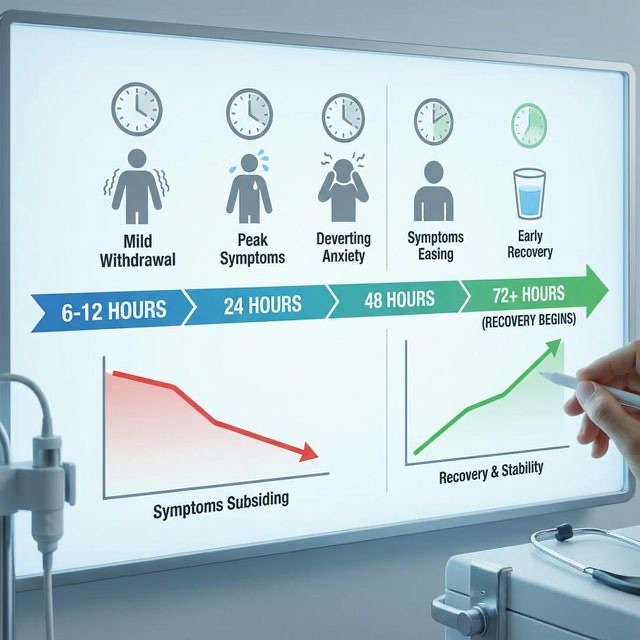
Alcohol withdrawal is one of the few substance withdrawal syndromes that can kill. Seizures most often occur between 12 and 48 hours after the last drink. Delirium tremens can follow. That is why payers treat medically supervised detox as hospital-level or residential-level care rather than optional counseling.
Insurers authorize detox when clinical notes show recent heavy use, prior withdrawal, medical risk, or CIWA-Ar scores that justify 24-hour monitoring. They do not authorize a fixed “30-day rehab package” up front. They authorize a short initial stay, then review whether continued medical necessity exists.
That structure is the same for Aetna, Cigna, UnitedHealthcare/Optum, and the California Blue plans. The phone numbers and portals differ. The clinical question does not: is unsupervised withdrawal dangerous for this person, today?
Aetna, Anthem, Blue Shield, Cigna, and UnitedHealthcare
Aetna typically manages behavioral health internally rather than through a carve-out. Initial residential or detox authorization is often 7 to 14 days, with concurrent review. PPO and POS plans usually allow you to start the process without a primary-care referral.
Anthem Blue Cross and Blue Shield of California are separate California carriers. Both are required to cover medically necessary detox. Anthem PPO generally offers more flexibility on facility choice. Blue Shield PPO and HMO products have different networks. Knowing which logo is on the card matters before anyone promises a network match.
Cigna behavioral health is administered through Evernorth. The benefits number on the back of the card, or 1-800-274-4621, is the line that actually authorizes detox. UnitedHealthcare members usually work through Optum for substance use benefits. UMR is a UnitedHealthcare third-party administrator that shows up on many large-employer cards and uses similar Optum clinical rules.
- Aetna PPO: often no referral; authorization in short increments
- Anthem Blue Cross PPO: California’s largest commercial book; pre-authorization common for residential detox
- Blue Shield of California: separate network from Anthem; verify the affiliate, not just “Blue Cross”
- Cigna / Evernorth: call behavioral health, not general medical customer service
- UnitedHealthcare / Optum / UMR: Optum manages most substance use authorizations
What a PPO actually pays for during alcohol detox
When medical necessity is approved, PPO plans commonly cover physician monitoring, nursing, withdrawal medications such as benzodiazepines used under protocol, thiamine and medical labs, and room and board at the authorized level of care. They do not pre-approve a luxury add-on. They approve the clinical service.
Your cost is the in-network or out-of-network deductible, then coinsurance, until you hit the out-of-pocket maximum. A family that has already met a deductible through other medical care often pays less for detox than they expect. A family that has not met a separate out-of-network deductible may pay more. That is why a benefits check has to happen on the actual member ID, not on a generic “Aetna covers rehab” page.
Trust SoCal explains those numbers in plain language before you admit. We will not invent a guaranteed dollar amount in this article because every group plan is different.
How verification works at Trust SoCal
Call (949) 280-8360 or use the form on our insurance page. Have the member ID, group number, and date of birth ready. Our admissions team contacts the behavioral health line for that carrier, asks about detox, residential, PHP, and IOP, and records deductibles, coinsurance, and authorization rules.
If pre-authorization is required, we submit clinical documentation. Urgent alcohol withdrawal can be authorized on an expedited timeline. You should not be filling out portal forms while someone is tremoring in a living room.
Medi-Cal, Molina, Kaiser, TRICARE, VA, and Medicare are a separate verification path. Those pages stay on this website. They are not the default next click from an alcohol-withdrawal article aimed at employer PPO coverage.
- 1Share the insurance card and a short drinking and withdrawal history
- 2We call Aetna, Anthem, Blue Shield, Cigna, or Optum on your behalf
- 3You receive a plain-language summary of coverage and likely out-of-pocket range
- 4We request authorization when the clinical picture supports medical detox
- 5Admission can proceed the same day when it is medically urgent
If the plan is an HMO, or the word “PPO” is not on the card
HMO plans can still cover alcohol detox. They usually require a referral or a network facility. California timely-access rules exist when the network cannot place someone in danger of seizures. That is a different workflow from a PPO, not a dead end.
Kaiser typically prefers its own system. Out-of-network exceptions exist when the needed level of care is not available in time. We investigate those cases honestly. We do not advertise Kaiser as a standard PPO admit.
If you have no insurance, private pay and payment plans exist. Public coverage including Medi-Cal is discussed during verification when it applies. This article is for the employed family that already has a commercial card and has been googling withdrawal timelines instead of “Aetna rehab Orange County.”

Madeline Villarreal, Counselor
Counselor