Key Takeaways
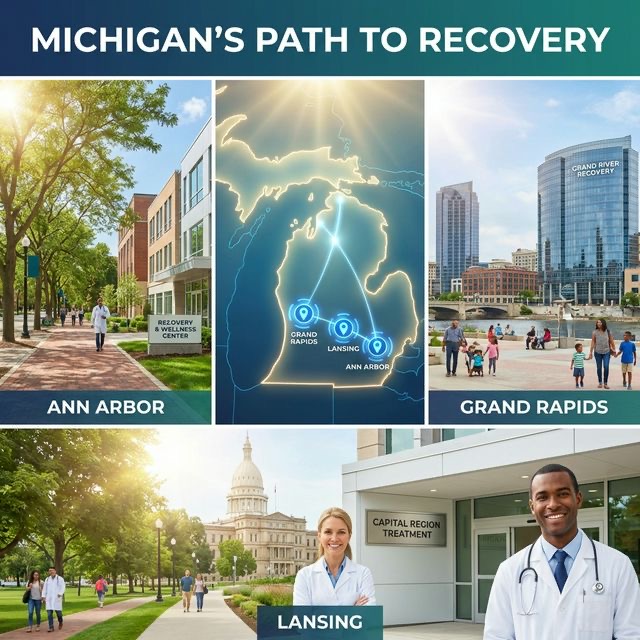
- Ann Arbor, Grand Rapids, Lansing, and other Michigan cities offer comprehensive addiction treatment including detox, residential, outpatient, and medication-assisted programs through university medical centers and community providers.
- Each Michigan city has unique treatment infrastructure reflective of its population characteristics, healthcare resources, and community needs. University towns like Ann Arbor have university-affiliated treatment; larger cities like Grand Rapids offer broader options.
- Michigan Medicaid covers treatment statewide, enabling individuals across Ann Arbor, Grand Rapids, Lansing, and other cities to access care regardless of insurance status.
- Specialized programs exist addressing diverse populations including college students, professionals, LGBTQ+ individuals, minorities, and those with co-occurring conditions.
- Geographic diversity means different communities have varying levels of MAT access, with some cities well-served and others experiencing availability challenges.
- Trust SoCal assists residents of Michigan cities with comprehensive treatment planning and coordinates care for individuals choosing California recovery at (949) 280-8360.
Addiction and Treatment Landscape Across Michigan Cities
Michigan's cities—from university towns like Ann Arbor to regional hubs like Grand Rapids and the state capital of Lansing—each have distinctive addiction treatment landscapes reflecting their unique populations, healthcare infrastructure, and community characteristics. Ann Arbor, home to the University of Michigan, experiences addiction patterns reflecting its college-aged population and young professional demographics. Grand Rapids, with a diverse population and strong healthcare system, offers comprehensive treatment capacity. Lansing, as the state capital, has state and federal resources supporting treatment services.
Each city has distinct assets. Ann Arbor benefits from University of Michigan's Department of Psychiatry and academic medical center resources. Grand Rapids has Spectrum Health and Beaumont Health providing regional treatment hub services. Lansing hosts state health department resources and connections. Toledo, Akron, Canton, Warren, Sterling Heights, and other Michigan communities each have community health centers and local providers serving their populations.
Despite these assets, all Michigan cities face common challenges including insufficient medication-assisted treatment capacity relative to demand, varying insurance coverage, and gaps in specialized programming for specific populations. Understanding each city's unique resources and barriers helps individuals and families navigate treatment options.
Michigan Medicaid covers substance use disorder treatment statewide, enabling individuals in Ann Arbor, Grand Rapids, Lansing, and all Michigan communities to access care through Medicaid-accepting providers. Contact your local health department or Michigan DHHS for referrals to available programs.
Treatment Resources in Ann Arbor and Washtenaw County
Ann Arbor, home to the University of Michigan, has addiction treatment services shaped by its academic medical center and college population. University of Michigan Health provides comprehensive addiction treatment through its Department of Psychiatry and Behavioral Health, including detoxification, medication-assisted treatment, and outpatient counseling. Washtenaw County Community Health Organization offers addiction services to Medicaid-eligible and uninsured residents.
The University of Michigan's role as a teaching medical center means that addiction treatment incorporates cutting-edge research and evidence-based practices. Specialized programming addresses college student substance use, young adult transitions, and professional populations. Outpatient addiction medicine is widely available for individuals balancing treatment with work or academic commitments.
Treatment Resources in Grand Rapids and Kent County
Grand Rapids, Michigan's second-largest city and center of Kent County, has robust healthcare infrastructure including Spectrum Health and Beaumont Health providing comprehensive addiction treatment. Both health systems offer medical detoxification, residential treatment partnerships, and extensive outpatient addiction services. The Grand Rapids metropolitan area serves as a regional treatment hub for West Michigan communities.
Specialized programming in Grand Rapids includes treatment for diverse populations including trauma survivors, LGBTQ+ individuals, and people with co-occurring mental illness. Community health centers throughout Kent County provide sliding-scale and Medicaid-covered treatment. Recovery support organizations and peer-led groups support sustained sobriety in Grand Rapids.
Treatment Services in Lansing and the Capital Region
Lansing, Michigan's capital city, hosts state health department resources and benefits from connections to state-level treatment infrastructure. Lansing's treatment landscape includes hospital-based services, community health centers, and community-based providers. The proximity to state government creates opportunities for policy advocacy and resource allocation toward treatment expansion.
The Lansing area serves residents from surrounding counties in central Michigan. Specialized programming addresses the needs of diverse populations. State-funded treatment resources available through Michigan DHHS provide options for uninsured and Medicaid-eligible residents.
Treatment Services in Other Michigan Cities
Beyond the largest cities, Michigan's many communities include Toledo, Akron, Canton, Warren, Sterling Heights, and others that serve specific geographic areas. Each has community health resources and connections to treatment services.
- Toledo operates in northwest Ohio bordering Michigan, with treatment served through Ohio providers and some cross-state utilization
- Akron and Canton in northeast Ohio serve nearby Michigan residents seeking treatment close to the Michigan-Ohio border
- Warren and Sterling Heights in the Detroit suburbs have local treatment resources plus ready access to Detroit-based comprehensive programs
- Other Michigan communities access treatment through county health departments and regional medical centers
College Student and Young Adult Addiction Treatment
Michigan cities including Ann Arbor with large college populations have developed specialized addiction treatment addressing college student-specific issues. Substance use among college students differs from non-college populations in patterns of use, social contexts, and developmental stage. Effective treatment addresses academic disruption, social identity challenges, family dynamics, and developmentally appropriate therapeutic approaches.
Young adult addiction treatment in Michigan cities addresses individuals ages 18-30 experiencing transitions between adolescence and full adulthood. Treatment incorporates identity formation, career development, relationship building, and independence skills alongside addiction treatment. Recovery support for young adults includes recovery housing, peer mentorship, and career support.
Insurance, Accessibility, and Treatment Matching
Michigan Medicaid provides coverage for substance use disorder treatment statewide, enabling residents of Ann Arbor, Grand Rapids, Lansing, and all Michigan communities to access care. Private insurance through employers and individual plans covers treatment under mental health parity requirements. Uninsured individuals access treatment through community health centers with sliding-scale fees and state-funded programs.
Matching individuals to appropriate treatment level—detoxification vs. residential vs. outpatient—depends on medical complexity, social stability, insurance, and personal preferences. University of Michigan, Spectrum Health, and other healthcare systems provide comprehensive assessment and treatment planning to ensure appropriate matching.
When seeking treatment in Michigan cities, ask programs about their experience treating college students, young adults, or your specific population. Inquire about medication-assisted treatment availability, individual therapy, family involvement, and aftercare planning. Trust SoCal's admissions team at (949) 280-8360 can help coordinate care if you're considering treatment in California.
Why Some Michigan Residents Choose Out-of-State Treatment
Despite comprehensive treatment availability in Michigan cities, some individuals choose to pursue recovery out-of-state, particularly in Southern California. Reasons include desire for geographic separation from using networks, environmental change, and access to specialized programming not available locally. The therapeutic benefit of climate change—moving from harsh Michigan winters to mild Southern California weather—can support emotional well-being during early recovery.
Trust SoCal in Fountain Valley, California provides comprehensive addiction treatment for residents of Michigan cities including Detroit, Ann Arbor, Grand Rapids, and throughout Michigan. The program coordinates treatment with careful consideration of individuals' needs and facilitates successful return-to-home planning. Michigan residents interested in California treatment can contact Trust SoCal at (949) 280-8360.

Kristin Stevens, LCSW
Licensed Clinical Social Worker