Key Takeaways
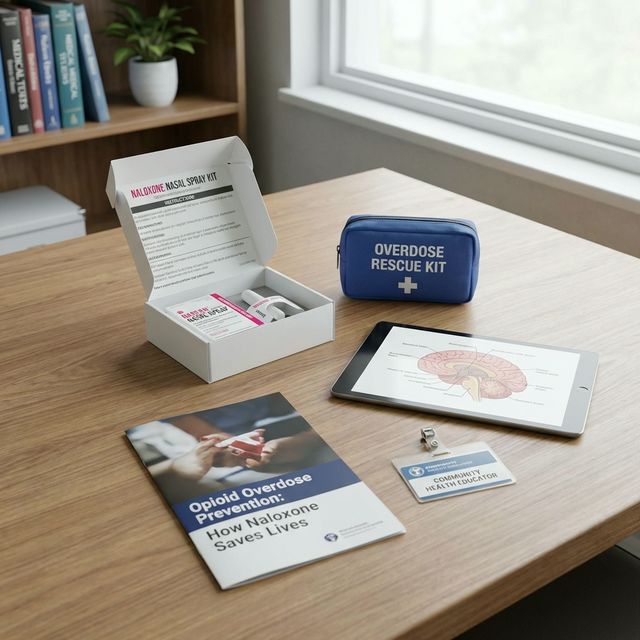
- Naloxone (brand name Narcan) is an opioid antagonist that rapidly reverses the effects of opioid overdose by displacing opioids from receptor sites in the brain, restoring breathing within 2-5 minutes.
- Narcan nasal spray is available over the counter at pharmacies in California without a prescription and can be administered by anyone, including family members and bystanders with no medical training.
- Recognizing an opioid overdose requires watching for slow or stopped breathing, unresponsiveness, pinpoint pupils, blue-tinged skin (especially lips and fingertips), and gurgling or snoring sounds.
- Multiple doses of naloxone may be required, especially for fentanyl overdoses, because fentanyl's high potency and receptor binding affinity may outlast a single naloxone dose.
- California's Good Samaritan Law protects individuals who call 911 to report an overdose from prosecution for drug possession.
The Opioid Overdose Crisis in Southern California
Opioid overdose remains the leading cause of accidental death in the United States, claiming more than 80,000 lives annually. In Orange County, fentanyl-related overdose deaths have increased dramatically in recent years, affecting communities across all socioeconomic levels and age groups. The widespread contamination of the illicit drug supply with fentanyl has made opioid overdose an ever-present risk not only for individuals with opioid use disorders but for anyone who uses illicit substances.
Naloxone, commercially available as Narcan nasal spray, has emerged as the single most important tool in reducing opioid overdose mortality. This medication can reverse the life-threatening respiratory depression caused by opioid overdose within minutes, providing a window for emergency medical services to arrive and stabilize the individual. Since its introduction, naloxone has saved an estimated hundreds of thousands of lives in the United States.
At Trust SoCal in Fountain Valley, we believe that overdose prevention education and naloxone access are essential components of comprehensive addiction treatment. Every client and family member who engages with our programs receives education on overdose recognition and naloxone administration, because saving lives is the first priority in addressing the opioid crisis.
As of 2023, Narcan (naloxone) nasal spray is available over the counter at pharmacies throughout California without a prescription. Many community organizations, health departments, and harm reduction programs also distribute naloxone free of charge.
How Naloxone Works: The Science Behind Overdose Reversal
Naloxone is an opioid antagonist, meaning it binds to the same opioid receptors that drugs like fentanyl, heroin, and prescription painkillers activate, but it does not activate the receptors itself. Instead, it competitively displaces the opioid molecules from the receptor sites, effectively blocking their effects. Because naloxone has a higher binding affinity for opioid receptors than most opioids, it can rapidly reverse even a substantial opioid dose.
The critical effect of naloxone in overdose reversal is the restoration of respiratory drive. Opioid overdose kills primarily by suppressing the brainstem's respiratory center, causing breathing to slow and eventually stop. By displacing opioids from receptors in the brainstem, naloxone restores the brain's sensitivity to carbon dioxide levels and reactivates the breathing reflex, typically within two to five minutes of administration.
It is important to understand that naloxone only blocks opioid effects. It will not reverse overdose from non-opioid substances including benzodiazepines, alcohol, stimulants, or other drugs. However, because fentanyl contamination is so prevalent, naloxone should be administered whenever opioid overdose is suspected, even if the individual is believed to be using a non-opioid substance, as they may be unknowingly exposed to fentanyl.
Recognizing an Opioid Overdose
Rapid recognition of an opioid overdose is critical because brain damage begins within 3 to 5 minutes of breathing cessation, and death can occur within minutes if breathing is not restored. Learning to recognize the signs of an opioid overdose can empower anyone to take life-saving action, whether they are a family member, friend, coworker, or bystander.
The most reliable signs of an opioid overdose include extremely slow, shallow, or stopped breathing, unresponsiveness to stimulation including loud voice and sternal rub, pinpoint pupils even in dim lighting, blue or grayish discoloration of the skin particularly around the lips, fingernails, and face, and gurgling or snoring sounds that indicate airway obstruction. The individual may appear to be in a very deep sleep from which they cannot be awakened.
It is important to distinguish between overdose and simple intoxication. An individual who is intoxicated on opioids but not overdosing will still be breathing regularly and can typically be roused with stimulation. An individual who is overdosing cannot be awakened, and their breathing is either dangerously slow (fewer than 8 breaths per minute), irregular, or absent entirely.
- Breathing: slow, shallow, irregular, or completely absent
- Responsiveness: cannot be awakened by voice, touch, or pain
- Pupils: extremely constricted (pinpoint), even in dim light
- Skin color: blue, gray, or ashen, especially around lips and fingertips
- Sounds: gurgling, choking, or snoring sounds indicating airway compromise
- Muscle tone: body is limp and unresponsive
- Pulse: slow, weak, or absent
How to Administer Narcan Nasal Spray
Narcan nasal spray is designed to be administered by anyone, regardless of medical training. The device is pre-loaded with a single dose and requires no assembly. Learning the steps in advance ensures that you can act quickly and confidently in an emergency situation.
The administration process is straightforward: call 911 immediately, lay the person on their back, insert the nozzle of the Narcan device into one nostril, press the plunger firmly to deliver the entire dose, and then place the person in the recovery position (on their side) to prevent aspiration if they vomit. Continue to monitor breathing and administer a second dose after 2 to 3 minutes if there is no response. Stay with the person until emergency services arrive.
It is crucial to understand that naloxone's duration of action (30 to 90 minutes) may be shorter than the opioid it is reversing, particularly with fentanyl. This means that the person may re-enter overdose after the naloxone wears off. This is why calling 911 is essential even if the person initially responds to naloxone. Never leave someone alone after administering naloxone.
- 1Call 911 immediately. Do not wait to see if the person improves.
- 2Lay the person flat on their back on a firm surface.
- 3Remove the Narcan nasal spray from its packaging.
- 4Tilt the person's head back slightly and insert the nozzle into one nostril.
- 5Press the plunger firmly with your thumb to deliver the full dose.
- 6Wait 2-3 minutes. If no improvement, administer a second dose in the other nostril.
- 7Place the person in the recovery position (on their side) to prevent choking.
- 8Stay with the person and continue monitoring until paramedics arrive.
- 9Be prepared for the person to experience immediate withdrawal symptoms upon awakening.
When naloxone reverses an opioid overdose, the person may awaken in acute opioid withdrawal and may be confused, agitated, or combative. They may also be disoriented about what happened. Approach calmly, explain what happened, and discourage them from using any more opioids, as the naloxone will wear off and overdose can recur.
Where to Get Naloxone in Orange County
Access to naloxone has expanded significantly in recent years through policy changes, community distribution programs, and over-the-counter availability. In California, naloxone is available through multiple channels, making it possible for anyone concerned about opioid overdose risk to obtain this life-saving medication.
Narcan nasal spray is available over the counter at pharmacies including CVS, Walgreens, and Rite Aid without a prescription. The Orange County Health Care Agency distributes free naloxone through community health centers, syringe services programs, and special distribution events. Many community organizations and harm reduction programs also provide free naloxone with brief training on administration.
Trust SoCal encourages all families affected by opioid use disorder to keep naloxone readily accessible. Even individuals in active recovery should have naloxone available, as relapse after a period of abstinence carries the highest risk of fatal overdose due to reduced tolerance. Our admissions team at (949) 280-8360 can provide information about local naloxone distribution sites and connect families with community resources for overdose prevention.
Keep naloxone in an easily accessible location, not locked in a medicine cabinet. In an overdose emergency, every second counts. Narcan nasal spray has a shelf life of approximately 24 months and should be replaced before expiration.
Madeline Villarreal, Counselor
Counselor