Key Takeaways
- Orange County Drug Court provides court-supervised treatment as an alternative to incarceration for qualifying defendants.
- Participants receive substance abuse treatment, regular drug testing, court appearances, and case management services.
- Successful completion can result in reduced charges, dismissed cases, or expunged records depending on the program.
- Drug court combines judicial oversight with clinical treatment to address the root causes of substance-related criminal behavior.
- Trust SoCal in Fountain Valley works with drug court participants to provide the clinical treatment required by the program.
What Is Drug Court?
Drug courts are specialized judicial programs that divert individuals with substance use disorders from incarceration into structured treatment programs. Rather than cycling through the traditional criminal justice system — arrest, prosecution, jail, release, and rearrest — drug court participants receive court-supervised addiction treatment designed to break the cycle of substance abuse and criminal behavior.
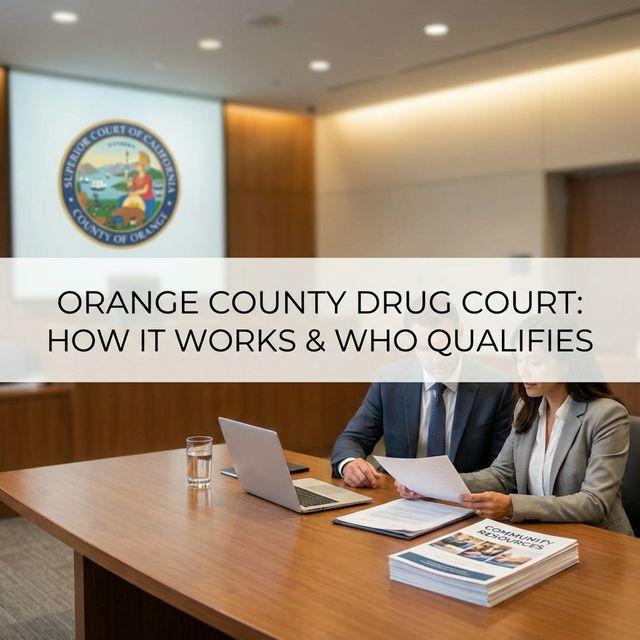
The Orange County Superior Court operates drug court programs that combine regular judicial oversight with comprehensive treatment services. Participants appear before a dedicated drug court judge at regular intervals, submit to frequent drug testing, attend treatment sessions, and meet with case managers. The program typically lasts 12 to 18 months, with successful completion resulting in significant legal benefits.
Research consistently demonstrates that drug courts are more effective than incarceration at reducing recidivism and substance use. Nationally, drug court graduates are significantly less likely to be rearrested than individuals who go through the traditional criminal justice system. Drug courts also save taxpayer money by reducing incarceration costs and associated social services expenses.
According to the National Association of Drug Court Professionals, drug courts reduce recidivism by an average of 8 to 14 percent compared to traditional criminal justice processing.
Who Qualifies for Orange County Drug Court?
Eligibility for Orange County Drug Court is determined by the nature of the criminal charges, the defendant's criminal history, and the presence of a substance use disorder. Generally, drug court is available to individuals charged with nonviolent drug offenses or drug-related property crimes whose behavior is driven by addiction.
Exclusions typically apply to individuals with violent felony convictions, current charges involving violence, active warrants in other jurisdictions, or charges involving sales or distribution of controlled substances. However, eligibility criteria can vary by specific program, and a criminal defense attorney can provide guidance on whether drug court is an option in a particular case.
To be accepted into drug court, defendants must agree to participate voluntarily, comply with all program requirements, and submit to ongoing substance abuse treatment and monitoring. A clinical assessment is conducted to confirm the presence of a substance use disorder and determine the appropriate level of treatment.
- Nonviolent drug possession charges or drug-related property offenses
- No current violent felony charges
- Clinical diagnosis of a substance use disorder
- Voluntary agreement to participate and comply with all requirements
- Willingness to engage in treatment and submit to regular drug testing
How Drug Court Works in Orange County
Orange County Drug Court operates in phases, with each phase requiring increasing levels of personal responsibility and decreasing levels of court supervision. In the early phases, participants attend court frequently — often weekly — submit to multiple drug tests per week, and attend treatment sessions several days per week.
As participants demonstrate progress through sustained sobriety, treatment engagement, and compliance with program requirements, they advance to later phases with less frequent court appearances and drug testing. The program rewards progress with praise, reduced reporting requirements, and other incentives while responding to noncompliance with graduated sanctions.
Treatment Requirements
Drug court participants are required to engage in substance abuse treatment at a licensed program. The level of treatment — residential, PHP, IOP, or outpatient — depends on the individual's clinical assessment and may change as they progress through the program. Treatment centers like Trust SoCal in Fountain Valley work directly with drug court programs to provide the required level of clinical care.
In addition to substance abuse treatment, many drug court participants receive services for co-occurring mental health conditions, trauma, family dysfunction, and vocational or educational needs. The holistic approach recognizes that addiction rarely exists in isolation and that addressing underlying issues is essential for long-term success.
Drug Testing and Court Appearances
Random drug testing is a cornerstone of drug court. Participants are subject to frequent, unannounced drug tests throughout the program, with the frequency decreasing as they advance through phases. Positive tests or missed tests result in graduated sanctions that may include community service, increased court appearances, or brief jail stays.
Regular court appearances before the drug court judge provide accountability and support. The judge reviews each participant's progress, acknowledges achievements, addresses setbacks, and adjusts the treatment plan as needed. This direct judicial involvement sets drug court apart from traditional probation and creates a powerful motivational dynamic.
Benefits of Completing Drug Court
Successful completion of Orange County Drug Court provides significant legal and personal benefits. Depending on the specific program and the nature of the original charges, benefits may include dismissal of charges, reduction of charges, shortened probation, or expungement of the conviction. These outcomes can have a profound impact on employment opportunities, housing eligibility, and overall quality of life.
Beyond the legal benefits, drug court graduates gain the tools, skills, and support systems needed for sustained recovery. The intensive, supervised treatment experience builds a foundation of sobriety that many participants describe as transformative. The combination of clinical treatment, judicial accountability, and peer support creates a powerful framework for lasting change.
Drug court also reconnects participants with their communities in positive ways. Many programs include community service requirements, vocational training, educational programming, and family reunification services. By the time participants graduate, they have not only addressed their addiction but have also rebuilt critical areas of their lives.
How Trust SoCal Supports Drug Court Participants
Trust SoCal in Fountain Valley provides clinical treatment for individuals participating in Orange County Drug Court programs. We understand the unique requirements of court-ordered treatment, including documentation, progress reports, drug testing coordination, and communication with probation officers and the court.
Our treatment programs meet the clinical standards required by drug court, including individual therapy, group counseling, substance abuse education, relapse prevention planning, and co-occurring mental health treatment. We coordinate with each participant's legal team and probation officer to ensure seamless communication and compliance with all program requirements.
If you or a loved one is facing drug-related charges and may qualify for drug court, call Trust SoCal at (949) 280-8360. Our admissions team can discuss your situation, verify your insurance, and explain how our treatment programs align with drug court requirements.
If you have been referred to drug court or are considering requesting it, having a treatment plan in place demonstrates your commitment to recovery. Call Trust SoCal at (949) 280-8360 to discuss your options.

Amy Pride, MFTT
Marriage & Family Therapy Trainee