Key Takeaways
- Naloxone (brand name Narcan) is a life-saving medication that reverses opioid overdoses within minutes.
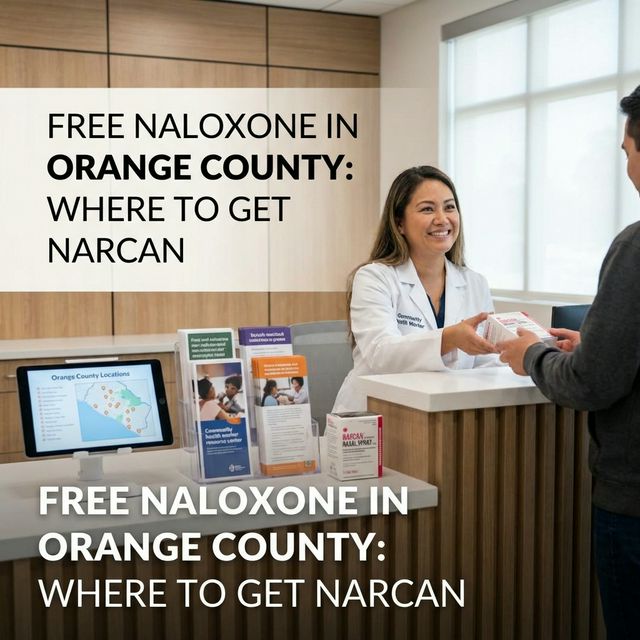
- Free naloxone is available at multiple distribution sites across Orange County including pharmacies, health clinics, and community organizations.
- California law allows anyone to obtain and administer naloxone without a prescription, and Good Samaritan protections apply.
- Trust SoCal in Fountain Valley educates clients and families about naloxone as part of comprehensive overdose prevention.
- Fentanyl contamination in the drug supply has made naloxone more critical than ever in Orange County.
What Is Naloxone and How Does It Work?
Naloxone, sold under the brand name Narcan, is an opioid antagonist medication that rapidly reverses the effects of an opioid overdose. When administered during an overdose, naloxone displaces opioids from receptors in the brain, restoring normal breathing within two to five minutes. It is safe, effective, and has no potential for abuse.
Naloxone is available as a nasal spray (Narcan) and as an injectable solution. The nasal spray is the most commonly distributed form for community use because it requires no medical training to administer. A single spray into one nostril can reverse an overdose, and a second dose can be given if the person does not respond within two to three minutes.
The medication works on all types of opioids, including heroin, fentanyl, oxycodone, hydrocodone, morphine, and methadone. However, fentanyl and its analogs may require multiple doses of naloxone due to their extreme potency. This is one reason why having multiple naloxone kits available is increasingly important in Orange County.
Naloxone is temporary. Its effects last 30 to 90 minutes, and the person may go back into overdose once it wears off. Always call 911 immediately, even after administering naloxone.
Where to Get Free Naloxone in Orange County
Orange County has expanded naloxone distribution significantly in response to the fentanyl crisis. Multiple agencies, organizations, and pharmacies now provide free naloxone kits to community members without requiring a prescription or insurance. The Orange County Health Care Agency leads these distribution efforts in partnership with community organizations.
The HCA distributes free naloxone through its harm reduction programs, community health centers, and special distribution events held throughout the county. Many Orange County pharmacies also participate in standing-order naloxone programs that allow individuals to obtain the medication without a personal prescription from a physician.
- Orange County Health Care Agency harm reduction programs and events
- Community health clinics and federally qualified health centers
- Participating pharmacies with standing-order naloxone programs
- Needle exchange and harm reduction organizations
- Treatment centers and recovery community organizations
- College campus health centers including Cal State Fullerton and UCI
Under California law (AB 635), anyone can obtain naloxone without a personal prescription. Pharmacies can dispense it under a standing order, and community organizations can distribute it through authorized programs.
How to Administer Naloxone
Administering naloxone nasal spray is straightforward and does not require medical training. First, recognize the signs of opioid overdose: slow or stopped breathing, blue or gray lips and fingertips, pinpoint pupils, unresponsiveness, and gurgling or snoring sounds. If you suspect an overdose, call 911 immediately.
To administer Narcan nasal spray, remove the device from the packaging, hold the person's head tilted slightly back, insert the nozzle into one nostril, and press the plunger firmly to release the full dose. Place the person in the recovery position on their side and stay with them until emergency medical services arrive.
If the person does not respond within two to three minutes, administer a second dose in the other nostril. Continue to monitor breathing and be prepared to perform rescue breathing or CPR if necessary. Even if the person regains consciousness, they must be evaluated by emergency medical professionals because the overdose can return once naloxone wears off.
- 1Call 911 immediately when you suspect an opioid overdose.
- 2Remove the Narcan nasal spray from the packaging.
- 3Tilt the person's head back slightly and insert the nozzle into one nostril.
- 4Press the plunger firmly to release the full dose.
- 5Place the person in the recovery position on their side.
- 6If no response within 2-3 minutes, administer a second dose in the other nostril.
- 7Stay with the person until emergency services arrive.
The Fentanyl Crisis and Why Naloxone Is Essential
The proliferation of illicitly manufactured fentanyl has transformed the overdose landscape in Orange County. Fentanyl is 50 to 100 times more potent than morphine and is now found in counterfeit prescription pills, heroin, methamphetamine, and cocaine. Many individuals who overdose on fentanyl did not knowingly consume it, making naloxone critical for anyone who uses drugs or is close to someone who does.
Orange County has experienced a sharp increase in fentanyl-related overdose deaths in recent years. The Orange County Coroner's Office has reported year-over-year increases in fentanyl fatalities, with the drug now involved in the majority of all drug overdose deaths in the county. This trend underscores the urgent need for widespread naloxone availability.
Having naloxone on hand does not encourage drug use — it prevents death. Public health research consistently shows that naloxone distribution programs reduce overdose mortality without increasing drug use rates. Every minute matters during an opioid overdose, and having naloxone immediately available can mean the difference between life and death.
Good Samaritan Protections in California
California's Good Samaritan law (AB 472) provides legal protections for individuals who call 911 to report an overdose and for those who administer naloxone in good faith during an emergency. The law protects both the person who calls for help and the person experiencing the overdose from prosecution for certain drug-related offenses.
These protections are designed to remove the fear of legal consequences that prevents people from calling for help during an overdose. Understanding these protections is critical, because many overdose deaths occur when bystanders delay calling 911 out of fear of arrest. At Trust SoCal, we educate every client and their family about these protections as part of our overdose prevention programming.
California law protects you if you call 911 during an overdose or administer naloxone in good faith. Do not let fear of legal consequences prevent you from saving a life.
Trust SoCal and Overdose Prevention
Trust SoCal in Fountain Valley integrates overdose prevention education into every treatment program. We train clients and their families on recognizing overdose signs, administering naloxone, and accessing ongoing support. Our medical team ensures that clients leaving treatment understand the risks of reduced tolerance after detox and have naloxone available for emergencies.
If you or someone you know is struggling with opioid use, do not wait for a crisis to seek help. Call Trust SoCal at (949) 280-8360 for a confidential assessment. Our team can connect you with treatment that addresses the root causes of addiction while equipping you with life-saving knowledge and resources.

Rachel Handa, Clinical Director
Clinical Director & Therapist