Key Takeaways
- Spending just 120 minutes per week in natural settings reduces cortisol levels by 21 percent and significantly improves self-reported well-being according to a study of 20,000 participants.
- Adventure therapy programs for substance use disorders show 25 percent higher treatment completion rates compared to facility-only programming.
- Forest bathing, or shinrin-yoku, increases natural killer cell activity by 50 percent and reduces blood pressure, anxiety, and depression.
- Orange County offers year-round access to beaches, mountains, deserts, and wetlands, making it one of the most ecologically diverse recovery environments in the United States.
- Nature exposure reduces activity in the subgenual prefrontal cortex, the brain region associated with rumination and self-focused negative thinking that drives relapse.
The Science of Nature and Recovery
The relationship between natural environments and human health is one of the most robust findings in behavioral science. Research spanning two decades consistently demonstrates that time spent in nature reduces stress hormones, lowers blood pressure, improves mood, enhances cognitive function, and strengthens immune response. For individuals recovering from addiction, these benefits directly address the physiological and psychological vulnerabilities that increase relapse risk.
A landmark study published in Scientific Reports analyzed data from nearly 20,000 participants and found that spending a minimum of 120 minutes per week in natural environments was associated with significantly better health and well-being outcomes. Below that threshold, benefits were minimal; above it, they plateaued. This finding provides a clear, evidence-based prescription: two hours per week in nature.
At Trust SoCal in Fountain Valley, our treatment philosophy recognizes that healing happens in context, not just in clinical offices. Orange County provides extraordinary access to natural environments, from the beaches of Huntington and Newport to the trails of Crystal Cove and the Santa Ana Mountains. We incorporate outdoor programming into treatment plans because the evidence is clear: nature heals.
A 2019 study in Proceedings of the National Academy of Sciences found that a 90-minute walk in a natural setting reduced neural activity in the subgenual prefrontal cortex, the brain region linked to rumination and repetitive negative self-focus, compared to a walk in an urban setting. Rumination is a major driver of craving and relapse.
Types of Nature-Based Recovery Approaches
Nature-based recovery is an umbrella term encompassing a range of therapeutic modalities that use natural environments as the setting or medium for healing. These approaches vary in structure, intensity, and clinical focus, but all share the common principle that engagement with the natural world supports recovery.
The following modalities represent the most researched and widely practiced nature-based interventions in addiction treatment today.
Forest Bathing (Shinrin-Yoku)
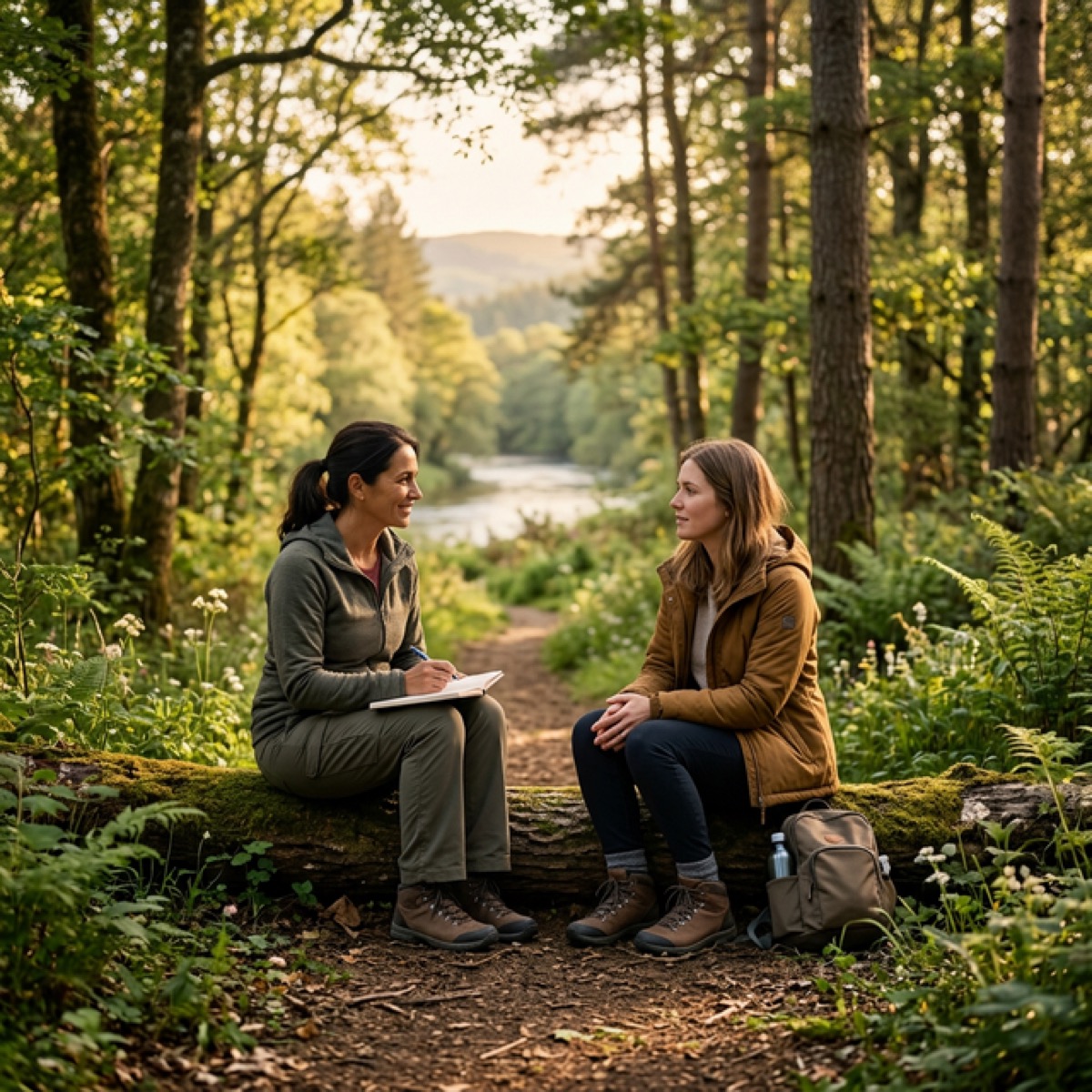
Originating in Japan, shinrin-yoku, or forest bathing, involves slow, intentional immersion in a forest environment. Unlike hiking, the goal is not distance or exertion but sensory engagement. Participants walk slowly, breathe deeply, and focus their attention on the sights, sounds, smells, and textures of the forest.
Research led by Dr. Qing Li at Nippon Medical School has demonstrated remarkable physiological effects of forest bathing including a 50 percent increase in natural killer cell activity that persists for up to 30 days after a single forest visit, significant reductions in cortisol and blood pressure, and decreased symptoms of anxiety and depression. Phytoncides, volatile organic compounds released by trees, appear to be partly responsible for the immune-boosting effects.
- Walk slowly and without a specific destination for 20 to 40 minutes
- Engage all five senses: notice colors, listen to birdsong, touch bark, smell earth and leaves
- Leave your phone in the car or on airplane mode
- Sit or stand still for several minutes at a time, simply observing
- Focus on breathing and allow the nervous system to downshift naturally
Adventure Therapy
Adventure therapy uses structured outdoor challenges, such as rock climbing, ropes courses, kayaking, and backpacking, as vehicles for therapeutic growth. The controlled exposure to manageable risk builds self-efficacy, distress tolerance, and trust in both self and others, all of which are typically compromised by addiction.
A meta-analysis in the Journal of Experiential Education found that adventure therapy programs for substance use disorders produced significant improvements in self-concept, interpersonal relationships, and locus of control. Treatment completion rates in programs incorporating adventure therapy were 25 percent higher than in facility-only programs, likely because the engaging nature of outdoor challenges increases motivation and reduces the monotony that can lead to early treatment departure.
Horticultural Therapy and Conservation Work
Working with plants, whether in a formal horticultural therapy program or a community garden, provides a unique recovery experience. Gardening combines physical activity, mindful attention, nurturing behavior, and the tangible satisfaction of growth and harvest. The metaphorical parallels to recovery, planting seeds, being patient, tending growth, accepting setbacks, are powerful and often arise spontaneously in therapeutic discussion.
Conservation volunteer work, such as trail maintenance, habitat restoration, and beach cleanups, adds a prosocial dimension. Contributing to something larger than oneself counters the isolation and self-absorption of addiction while building a sense of purpose and community connection.
The Attention Restoration Theory and Craving Reduction
Attention Restoration Theory, developed by Rachel and Stephen Kaplan at the University of Michigan, provides a cognitive framework for understanding why nature reduces cravings. The theory proposes that natural environments engage a type of attention called soft fascination, a gentle, effortless focus on interesting but non-demanding stimuli like clouds, flowing water, and rustling leaves.
This soft fascination allows the brain's directed attention resources to rest and replenish. Directed attention is the cognitive capacity used for impulse control, decision-making, and resisting cravings. When directed attention is depleted by the constant demands of early recovery, cravings become harder to resist. Natural environments restore this capacity, literally refreshing the cognitive fuel tank that self-control draws upon.
This insight has practical implications. Scheduling time in nature during high-risk periods, such as evenings, weekends, or emotionally difficult days, can proactively restore the cognitive resources needed to navigate triggers. It reframes a nature walk from a leisure activity to a strategic recovery intervention.
When you feel a craving building or notice your emotional resilience fading, go outside. Even 20 minutes in a park, on a beach, or under trees can measurably restore the cognitive resources you need to ride out the craving. Nature is a recovery tool, not just a backdrop.
Orange County as a Nature-Based Recovery Environment
Southern California, and Orange County specifically, offers one of the most ecologically diverse recovery environments in the country. Within a 90-minute drive of Fountain Valley, clients and individuals in recovery can access Pacific Ocean beaches, coastal wetlands, mountain trails, desert landscapes, and old-growth forest ecosystems. This diversity means that nature-based recovery can be personalized to individual preferences and therapeutic needs.
The mild, year-round climate eliminates the seasonal barriers that limit outdoor programming in other parts of the country. When facilities in the Northeast or Midwest are restricted to indoor programming for months at a time, treatment centers in Orange County can maintain consistent outdoor therapeutic activities throughout the calendar year.
Trust SoCal's treatment programs incorporate outdoor activities in these and other Orange County natural areas. Our proximity to the coast and mountains means that nature-based recovery is not a theoretical concept here; it is a daily practice.
Accessible Nature Destinations Near Fountain Valley
Building a nature-based recovery practice does not require expensive equipment or long travel times. The following natural areas are all within 30 minutes of Trust SoCal's Fountain Valley location and offer varied therapeutic experiences.
- Bolsa Chica Ecological Reserve: coastal wetland with flat, accessible trails and abundant birdlife for mindful observation
- Crystal Cove State Park: oceanside trails combining beach and bluff-top hiking with tide pool exploration
- Huntington Beach: the broad, flat beach provides an ideal setting for walking meditation, grounding, and sunrise practices
- Shipley Nature Center: a compact but richly biodiverse space for short forest bathing sessions
- Santiago Oaks Regional Park: oak woodland trails offering shade, creek access, and moderate elevation for active nature therapy
- Upper Newport Bay Nature Preserve: gentle trails with water views and opportunities for kayaking and birdwatching
Safety Considerations for Outdoor Recovery Activities
Nature-based recovery is generally low-risk, but responsible programming requires attention to safety. Physical readiness, environmental awareness, and emotional preparation are all important considerations, particularly for individuals in early recovery who may be physically deconditioned or emotionally fragile.
Medical clearance should be obtained before beginning any vigorous outdoor activity. Hydration, sun protection, and appropriate footwear are essential in Southern California's climate. Group outdoor activities should always include at least one person trained in first aid.
Some outdoor social events in the recovery community involve alcohol or cannabis. Before joining any outdoor group, verify that it is a sober activity. Trust SoCal can recommend recovery-specific outdoor groups and activities in the Orange County area. Call (949) 280-8360 for recommendations.
Integrating Nature into Your Recovery Routine
The most effective nature-based recovery practices are consistent and intentional. Rather than occasional outdoor excursions, aim to build regular nature contact into your weekly routine. The research-supported threshold of 120 minutes per week can be achieved through daily 20-minute walks in a park, two longer weekend outings, or any combination that fits your schedule.
Track your nature time for two weeks and notice the correlation with your mood, craving intensity, and sleep quality. Most people discover a clear pattern: weeks with more nature exposure feel easier. This personal data becomes powerful motivation for maintaining the practice.
If you or someone you care about is seeking addiction treatment that embraces the healing power of natural environments alongside clinical evidence-based therapies, Trust SoCal in Fountain Valley offers exactly that integration. Call (949) 280-8360 to begin your recovery in one of the most naturally beautiful regions in the country.

Trust SoCal Editorial Team, Clinical Review Board
Editorial & Clinical Review