Key Takeaways
- Social media can support recovery through access to online communities, recovery content, and connection with sober peers.
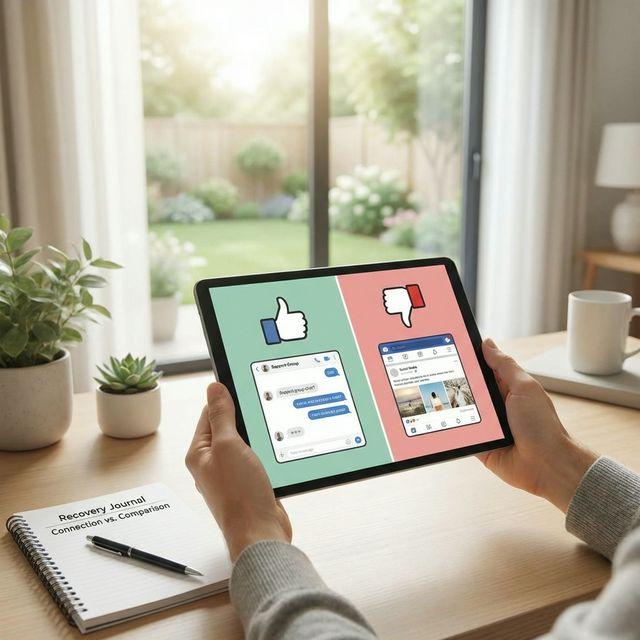
- The same platforms can harm recovery through social comparison, triggering content, dopamine-driven compulsive use, and displacement of real-world connection.
- Intentional curation of your social media feed, unfollowing triggering accounts and following recovery-supportive ones, significantly changes the impact.
- Setting time limits and usage boundaries prevents social media from becoming a substitute addiction.
- In-person connection should always take priority over online interaction for lasting recovery support.
The Dual Nature of Social Media in Recovery
Social media occupies a complicated space in addiction recovery. It provides unprecedented access to recovery communities, educational content, and peer support that previous generations of people in recovery never had. Simultaneously, it exploits the same reward-seeking brain pathways that addiction hijacks, creating potential for compulsive use and emotional harm.
The question is not whether social media is good or bad for recovery but how you use it. The same platform that delivers an inspirational recovery story to your feed also serves alcohol advertisements, glamorized drug content, and curated highlight reels that fuel inadequacy. Your relationship with social media, like your relationship with everything in recovery, requires intentionality.
At Trust SoCal in Fountain Valley, we address digital wellness as part of comprehensive recovery planning. We help clients develop a conscious, boundaried approach to social media that maximizes benefits and minimizes risks.
How Social Media Can Support Recovery
When used intentionally, social media offers several genuine benefits for people in recovery. Understanding these benefits helps you leverage them while remaining vigilant about potential harms.
Access to Recovery Community
Online recovery communities on Instagram, Reddit, Facebook, and TikTok provide 24-hour access to peer support. At 2 AM when insomnia strikes and cravings intensify, an online recovery group may be the most accessible source of connection and encouragement. For people in rural areas or with mobility limitations, online community may be the primary form of peer support available.
Recovery hashtags and accounts create a feed filled with sobriety milestones, motivational content, and honest discussions about the challenges of recovery. This constant stream of recovery-oriented content reinforces sober identity and normalizes the recovery experience.
Accountability and Documentation
Some individuals use social media to document their recovery journey publicly. Sharing sobriety milestones, reflections, and struggles creates accountability and invites support. The positive response from followers reinforces the commitment to sobriety.
However, public recovery documentation is a personal choice that carries both benefits and risks. The pressure to maintain a polished recovery narrative can become stressful, and the potential for negative comments or unsolicited advice requires emotional resilience.
How Social Media Can Harm Recovery
The risks of social media in recovery are significant and often subtle. They accumulate gradually, making them easy to overlook until the damage is substantial.
Understanding these risks empowers you to make informed choices about your digital habits.
Triggering Content and Cravings
Alcohol advertising, party content, and posts glamorizing substance use are pervasive on social media. Algorithms designed to maximize engagement may serve this content even to users who have indicated recovery interests. A single triggering image or video can initiate a craving cascade.
Additionally, seeing former drinking or using friends posting about their nightlife can trigger FOMO (fear of missing out) and romanticize the aspects of substance use that memory tends to polish while forgetting the consequences.
Comparison and Inadequacy
Social media presents curated versions of reality. When you are struggling through early recovery, seeing others' highlight reels can intensify feelings of inadequacy, shame, and hopelessness. Even recovery accounts can create unhealthy comparison if they present recovery as an effortless, photogenic journey.
The comparison trap is particularly dangerous in recovery because it undermines the self-compassion and patient self-acceptance that sustained sobriety requires. If your recovery does not look like the influencer's recovery, that says nothing about your recovery. It says everything about the constructed nature of social media.
Curating a Recovery-Supportive Social Media Feed
The most powerful action you can take to improve your social media experience is aggressive curation of your feed. This means actively shaping what content reaches you rather than passively consuming whatever the algorithm serves.
This curation is an ongoing practice, not a one-time action. Regularly audit your feed and adjust as your recovery needs evolve.
- Unfollow or mute accounts that post substance-related content, party scenes, or triggering material
- Follow recovery accounts, mental health professionals, wellness practitioners, and inspiring sober individuals
- Use the not interested or hide options on posts that trigger negative emotions or cravings
- Block or restrict accounts connected to your previous substance-using social circle if necessary
- Follow accounts related to your recovery interests: fitness, nature, cooking, reading, creative arts
- Periodically review your following list and remove any account that consistently leaves you feeling worse
Do a social media audit today. Scroll through your feed for 10 minutes and notice how each post makes you feel. Unfollow anything that triggers comparison, craving, or negative self-talk. Your feed should feel like a supportive community, not a minefield.
Setting Healthy Social Media Boundaries in Recovery
Boundaries around social media use are as important as boundaries in relationships. Without them, social media can quietly consume hours of each day, displacing the in-person connection, physical activity, and restorative practices that recovery depends on.
Set specific times for social media use rather than allowing it throughout the day. Use built-in screen time features to enforce limits. Establish screen-free zones and times: no phones at meals, no scrolling in bed, no social media during the first and last hour of each day.
If you find that social media consistently worsens your mood or triggers cravings despite curation and boundary setting, a complete break may be necessary. Many people in recovery take 30-day social media fasts and report significant improvements in mood, sleep, and recovery engagement. Contact Trust SoCal at (949) 280-8360 to discuss building healthy digital habits as part of your recovery plan.

Amy Pride, MFTT
Marriage & Family Therapy Trainee