Key Takeaways
- Substance abuse downregulates dopamine receptors and impairs glucose metabolism, creating intense sugar cravings as the brain seeks dopamine restoration through the most available reward—sugar.
- Individuals in recovery are at significantly increased risk for cross-addiction to sugar and processed foods, driven by identical neurobiological mechanisms and partially overlapping neural circuits.
- Frequent sugar consumption destabilizes blood glucose and dopamine, perpetuating the dysregulation that drives both cravings and relapse vulnerability.
- Stable blood sugar through complex carbohydrates, protein, and healthy fats reduces sugar cravings while supporting consistent dopamine function and mood stability.
- Behavioral strategies—identifying sugar craving triggers, having prepared healthy alternatives, addressing emotional triggers—complement nutritional approaches for comprehensive craving management.
Dopamine Dysregulation and Sugar Reward Processing
The intense sugar cravings experienced by many individuals in addiction recovery are not character flaws or lack of willpower—they represent a direct neurobiological consequence of substance-induced dopamine dysregulation. During active addiction, chronic substance use downregulates dopamine D2 receptors by 20-50%, creating an anhedonic state where normal rewards feel inadequate. The brain, desperate to restore dopamine signaling, compulsively seeks the most powerfully dopamine-stimulating substances available. In recovery, as access to previous drugs of choice becomes unavailable or strongly resisted, sugar becomes the most accessible, socially acceptable dopamine-stimulating substance.
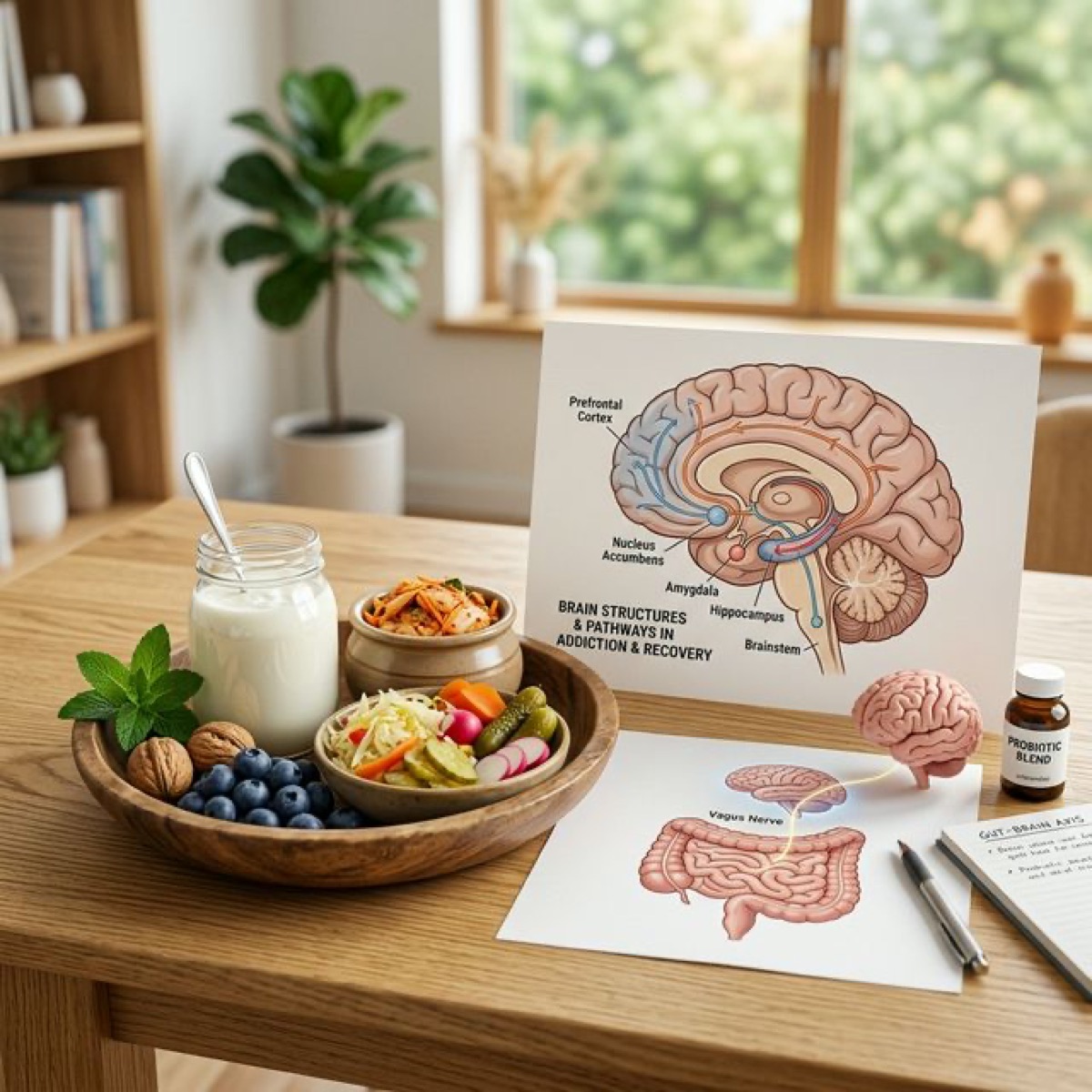
Sugar activates identical dopamine reward pathways to many drugs of abuse, producing dopamine surges in the nucleus accumbens comparable to (but less intense than) cocaine or opioid euphoria. Critically, sugar does not fully restore dopamine D2 receptor sensitivity the way that consistent exercise, sleep, stress management, and gradual neurochemical rebalancing do. Instead, frequent sugar consumption creates oscillating blood glucose and dopamine levels that perpetuate the dysregulation driving both sugar cravings and substance craving vulnerability. The individual finds themselves caught in a pattern where sugar temporarily satisfies dopamine-seeking drive but perpetuates the underlying dysregulation making long-term abstinence difficult.
Sugar activates dopamine reward pathways identically to many drugs of abuse. However, frequent sugar consumption perpetuates dopamine dysregulation rather than restoring it, potentially increasing substance craving vulnerability over time.
Cross-Addiction and Sugar in Recovery
Cross-addiction—the development of addictive patterns toward alternative substances when the primary substance of abuse becomes unavailable—is a significant risk in addiction recovery. Individuals in recovery show dramatically elevated risk for developing problematic relationships with sugar and processed foods, with studies showing that 50-70% of individuals with alcohol use disorder develop problematic eating patterns or binge eating disorder in early recovery. This cross-addiction is not coincidental—it reflects the reality that identical neural circuits and identical dopamine dysregulation drivers underlie both substance addiction and behavioral addictions like binge eating.
The warning signs of emerging sugar cross-addiction include: intense preoccupation with sugar and sweets; loss of control around sugar consumption despite intentions; continued consumption despite negative health consequences; withdrawal-like irritability and anxiety when sugar is restricted; and use of sugar to manage emotional or situational triggers. Recognizing these patterns early and implementing preventive nutritional and behavioral strategies prevents cross-addiction from developing.
Blood Sugar Stability and Dopamine Support Through Nutrition
Stable blood glucose through balanced macronutrient intake supports stable dopamine function and reduces sugar craving intensity. Frequent meals or snacks combining complex carbohydrates (whole grains, legumes, vegetables), protein (eggs, fish, poultry, legumes, dairy), and healthy fats (nuts, seeds, avocado, olive oil) maintain steady glucose and dopamine levels throughout the day. Avoiding high-glycemic simple sugars and refined carbohydrates, which create rapid blood glucose spikes followed by crashes, prevents the glucose-dopamine dysregulation that intensifies cravings.
A practical eating pattern for craving management: balanced breakfast within 1-2 hours of waking including protein and complex carbohydrates; mid-morning snack combining protein and fat; balanced lunch; afternoon snack of fruit or yogurt; balanced dinner. This frequent meal pattern prevents the 3-4 hour periods of declining blood glucose that trigger intense sugar cravings. Additionally, consistent meal timing supports circadian rhythm stability and sleep quality, which independently reduce cravings.
Eat balanced meals every 3-4 hours including protein, complex carbohydrates, and healthy fats. This prevents blood glucose crashes that trigger intense sugar cravings and dopamine dysregulation.
Behavioral Management of Sugar Cravings
Behavioral strategies complementing nutritional approaches include: identifying specific triggers for sugar cravings—emotional states, times of day, specific situations—and developing alternative responses; preparing low-glycemic, nutrient-dense snack alternatives (nuts, cheese, fruit, yogurt) in advance; and addressing underlying emotional or situational triggers through coping strategies or therapeutic work. Many individuals find that planned "emergency snacks" carried on their person reduce the likelihood of reaching for high-sugar options when cravings strike unexpectedly.
Mindfulness-based approaches recognize that sugar cravings, like substance cravings, typically intensify with resistance and diminish with acceptance and time. When sugar cravings arise, individuals who can observe the craving without judgment, notice its intensity waxing and waning over minutes, and choose not to act on it often find cravings extinguish within 15-20 minutes. This differs from active white-knuckling resistance which intensifies cravings through the opponent process mechanism.

Trust SoCal Editorial Team, Clinical Review Board
Editorial & Clinical Review