
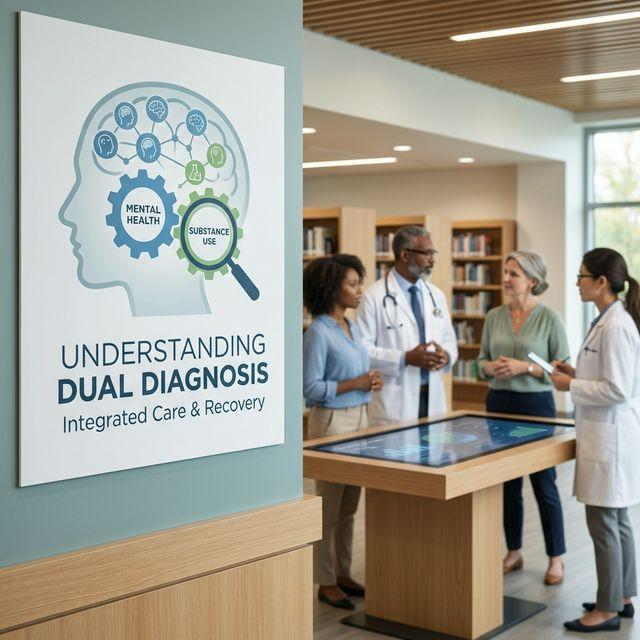
Overview
Dual diagnosis, also known as co-occurring disorders, refers to the simultaneous presence of a substance use disorder and one or more mental health conditions in the same individual. This combination is far more common than many people realize: according to the Substance Abuse and Mental Health Services Administration (SAMHSA), approximately 9.2 million adults in the United States have co-occurring mental health and substance use disorders. Despite its prevalence, dual diagnosis remains widely misunderstood, frequently underdiagnosed, and inadequately treated. Many treatment programs address either addiction or mental health but fail to treat both conditions simultaneously, leading to a cycle of incomplete recovery and relapse. At Trust SoCal, our JCAHO-accredited program specializes in integrated dual diagnosis treatment, meaning that both the substance use disorder and the co-occurring mental health condition are treated concurrently by a coordinated clinical team. We understand that addiction and mental illness are deeply interconnected, that one often drives or worsens the other, and that sustainable recovery requires addressing both conditions at their roots. This guide explains what dual diagnosis is, why it matters, which mental health conditions most commonly co-occur with addiction, how integrated treatment works, and what you should look for in a dual diagnosis treatment program. If you or a loved one is struggling with both addiction and mental health challenges, call (949) 280-8360 to learn about our comprehensive dual diagnosis treatment services.