
Key Takeaways
- San Diego County has one of the highest rates of substance abuse in California, with particular challenges related to methamphetamine, fentanyl, and alcohol.
- Treatment options in San Diego County include public programs through the county Behavioral Health Services system, Medi-Cal providers, and private treatment centers.
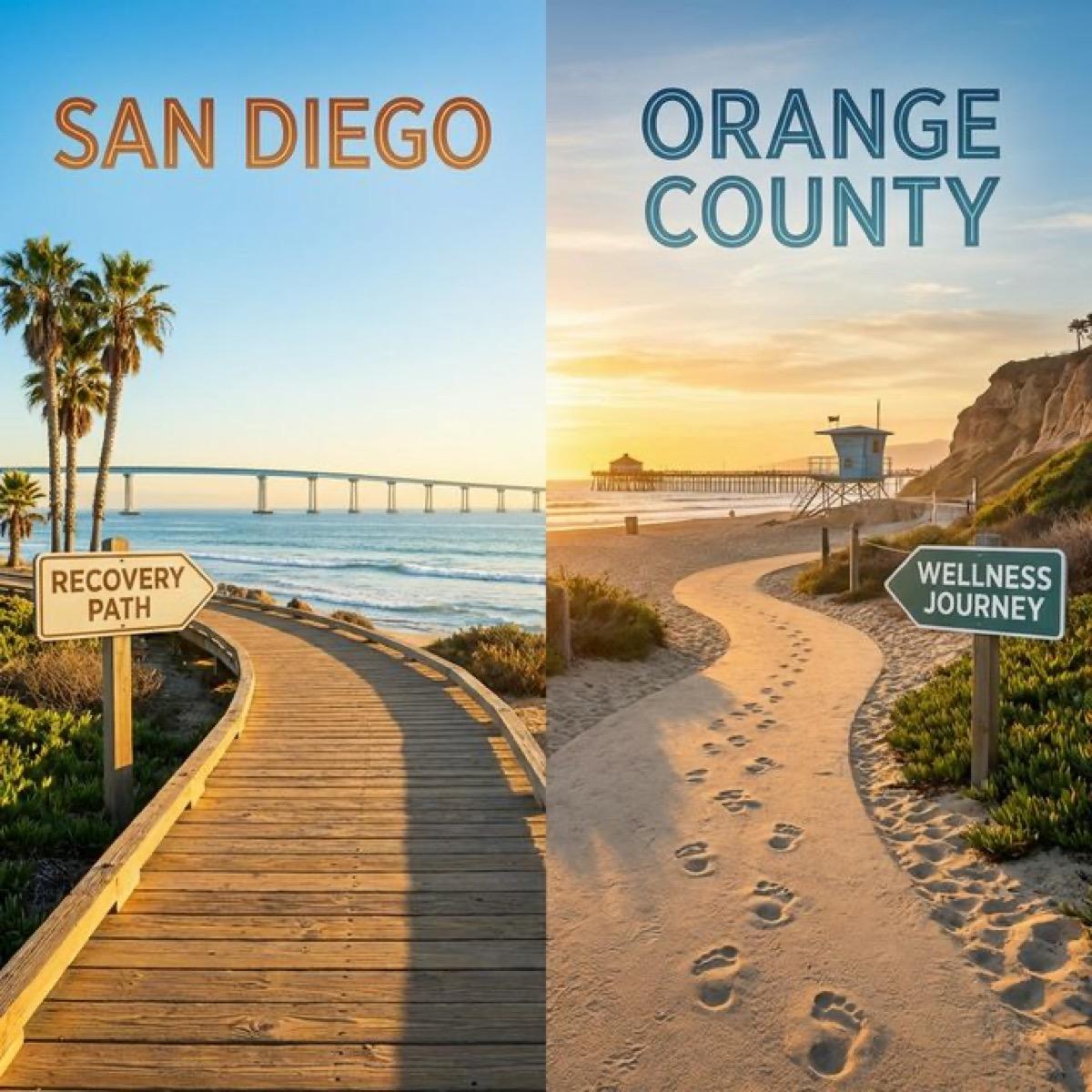
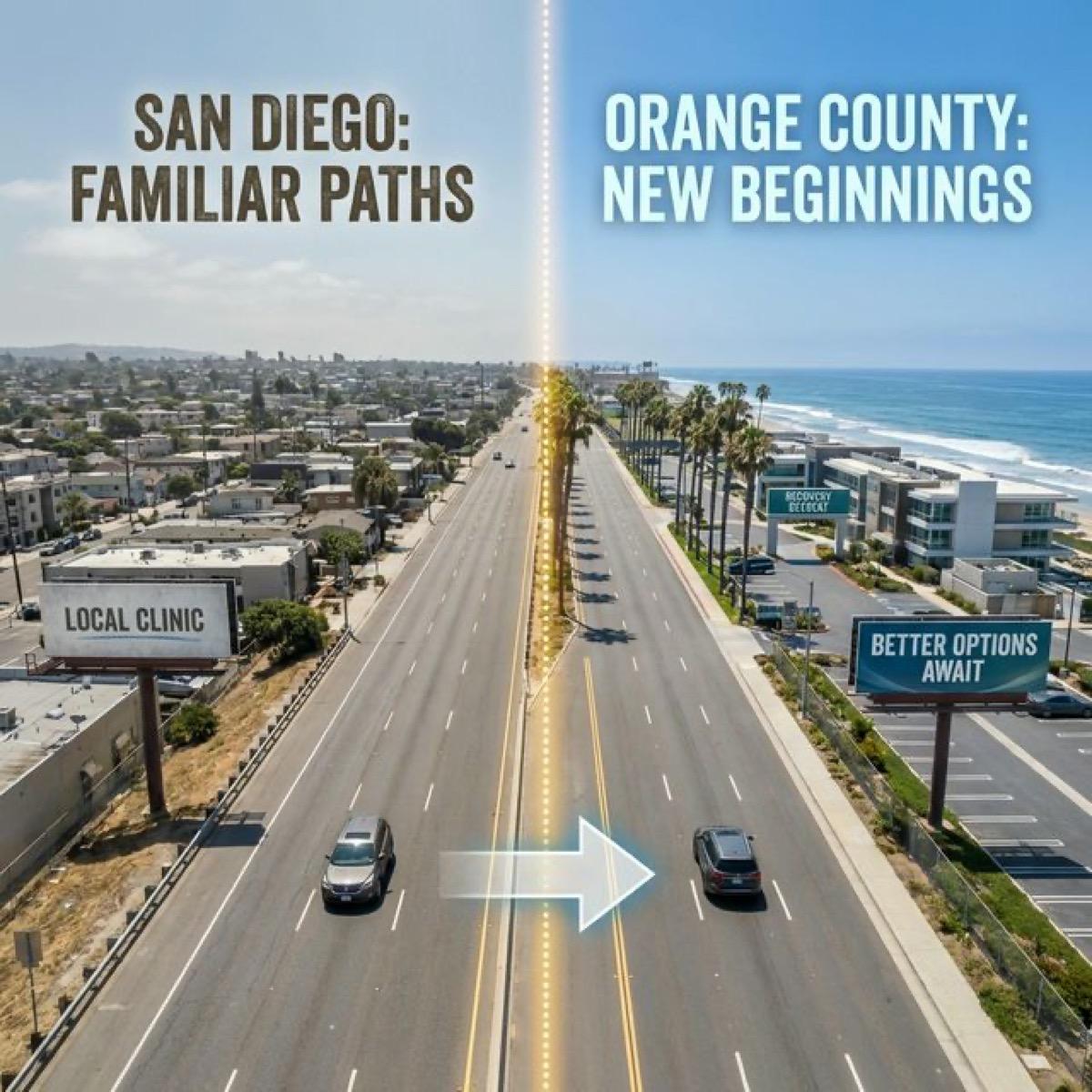
- Many San Diego residents choose to attend rehab in Orange County, approximately 75 miles north, to gain geographic distance from their using environment and access a different recovery community.
- Leaving your familiar environment for treatment can significantly reduce exposure to triggers, people, and places associated with substance use during the critical early phase of recovery.
- Trust SoCal in Fountain Valley, Orange County, regularly serves clients from San Diego County and provides assistance with transportation logistics for admissions.
- Whether you choose local treatment or travel to Orange County, the most important factor is selecting a program with licensed staff, evidence-based methods, and comprehensive aftercare planning.
The Addiction Treatment Landscape in San Diego County
San Diego County, home to approximately 3.3 million residents, faces substantial addiction challenges that reflect broader trends across Southern California while also presenting unique local dynamics. Understanding the addiction treatment landscape in San Diego County helps residents and families make informed decisions about where and how to seek help.
According to the San Diego County Health and Human Services Agency, substance use disorders affect tens of thousands of county residents annually. The region sits along the U.S.-Mexico border, which influences the availability and types of substances commonly encountered. Methamphetamine, fentanyl-laced opioids, alcohol, and marijuana are the most prevalent substances of abuse in the county.
Despite these challenges, San Diego County has a robust treatment infrastructure that includes county-operated programs, nonprofit providers, private treatment centers, and academic medical center affiliations. Residents seeking addiction treatment in San Diego County have more options than most parts of the country, though navigating these options effectively requires guidance.
The San Diego County Medical Examiner's Office reported a significant increase in fentanyl-related deaths over the past five years, underscoring the urgency of accessible, effective addiction treatment throughout the county.
San Diego County Addiction Statistics and Common Substances
Understanding the specific substances driving addiction in San Diego County provides context for the types of treatment most needed in the region. Each substance presents unique clinical challenges that influence treatment approaches and outcomes.
Methamphetamine
San Diego County has historically had one of the highest rates of methamphetamine use in the nation, driven in part by geographic proximity to manufacturing and trafficking routes. Methamphetamine addiction requires specialized treatment approaches including extended residential stays, cognitive remediation, contingency management, and careful psychiatric evaluation for stimulant-induced psychosis.
Fentanyl and Opioids
The opioid crisis has hit San Diego County particularly hard, with fentanyl-related overdoses increasing dramatically in recent years. Fentanyl is now found in counterfeit pills, heroin, and even methamphetamine and cocaine, making overdose risk pervasive across substance types. Treatment for opioid use disorder typically includes medication-assisted treatment with buprenorphine, methadone, or naltrexone alongside psychotherapy.
Alcohol
Alcohol remains the most commonly abused substance in San Diego County and throughout California. The region's vibrant social scene, craft brewery culture, and tourism industry normalize heavy drinking in ways that can mask alcohol use disorders. Alcohol addiction treatment typically begins with medically supervised detox followed by residential or outpatient rehabilitation.
Addiction Treatment Options Within San Diego County
San Diego County offers a range of addiction treatment options across the full continuum of care. Public, private, and nonprofit providers serve the community with varying levels of accessibility, cost, and specialization.
The San Diego County Behavioral Health Services department coordinates publicly funded substance use disorder treatment through a network of contracted providers. Residents can access services by calling the Access and Crisis Line at (888) 724-7240 for assessment, referral, and authorization. Services include outpatient counseling, intensive outpatient programs, residential treatment, detoxification, medication-assisted treatment, and recovery support services.
Private treatment centers in San Diego County accept commercial insurance and offer a broader range of amenities and specialized programming. These programs typically have shorter wait times and lower client-to-staff ratios compared to publicly funded options. Major insurance plans, including most PPO plans, provide coverage for addiction treatment at private facilities throughout the county.
- County-funded programs through Behavioral Health Services: Free or low-cost for eligible residents
- Medi-Cal managed care providers: No-cost treatment through Community Health Group and other plans
- Private treatment centers: Insurance-covered programs with shorter wait times
- VA healthcare system: Free treatment for eligible veterans through the VA San Diego Healthcare System
- Nonprofit providers: Sliding scale and scholarship programs through organizations like McAlister Institute and Family Health Centers
Why Some San Diego Residents Choose Orange County for Rehab
While San Diego County has quality treatment options, a significant number of SD residents choose to attend addiction treatment in Orange County, approximately 75 miles to the north. This decision is driven by several clinical and practical considerations that can meaningfully impact recovery outcomes.
Geographic distance from the using environment is one of the most frequently cited reasons. When a person enters treatment in the same county where they used substances, the proximity to dealers, using friends, familiar bars, and trigger locations creates a constant psychological pull. Even during residential treatment, the knowledge that these elements are just a short drive away can undermine the sense of safety and separation that early recovery requires.
The change-of-environment principle is well-supported by addiction research. Contextual cues, including people, places, and routines associated with substance use, can trigger powerful cravings that override even strong motivation to remain sober. By removing yourself from these contextual triggers, you give your brain the opportunity to form new associations and patterns in a neutral setting.
Orange County also offers one of the most concentrated and well-established recovery communities in the world. The density of treatment centers, sober living homes, twelve-step meetings, and recovery-oriented social activities creates an ecosystem that supports every phase of recovery. For San Diego residents who may have exhausted local recovery resources or who want a fresh start, this ecosystem provides invaluable support.
Many of our San Diego clients tell us that the physical distance from their home county gave them the mental space they needed to focus entirely on recovery without the constant pull of their old life.
— Christina Morales, CADC, Admissions Director at Trust SoCal
Benefits of Traveling to Orange County for Treatment
Beyond geographic distance, Orange County offers several specific advantages that attract San Diego residents seeking addiction treatment.
Concentration of Treatment Resources
Orange County has one of the highest densities of accredited addiction treatment facilities in the nation. This concentration drives competition, innovation, and quality improvement across the treatment landscape. San Diego residents who travel to OC benefit from a treatment market that consistently attracts top clinical talent and invests in evidence-based programming.
Strong Recovery Community
The recovery community in Orange County, particularly in cities like Costa Mesa, Huntington Beach, and Newport Beach, is among the most active and supportive in the country. Hundreds of twelve-step meetings, alternative recovery groups, sober social events, and alumni networks create a community that many individuals credit as essential to their long-term sobriety.
Seamless Transition to Sober Living
Orange County offers extensive sober living options for individuals who want to continue their recovery in a structured, supportive environment after completing residential treatment. The ability to step down from residential treatment to sober living within the same community, maintaining the same therapist, support group connections, and recovery peers, creates a continuity of care that supports long-term outcomes.
Trust SoCal: Serving San Diego County Residents
Trust SoCal in Fountain Valley, Orange County, regularly serves clients from throughout San Diego County. Our facility is located approximately 75 miles north of downtown San Diego, a distance that provides meaningful geographic separation while remaining accessible for family visits and involvement in the treatment process.
We understand that the decision to travel for treatment adds a layer of complexity to an already difficult situation. Our admissions team provides transportation coordination assistance, helping San Diego residents arrange travel to our facility. We also facilitate family therapy sessions through both in-person visits and telehealth technology to ensure that family involvement remains a central part of treatment regardless of distance.
Our comprehensive treatment program includes medical detox, residential treatment, partial hospitalization, intensive outpatient programs, and robust aftercare planning. We accept most major PPO insurance plans and provide free insurance verification to help San Diego families understand their coverage before committing to treatment.
If you or a loved one in San Diego County is struggling with addiction, Trust SoCal can help. Call (949) 280-8360 for a free, confidential consultation. Our admissions team is available 24 hours a day to answer your questions and help you take the first step toward recovery.
San Diego residents considering treatment at Trust SoCal can complete their insurance verification and clinical assessment by phone before traveling. This allows us to have a personalized treatment plan ready for your arrival, minimizing transition time and maximizing clinical benefit from day one.
Madeline Villarreal, Counselor
Counselor