Key Takeaways
- Both San Diego and Orange County offer high-quality addiction treatment with distinct advantages.
- Geographic distance from triggers and substance-using networks improves early recovery outcomes.
- Orange County offers a high concentration of specialized, accredited treatment facilities.
- The I-5 corridor makes travel between San Diego and Orange County convenient for families.
- Insurance coverage is generally portable between counties for PPO plan holders.
San Diego vs. Orange County Rehab: A Comprehensive Comparison
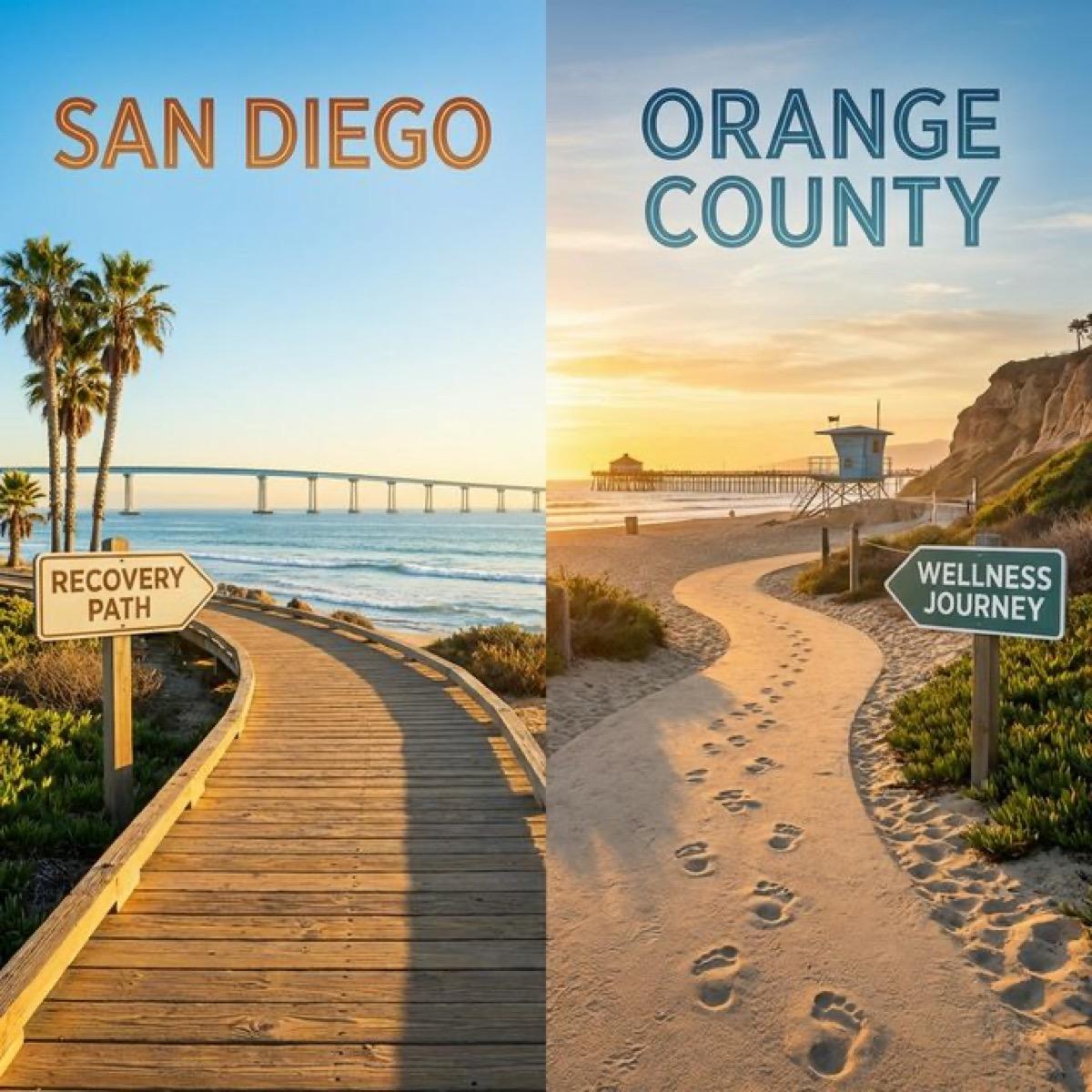
San Diego vs. Orange County rehab is one of the most common comparisons Southern California residents make when exploring addiction treatment options. Both regions offer world-class facilities, experienced clinical teams, and the therapeutic benefits of the Southern California climate. Understanding the differences between these two treatment markets can help individuals and families make the most informed decision possible.
San Diego County's treatment landscape has grown substantially, with over two hundred licensed facilities offering services from medical detox through outpatient aftercare. Orange County, particularly the Fountain Valley, Costa Mesa, and Newport Beach corridor, has developed a national reputation for addiction treatment excellence with one of the highest concentrations of accredited facilities in the country.
The right choice depends on individual clinical needs, insurance coverage, personal preferences, and the role that geographic distance plays in supporting recovery. This guide examines the key factors that differentiate these two regions to help you determine which setting best serves your path to lasting sobriety.
Treatment Availability and Specialization
San Diego County's large population and military presence have shaped its treatment landscape toward programs addressing alcohol use disorder, opioid addiction, and co-occurring PTSD. The presence of multiple military installations means that veteran-specific programming is more widely available than in most regions, and the county's behavioral health system provides robust Medi-Cal-funded services.
Orange County has earned its reputation as a premier destination for addiction treatment through a combination of clinical innovation, facility quality, and specialized programming. The region offers an especially high concentration of dual-diagnosis programs, executive and professional treatment tracks, and holistic approaches that integrate evidence-based therapies with wellness-oriented modalities.
Clinical Quality Indicators
When comparing treatment quality between regions, look at accreditation rates, staff credentials, evidence-based modality adoption, and outcome tracking practices. Both San Diego and Orange County have facilities that meet the highest clinical standards, though Orange County's competitive treatment market has driven particularly high rates of Joint Commission and CARF accreditation among its providers.
Trust SoCal in Fountain Valley exemplifies the clinical quality available in Orange County, offering board-certified addiction medicine physicians, licensed therapists with specialized training in dual diagnosis, and a comprehensive continuum of care from medical detox through outpatient aftercare.
Program Variety and Innovation
Orange County treatment centers tend to offer broader menus of therapeutic modalities including neurofeedback, experiential therapies, and cutting-edge pharmacological interventions. The competitive nature of the Orange County treatment market incentivizes innovation and continuous improvement in ways that benefit clients seeking the most current approaches to addiction care.
San Diego facilities, while generally offering standard evidence-based approaches, have particular strengths in trauma-informed care for military populations, culturally responsive programming for diverse communities, and community-based outpatient services that integrate well with the region's robust recovery community.
The Evidence for Geographic Distance in Recovery
One of the most compelling reasons San Diego residents consider Orange County rehab is the therapeutic benefit of geographic distance. Research in addiction medicine consistently shows that removing individuals from environments associated with substance use reduces cue-triggered cravings, limits access to dealers and drinking companions, and provides the psychological fresh start that supports meaningful behavioral change.
The concept of "people, places, and things" is foundational in recovery, and attending treatment outside your home community addresses all three. In a new location, you are less likely to encounter the social networks, hangout spots, and routines that reinforced substance use, giving you space to develop new patterns without constant environmental triggers.
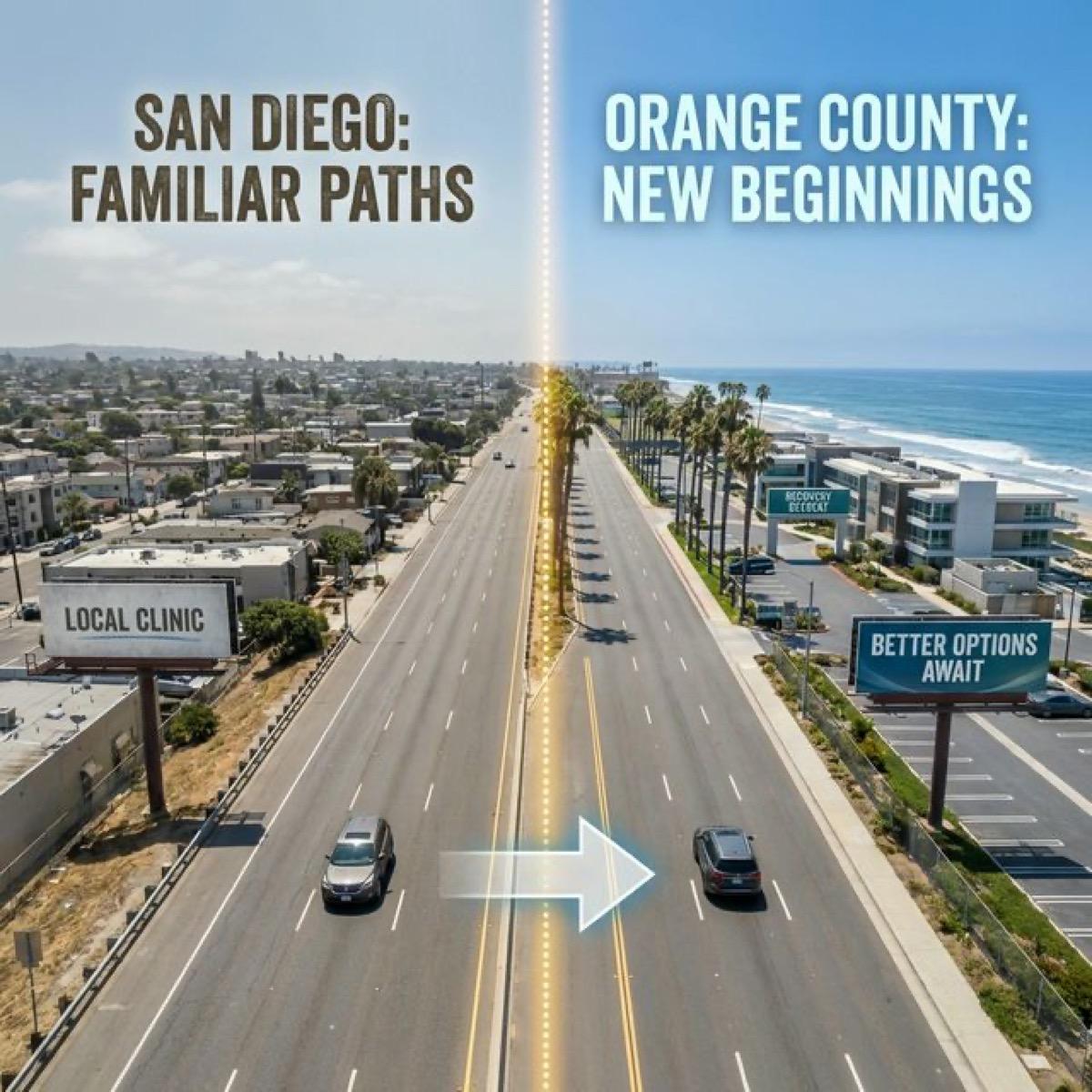
The I-5 corridor between San Diego and Orange County makes this geographic distance therapeutic rather than burdensome. The ninety-minute drive is short enough to allow regular family participation in treatment programming while being far enough to create genuine separation from triggering environments in San Diego neighborhoods like Pacific Beach, Hillcrest, or North Park.
A 2019 study published in the Journal of Substance Abuse Treatment found that individuals who received treatment more than 25 miles from their home zip code had significantly higher rates of program completion compared to those treated locally.
Cost Comparison Between Regions
Treatment costs in both San Diego and Orange County vary widely based on the level of care, facility amenities, and program duration. Generally, residential treatment in Orange County can be slightly higher in cost due to the region's premium real estate and facility standards, though this is offset by the high clinical quality and comprehensive services provided.
Insurance coverage is the primary cost determinant for most families. PPO plans provide coverage regardless of which county the treatment facility is located in, making out-of-county care financially accessible. HMO plans may have more geographic restrictions, though many still cover out-of-area treatment when clinical necessity is documented.
For individuals with Medi-Cal, San Diego County's Drug Medi-Cal system provides access to local treatment services. While Medi-Cal coverage at out-of-county facilities may require additional authorization, the process is achievable with proper coordination between county behavioral health departments.
Family Involvement and Proximity
Family involvement in treatment significantly improves outcomes, and the distance between San Diego and Orange County is manageable for regular family participation. Most treatment programs offer weekly family therapy sessions, and the ninety-minute drive along I-5 allows San Diego families to attend in person while also offering virtual participation options for those who cannot make every session.
Some San Diego families find that the moderate distance actually improves family dynamics during treatment. It allows both the individual in treatment and their family members the space to focus on their respective healing processes without the temptation of premature contact or the friction that can arise from excessive proximity during early recovery.
Virtual Family Programming
The expansion of telehealth has made family involvement in treatment more accessible than ever. Trust SoCal offers virtual family therapy sessions, online family education workshops, and secure video visitation options that allow San Diego families to maintain therapeutic engagement even when travel is challenging.
Virtual programming does not replace the value of in-person family sessions but provides valuable supplementary connection points that keep families involved throughout the treatment process. This hybrid approach ensures that distance never becomes a barrier to the family healing that is essential for sustained recovery.
Aftercare and Continuing Care Considerations
Aftercare planning should begin well before treatment concludes, regardless of which county you choose. Individuals treated in Orange County who plan to return to San Diego should have a detailed aftercare plan that includes local outpatient providers, recovery meeting locations, sober living options if needed, and connections to San Diego's recovery community established before discharge.
Trust SoCal's clinical team specializes in creating seamless transitions for clients returning to San Diego after treatment. This includes warm referrals to trusted San Diego outpatient providers, introductions to appropriate recovery meetings and sober living communities, and ongoing alumni support that bridges the geographic gap between treatment and home.
For those who find that Orange County's environment supports their recovery, some individuals choose to remain in the region after treatment, transitioning to sober living in Costa Mesa, Huntington Beach, or other Orange County communities before eventually returning home or establishing new roots in the area.
Before starting treatment, ask the facility about their specific aftercare planning process for out-of-county clients. A quality program will have established referral relationships with providers in your home county.
Making Your Decision
The choice between San Diego and Orange County rehab ultimately comes down to individual needs and circumstances. If you are a veteran seeking military-specific programming, San Diego's VA system and veteran-focused private facilities may be the best fit. If you need the therapeutic distance of out-of-community treatment combined with cutting-edge clinical approaches, Orange County facilities like Trust SoCal offer compelling advantages.
Both regions provide the foundational elements of effective addiction treatment: evidence-based therapies, qualified clinical staff, structured environments, and the Southern California climate that supports outdoor wellness activities. The most important factor is choosing a program that aligns with your clinical needs and gives you the best chance at lasting recovery.
Trust SoCal's admissions team can help you evaluate your options, understand your insurance coverage in both regions, and determine whether the therapeutic distance of Orange County treatment is right for your specific situation. The call is free, confidential, and carries no obligation.

Rachel Handa, Clinical Director
Clinical Director & Therapist