
Key Takeaways
- CBT is one of the most extensively researched and validated therapies for substance use disorders.
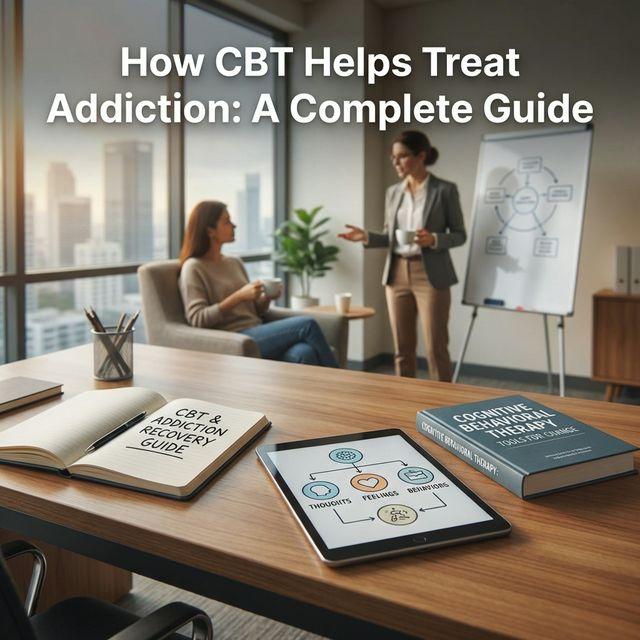
- The core principle of CBT is that thoughts influence feelings, which influence behaviors, and changing thought patterns can change addictive behaviors.
- Skills learned in CBT, such as cognitive restructuring and behavioral activation, are practical tools that clients use daily after treatment.
- CBT is effective for both addiction and co-occurring disorders like depression and anxiety.
- Research shows CBT produces durable effects that persist after therapy ends, unlike some other interventions.
What Is Cognitive-Behavioral Therapy?
Cognitive-behavioral therapy, commonly known as CBT, is a structured, goal-oriented form of psychotherapy that focuses on the relationship between thoughts, feelings, and behaviors. Developed by Dr. Aaron Beck in the 1960s, CBT is based on the cognitive model, which proposes that our emotional reactions and behaviors are not caused directly by events but by our interpretation of those events. When those interpretations are distorted or irrational, they lead to problematic emotional and behavioral responses, including substance use.
In the context of addiction treatment, CBT helps clients identify the specific thought patterns, beliefs, and behavioral habits that maintain their substance use. For example, a person might believe that they cannot handle social situations without alcohol (a cognitive distortion called fortune telling), which drives them to drink every time they are invited to a social event. CBT would help this person examine the evidence for and against this belief, develop alternative thoughts, and practice attending social events without alcohol.
CBT is one of the most extensively researched therapies in the history of psychology, with hundreds of randomized controlled trials demonstrating its effectiveness for substance use disorders, depression, anxiety, PTSD, and numerous other conditions. At Trust SoCal in Fountain Valley, CBT is a core component of the clinical programming provided to every client.
How CBT Addresses Addiction
Addiction involves deeply ingrained patterns of thought and behavior that have been reinforced through repeated substance use. CBT targets these patterns at their source by teaching clients to recognize the automatic thoughts and cognitive distortions that precede substance use. Common cognitive distortions in addiction include all-or-nothing thinking ("I already slipped, so I might as well use all weekend"), catastrophizing ("I cannot survive this craving"), and minimization ("One drink will not hurt anything").
The therapeutic process involves several key components. Functional analysis is the process of examining each episode of substance use to identify the triggers, thoughts, feelings, and consequences associated with it. This analysis helps clients understand the chain of events that leads to use and identifies specific points where the chain can be interrupted. Skills training then equips clients with practical coping strategies to use at each intervention point.
One of the most powerful aspects of CBT for addiction is its emphasis on behavioral experiments. Rather than simply talking about change, CBT encourages clients to test their beliefs in real-world situations. A client who believes they will be unable to resist cravings might be assigned to visit a triggering environment with support and observe what actually happens. These experiments provide direct evidence that challenges addictive thinking and builds confidence in recovery.
The ABC model in CBT stands for Activating event, Belief about the event, and Consequence (emotional and behavioral). By changing the Belief (B), you change the Consequence (C), even when the Activating event (A) remains the same.
What to Expect in CBT Sessions
CBT sessions are structured and collaborative. Each session typically begins with a brief check-in and mood assessment, followed by a review of homework from the previous session. The therapist and client then work together on a specific skill or issue using techniques like cognitive restructuring, behavioral activation, or exposure. Sessions conclude with a summary of key takeaways and a homework assignment to practice the skills discussed.
Homework is a critical component of CBT because the skills only become effective through practice. Assignments might include keeping a thought record to track automatic thoughts and their associated emotions, practicing a relaxation technique daily, or engaging in a behavioral experiment like attending a social event without drinking. Clients who complete homework consistently tend to progress faster and maintain gains longer than those who do not.
A typical course of CBT in addiction treatment involves two to three individual sessions per week over the course of the treatment stay, supplemented by CBT-informed group therapy. Trust SoCal in Orange County incorporates CBT principles throughout its group programming, including relapse prevention groups, coping skills groups, and psychoeducation sessions that teach clients to identify and challenge cognitive distortions.
CBT Techniques Used in Addiction Treatment
Several specific CBT techniques have proven particularly effective for addiction. Cognitive restructuring involves identifying a negative automatic thought, examining the evidence for and against it, and developing a more balanced alternative thought. For example, the thought "I am a failure because I relapsed" might be restructured to "Relapse is a common part of recovery, and I can learn from this experience to strengthen my recovery plan."
Behavioral activation combats the withdrawal, isolation, and anhedonia that often accompany early recovery by scheduling pleasurable and meaningful activities that provide natural rewards. When the brain is no longer receiving artificial dopamine from substances, it needs alternative sources of pleasure and satisfaction. Behavioral activation creates those alternative reward pathways.
Coping skills training teaches specific strategies for managing cravings, difficult emotions, and high-risk situations without resorting to substance use. These include urge surfing, where the client observes a craving without acting on it and watches it peak and subside naturally; grounding techniques that redirect attention from cravings to present-moment sensory experience; and assertiveness training that helps clients refuse offers of substances without damaging relationships.
- 1Cognitive restructuring: Identify and challenge distorted thoughts that drive substance use.
- 2Behavioral activation: Schedule rewarding activities that provide natural sources of pleasure.
- 3Coping skills training: Develop practical strategies for managing cravings and triggers.
- 4Functional analysis: Examine the chain of events that leads to each substance use episode.
- 5Relapse prevention planning: Create detailed strategies for high-risk situations.
- 6Exposure and response prevention: Gradually face triggers while practicing new coping responses.
The Evidence Base for CBT in Addiction
The evidence supporting CBT for substance use disorders is robust and consistent. A comprehensive meta-analysis published in Clinical Psychology Review examined over 50 randomized controlled trials and concluded that CBT produced significant reductions in substance use across all major drug classes, including alcohol, cannabis, cocaine, opioids, and methamphetamine. The effect sizes were moderate to large and were maintained at follow-up assessments.
One of the most compelling findings is that CBT produces durable effects that persist and even strengthen after therapy ends. This is because CBT teaches skills rather than providing temporary symptom relief. Once a person has learned to identify cognitive distortions, challenge automatic thoughts, and apply coping strategies, these skills become internalized and continue to function independently of the therapeutic relationship. This durability distinguishes CBT from some other treatment modalities.
CBT has also demonstrated effectiveness when combined with other interventions. The combination of CBT and medication-assisted treatment produces better outcomes than either intervention alone for opioid and alcohol use disorders. Similarly, CBT paired with contingency management has shown enhanced effectiveness for stimulant use disorders. At Trust SoCal, CBT is integrated with multiple therapeutic modalities to create a comprehensive treatment experience.
CBT for Co-Occurring Addiction and Mental Health
One of the greatest strengths of CBT in addiction treatment is its versatility in addressing co-occurring conditions. The same cognitive model that explains addictive behavior also explains depression, anxiety, PTSD, and other mental health conditions. Depressive thinking involves cognitive distortions like negative self-evaluation and hopelessness. Anxiety involves distortions like catastrophizing and overestimation of threat. CBT can address all of these patterns within a unified therapeutic framework.
This versatility makes CBT an ideal primary therapy for clients with dual diagnosis. Rather than requiring separate therapists for addiction and mental health, a single clinician trained in CBT can address both conditions using the same core techniques adapted to each domain. This integrated approach produces better outcomes than parallel or sequential treatment because it recognizes the interconnection between substance use and mental health symptoms.
If you are struggling with both addiction and a mental health condition, Trust SoCal's clinical team in Orange County can determine how CBT and other evidence-based therapies can be tailored to your specific needs. Contact (949) 280-8360 for a confidential assessment.

Rachel Handa, Clinical Director
Clinical Director & Therapist