Key Takeaways
- Chicago offers a comprehensive treatment network including detox, residential, and outpatient programs at major medical centers and community-based providers throughout Cook County.
- Illinois Medicaid and most private insurance plans cover substance use disorder treatment, and the Illinois Helpline (1-833-2-FIND-HELP) provides free referrals to available programs statewide.
- Specialized treatment programs exist for diverse populations including Latino communities, LGBTQ+ individuals, veterans, adolescents, and justice-involved persons.
- Geographic distance from triggers and a healing climate lead many Chicago residents to seek treatment in Southern California, with direct flights from O'Hare and Midway making travel convenient.
- Building a recovery support network through 12-step groups, recovery community organizations, and sober living housing is essential for sustained sobriety after completing formal treatment.
- Trust SoCal in Fountain Valley, CA provides individualized treatment programs and assists Chicago-area residents with insurance verification and travel coordination at (949) 280-8360.
Understanding the Scope of Addiction in Chicago
Chicago, the third-largest city in the United States, faces addiction challenges as vast and complex as its sprawling metropolitan footprint. From the high-rise corridors of the Loop to the residential neighborhoods of Lakeview and Hyde Park, substance use disorders affect families across every zip code in Cook County. The Illinois Department of Human Services Division of Substance Use Prevention and Recovery (SUPR) reports that tens of thousands of Illinois residents seek treatment each year, with a significant concentration of need in the greater Chicago area. Understanding the full range of options available to those seeking recovery is the critical first step toward lasting sobriety.
The addiction landscape in Chicago is shaped by the city's size, diversity, and socioeconomic disparities. The South Side and West Side neighborhoods, including Englewood, Austin, and North Lawndale, have been disproportionately impacted by opioid and heroin use for decades. Meanwhile, the North Side and suburban Cook County communities have seen rising rates of prescription opioid misuse and alcohol use disorders that often go underreported. The CTA L train system, which connects neighborhoods from O'Hare on the Blue Line to the far reaches of the Red and Green Lines, also connects communities with vastly different levels of access to treatment resources.
Data from the Cook County Medical Examiner and the Illinois SUPR reveal that opioid-related overdose deaths in Chicago have remained stubbornly high, with fentanyl driving a significant share of fatalities. Polysubstance use involving cocaine, methamphetamine, and benzodiazepines combined with opioids has further complicated the clinical picture. Chicago's position as a major transportation hub, with interstate corridors including I-90/94, I-55, and I-290 feeding into the city from across the Midwest, also means that drug trafficking routes deliver illicit substances to local markets with alarming efficiency.
If you or someone you love is experiencing a drug overdose or psychiatric emergency, call 911 immediately. Illinois Good Samaritan laws protect individuals who call for help during an overdose from prosecution for drug possession. For non-emergency treatment guidance, contact Trust SoCal at (949) 280-8360.
Types of Drug Rehab Programs Available in Chicago
Chicago's treatment ecosystem includes virtually every level of care defined by the American Society of Addiction Medicine (ASAM) criteria. Medical detoxification programs are available at major hospital systems including Rush University Medical Center, Northwestern Memorial Hospital, and Stroger Hospital, providing medically supervised withdrawal management for individuals dependent on opioids, alcohol, benzodiazepines, and other substances. These programs typically last between three and ten days and serve as the critical bridge between active use and ongoing treatment.
Residential treatment programs in the Chicago area range from short-term 28-day models to extended stays of 60 to 90 days or longer. Many residential programs are concentrated in the suburbs of Cook County and the surrounding collar counties, where facilities can offer campus-style environments with more space for therapeutic activities. Intensive outpatient programs (IOPs) and standard outpatient programs are widely available throughout the city, including in neighborhoods like Wicker Park, Lakeview, and the Near West Side, allowing participants to attend structured therapy sessions while maintaining work, school, or family commitments.
Key Treatment Modalities Offered in Chicago
Chicago-area treatment facilities offer a wide range of evidence-based clinical modalities designed to address the complex factors underlying addiction. The diversity of approaches available reflects the city's position as a major medical and academic center with deep expertise in behavioral health.
- Medication-assisted treatment (MAT) using buprenorphine (Suboxone), methadone, and naltrexone (Vivitrol) for opioid use disorders, available through federally certified opioid treatment programs and office-based prescribers across Cook County
- Cognitive-behavioral therapy (CBT) and dialectical behavior therapy (DBT), which are foundational components of most evidence-based programs in the Chicago area and help clients identify and restructure maladaptive thought patterns driving substance use
- Trauma-informed care models incorporating EMDR (Eye Movement Desensitization and Reprocessing) and somatic experiencing, particularly important given Chicago's high rates of community violence and adverse childhood experiences
- Holistic and integrative approaches including mindfulness meditation, yoga therapy, art therapy, and equine-assisted therapy, which are increasingly available at private treatment centers in suburban Cook County and collar counties
- Family therapy and systemic interventions that engage partners, parents, and children in the recovery process, recognizing that addiction affects entire family systems rather than isolated individuals
Navigating the Public Treatment System in Cook County
For uninsured and Medicaid-enrolled residents, the public treatment system in Cook County serves as the primary gateway to addiction services. The Cook County Health system, which includes Stroger Hospital and a network of community health centers, offers detoxification, outpatient counseling, and medication-assisted treatment at reduced or no cost. The Illinois SUPR funds a network of community-based providers throughout Chicago that accept state funding and serve individuals regardless of their ability to pay, though demand for these services frequently exceeds available capacity.
Accessing public treatment in Chicago often requires patience and persistence. Wait times for residential beds can stretch from days to weeks, particularly for specialized populations such as pregnant women, adolescents, and individuals with severe co-occurring mental illness. The Illinois Helpline at 1-833-2-FIND-HELP serves as a centralized intake and referral resource, connecting callers with available treatment slots across the state. Community health workers and recovery coaches stationed at hospitals, courts, and social service agencies throughout Chicago can also help individuals navigate the system and find appropriate placements.
The Illinois Helpline for Opioids and Other Substances (1-833-2-FIND-HELP) provides free, confidential referrals to treatment programs throughout the state 24 hours a day, 7 days a week. Specialists can assist with identifying programs that accept Medicaid, sliding-scale fees, or state-funded beds.
Private and Insurance-Based Treatment Options
Chicago residents with private insurance or employer-sponsored health plans have access to a broader range of treatment options, including luxury residential programs, boutique outpatient practices, and specialized programs for professionals, executives, and first responders. The Mental Health Parity and Addiction Equity Act requires most insurance plans to cover substance use disorder treatment at levels comparable to medical and surgical benefits, meaning that many Chicagoans have more robust coverage than they realize. Verifying benefits before admission is essential, and most reputable treatment centers will conduct a complimentary insurance verification on behalf of prospective clients.
The availability of in-network providers varies significantly by insurance carrier and plan type. Blue Cross Blue Shield of Illinois, the state's largest insurer, maintains a wide network of addiction treatment providers. Aetna, Cigna, UnitedHealthcare, and Humana also cover treatment at various facilities throughout the Chicago metropolitan area. For individuals whose local in-network options are limited or who seek specialized programming not available in Chicago, out-of-network benefits may cover treatment at facilities in other states, including Southern California programs that offer unique clinical approaches and therapeutic environments.
Before committing to any treatment program, contact your insurance provider to verify your specific benefits for substance use disorder treatment. Ask about coverage for detox, residential, and outpatient levels of care, as well as any pre-authorization requirements. Trust SoCal can also help verify your insurance benefits at no cost. Call (949) 280-8360 to speak with an admissions specialist.
Specialized Populations and Treatment Needs
Chicago's diversity necessitates treatment programs that are culturally responsive and tailored to the unique needs of specific populations. The city's large Latino community, concentrated in neighborhoods like Pilsen, Little Village, and Humboldt Park, benefits from bilingual and bicultural treatment programs that address cultural factors influencing substance use and recovery. African American communities on the South and West Sides require programs that understand the intersection of systemic racism, community violence, and addiction, and that incorporate culturally relevant healing practices alongside evidence-based clinical interventions.
LGBTQ+ individuals in Chicago, particularly those in neighborhoods like Boystown in Lakeview, face elevated rates of substance use disorders driven by minority stress, discrimination, and social isolation. Gender-specific programming for women, including trauma-informed care that addresses domestic violence and sexual assault, is available at several Chicago-area facilities. Veterans returning from service can access addiction treatment through the Jesse Brown VA Medical Center on the Near West Side, which offers specialized programming for combat-related PTSD and co-occurring substance use disorders.
Populations Requiring Specialized Treatment Approaches
Treatment programs serving specialized populations in Chicago must account for the distinct clinical presentations, cultural contexts, and systemic barriers facing each group. Effective matching of individuals to appropriate programs significantly improves treatment engagement and outcomes.
- Adolescents and young adults ages 12 to 25 who need developmentally appropriate treatment that addresses peer influence, academic disruption, family dynamics, and identity formation during critical developmental periods
- Pregnant and postpartum women who require integrated obstetric and addiction care, including MAT protocols that are safe during pregnancy and breastfeeding, with postpartum support to prevent relapse during the vulnerable early parenting period
- Individuals with co-occurring serious mental illness such as schizophrenia, bipolar disorder, or severe PTSD who need integrated dual-diagnosis treatment from providers trained in both psychiatric and addiction medicine
- Justice-involved individuals transitioning from Cook County Jail or Illinois Department of Corrections facilities who need immediate linkage to community-based treatment to reduce recidivism and support successful reentry
Why Some Chicago Residents Seek Treatment in Southern California
Despite Chicago's extensive treatment infrastructure, a growing number of Cook County residents choose to pursue recovery in Southern California. The reasons are both practical and therapeutic. Chicago's harsh winters can exacerbate depression and isolation during early recovery, when emotional resilience is at its lowest. Southern California's mild Mediterranean climate allows for year-round outdoor therapeutic activities including beach walks, hiking, surfing therapy, and equestrian programs that promote physical fitness, mindfulness, and emotional regulation in ways that indoor-only programming cannot replicate.
Geographic distance from the people, places, and routines associated with active use is another powerful motivator. For many Chicagoans, the triggers embedded in their daily environments, from the corner where they used to buy drugs to the bar where they drank every night, are constant threats to early sobriety. Traveling to Southern California creates a clean break that allows individuals to focus entirely on their recovery without the distraction of familiar cues and enabling relationships. The three-hour flight from O'Hare or Midway to Southern California is direct and manageable, making the logistical barrier relatively low.
Trust SoCal, located at 16537 Elm Cir in Fountain Valley, California, has helped numerous Chicago-area residents find lasting recovery in Orange County's supportive environment. The program offers individualized treatment plans that integrate evidence-based clinical therapies with holistic wellness practices, all within a community-oriented setting that fosters genuine connection and accountability. Chicago residents interested in exploring out-of-state treatment can contact Trust SoCal at (949) 280-8360 for a confidential consultation and complimentary insurance verification.
I tried three different programs in Chicago before I finally went to California. Getting away from the city, the cold, and the people I used with gave me the space I needed to actually work on myself. It was the best decision I ever made for my recovery.
— Former Trust SoCal client from Cook County
Building a Recovery Support Network in Chicago
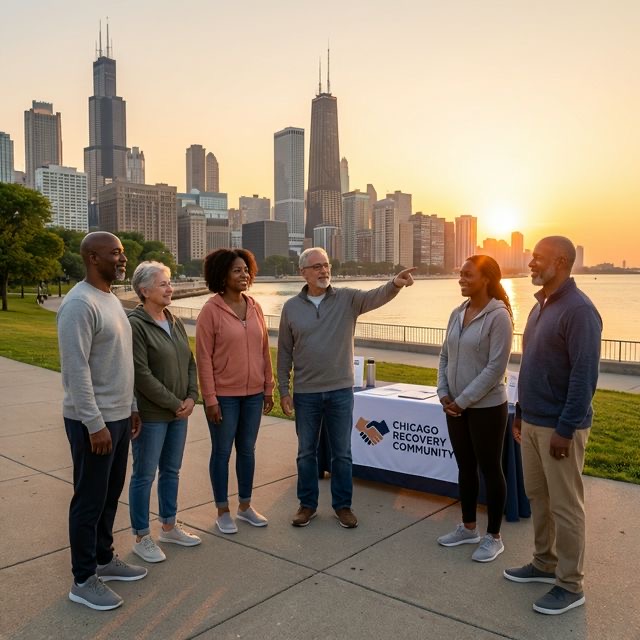
Whether an individual completes treatment locally or returns to Chicago after an out-of-state program, building a strong recovery support network is essential for sustained sobriety. Chicago has one of the most active 12-step communities in the country, with Alcoholics Anonymous and Narcotics Anonymous meetings held in churches, community centers, and clubhouses across every neighborhood. The Chicagoland AA Intergroup website lists hundreds of meetings weekly, from early morning gatherings in the Loop to late-night meetings in Wicker Park and Logan Square. SMART Recovery, Refuge Recovery, and other non-12-step alternatives are also available throughout the city.
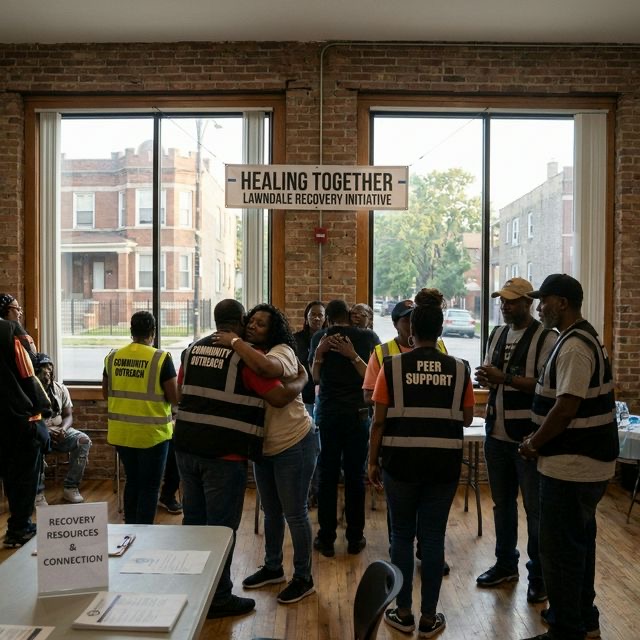
Recovery community organizations (RCOs) in Chicago provide sober social activities, peer mentorship, employment assistance, and housing support that complement formal treatment. Oxford Houses, which are self-supporting sober living residences, operate in multiple Chicago neighborhoods and suburbs, offering affordable, substance-free housing for individuals in early recovery. Recovery coaches and peer support specialists, many of whom are themselves in long-term recovery, can be accessed through community health centers, hospitals, and social service agencies across Cook County.
Essential Recovery Resources in Chicago
A robust network of recovery support organizations operates throughout the Chicago metropolitan area, providing the ongoing community connections that research shows are essential for sustained sobriety. Connecting with these resources early in the recovery process significantly improves long-term outcomes.
- Chicagoland AA Intergroup and Chicago Area NA provide meeting directories, helplines, and sponsorship connections for individuals seeking 12-step fellowship support throughout the metropolitan area
- The Chicago Recovery Alliance operates harm reduction services including naloxone distribution, syringe exchange, and recovery support across multiple South and West Side locations
- NAMI Chicago (National Alliance on Mental Illness) offers support groups and educational programs for individuals and families navigating co-occurring mental health and substance use conditions
- The Illinois Association of Recovery Residences (IARR) certifies sober living homes that meet quality standards for safety, structure, and recovery support throughout the Chicago area
- Thresholds, one of the largest behavioral health providers in Illinois, operates multiple locations in Chicago offering integrated treatment for individuals with serious mental illness and substance use disorders
Steps to Start Your Recovery Journey in Chicago
Beginning the recovery process can feel overwhelming, especially in a city as large and complex as Chicago. The most important step is simply reaching out for help, whether that means calling the Illinois Helpline, visiting an emergency department, speaking with a primary care physician, or contacting a treatment center directly. Every major hospital in Chicago, including Rush, Northwestern, UIC, and Stroger, has protocols for identifying and referring individuals with substance use disorders, and many have addiction medicine specialists on staff who can initiate treatment or facilitate transfers to appropriate programs.
For those considering treatment outside of Chicago, the process typically begins with a phone consultation during which an admissions specialist gathers information about the individual's substance use history, mental health status, insurance coverage, and treatment preferences. Trust SoCal's admissions team can be reached at (949) 280-8360 and is available to answer questions, verify insurance benefits, and coordinate travel arrangements for Chicago residents seeking treatment in Southern California. The team understands the unique challenges facing Midwestern residents and provides compassionate, knowledgeable guidance throughout the admissions process.
If you or someone you know is in crisis, call 911 for overdose emergencies or the 988 Suicide and Crisis Lifeline for mental health crises. Illinois Good Samaritan laws protect individuals who call for help during an overdose from prosecution for drug possession.
The Future of Addiction Treatment in Chicago
Chicago is at the forefront of several emerging trends in addiction treatment that promise to improve outcomes for residents struggling with substance use disorders. The expansion of telehealth services, accelerated by the COVID-19 pandemic, has made it possible for individuals in underserved South and West Side neighborhoods to access counseling, psychiatric evaluation, and medication management without the transportation barriers that historically limited access to care. Mobile MAT clinics and street outreach teams are bringing medication-assisted treatment directly to communities with the highest overdose rates, meeting people where they are rather than waiting for them to navigate complex intake processes.
The integration of addiction treatment into primary care settings is another promising development, with federally qualified health centers throughout Chicago increasingly screening for substance use disorders and initiating treatment during routine medical visits. Recovery-oriented systems of care that provide long-term support rather than episodic treatment are gaining traction, supported by growing evidence that addiction is a chronic condition requiring ongoing management similar to diabetes or hypertension. As these innovations mature, Chicago has the potential to become a national model for urban addiction treatment delivery.
Policy changes at the state level, including expanded Medicaid coverage for substance use disorder treatment and criminal justice reform initiatives that divert individuals from incarceration to treatment, are creating new pathways to recovery for thousands of Illinois residents. The ongoing challenge is ensuring that these systemic improvements reach the communities most in need, particularly the predominantly Black and Latino neighborhoods on the South and West Sides that have borne the heaviest burden of the addiction crisis for generations.

Kristin Stevens, LCSW
Licensed Clinical Social Worker