Key Takeaways
- Veterans are twice as likely as civilians to develop substance use disorders due to combat trauma, chronic pain, and the challenges of military-to-civilian transition.
- PTSD and addiction frequently co-occur in veterans, requiring integrated dual-diagnosis treatment for effective recovery.
- VA healthcare benefits cover addiction treatment, and Tricare provides coverage for both in-network and approved out-of-network rehab facilities.
- Private rehab centers like Trust SoCal can offer shorter wait times and more individualized programming compared to VA facilities.
- Trauma-informed care that understands military culture is essential for veteran-specific addiction treatment.
- Medication-assisted treatment (MAT) is an evidence-based option for veterans struggling with opioid or alcohol use disorders.
Why Veterans Need Specialized Drug Rehab
Drug rehab for veterans requires a fundamentally different approach than civilian treatment programs. Military service exposes individuals to experiences that most people never encounter: combat, the constant threat of injury or death, prolonged separation from family, and the moral complexity of warfare. These experiences leave lasting psychological imprints that civilian-focused treatment programs may not fully understand or address.
According to the Substance Abuse and Mental Health Services Administration (SAMHSA), approximately 1 in 15 veterans meets the criteria for a substance use disorder. The Department of Veterans Affairs reports that veterans are significantly more likely than civilians to use alcohol excessively and are at elevated risk for prescription opioid misuse, often stemming from pain management for service-connected injuries.
At Trust SoCal, we recognize that effective drug rehab for veterans must address not just the addiction but the underlying trauma, chronic pain, and identity challenges that fuel it. Our clinical team includes providers with experience treating active-duty service members and veterans, and we create an environment where military clients feel understood and respected.
The Department of Veterans Affairs estimates that more than 2 in 10 veterans with PTSD also have a co-occurring substance use disorder. Among veterans seeking treatment for substance abuse, the rate of PTSD co-occurrence is even higher, approaching 30-50%.
The Connection Between PTSD and Substance Abuse in Veterans
Post-traumatic stress disorder and substance abuse are deeply intertwined for many veterans. The relationship between these conditions is bidirectional: PTSD symptoms such as hypervigilance, nightmares, emotional numbness, and flashbacks drive individuals to self-medicate with drugs or alcohol, while substance use worsens PTSD symptoms over time and prevents the brain from processing traumatic memories.
Combat veterans are particularly vulnerable to this cycle. During deployment, service members may begin using substances to cope with the stress and horror of combat. After returning home, they may continue using to manage PTSD symptoms, sleep disturbances, or the emotional disconnection they feel from civilian life. The military culture of self-reliance and stoicism can further delay help-seeking behavior, as many veterans view asking for help as a sign of weakness.
Effective drug rehab for veterans must treat PTSD and addiction simultaneously through integrated dual-diagnosis care. Sequential treatment, where one condition is addressed before the other, has been shown to be less effective because untreated PTSD symptoms almost always trigger relapse. At Trust SoCal, we use evidence-based trauma therapies including EMDR, Cognitive Processing Therapy, and Prolonged Exposure alongside addiction treatment to address both conditions concurrently.
VA Benefits and Tricare Coverage for Drug Rehab
Understanding how to pay for addiction treatment is a critical concern for veterans and their families. Fortunately, several pathways exist for funding drug rehab for veterans, including VA healthcare benefits, Tricare insurance, and private insurance options.
The VA provides substance abuse treatment services at many of its medical centers and community-based outpatient clinics. Services include medical detox, residential rehabilitation, outpatient counseling, and medication-assisted treatment. Veterans enrolled in VA healthcare are eligible for these services, and in many cases, they are provided at little or no cost. However, VA facilities often have wait times that can delay treatment during a critical window of motivation.
Tricare, the health insurance program for active-duty service members, retirees, and their families, covers substance abuse treatment at both in-network and approved out-of-network facilities. Tricare coverage typically includes inpatient detox, residential treatment, partial hospitalization, intensive outpatient programs, and outpatient counseling. Prior authorization may be required for residential stays beyond a certain duration.
Private Rehab Options for Veterans
Many veterans choose private rehabilitation centers over VA facilities for several reasons: shorter wait times, more individualized treatment, greater privacy, and access to specialized programming. Private facilities like Trust SoCal accept Tricare and most major insurance plans, making high-quality treatment financially accessible.
Private rehab often provides a more comfortable treatment environment, lower client-to-staff ratios, and a broader range of therapeutic modalities. For veterans who value privacy or prefer treatment outside the VA system, private facilities offer an excellent alternative while maintaining the clinical rigor necessary for effective addiction treatment.
If you are a veteran considering private rehab, contact the facility's admissions team to verify Tricare acceptance and understand any out-of-pocket costs. Trust SoCal's admissions team handles all insurance verification and prior authorization at no charge.
Trauma-Informed Care for Combat Veterans
Trauma-informed care is not simply a therapeutic modality; it is a framework that shapes every aspect of treatment. In a trauma-informed program, the entire environment is designed to promote safety, trust, and empowerment. Staff understand that behaviors often labeled as resistance or noncompliance may actually be trauma responses, and they respond with patience and clinical skill rather than punishment.
For combat veterans, trauma-informed drug rehab incorporates specific evidence-based therapies proven effective for military-related PTSD. Cognitive Processing Therapy (CPT) helps veterans identify and challenge unhelpful beliefs that developed as a result of trauma, such as "the world is never safe" or "I am damaged beyond repair." Eye Movement Desensitization and Reprocessing (EMDR) uses bilateral stimulation to help the brain reprocess traumatic memories, reducing their emotional charge.
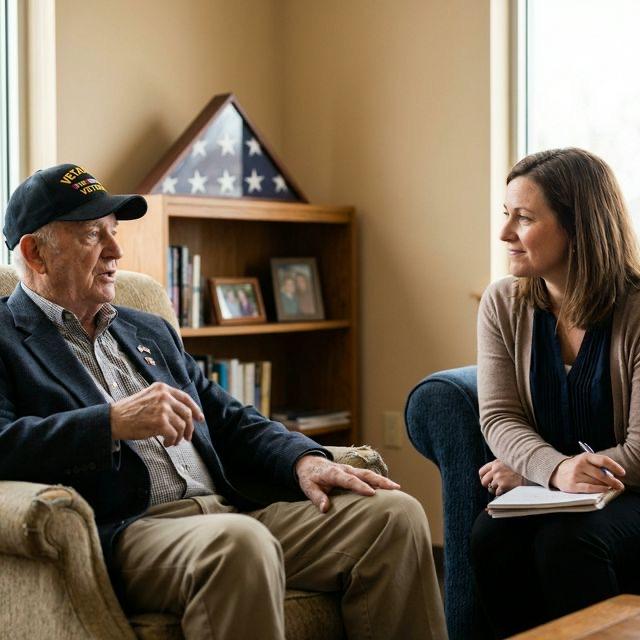
Beyond formal therapy, Trust SoCal creates an environment where veterans feel safe to lower their guard. Many veterans report that being in treatment with other veterans who understand the military experience is profoundly healing. Peer support among veterans creates a bond of shared understanding that accelerates the therapeutic process.
Addressing Chronic Pain and Prescription Drug Dependence
Chronic pain is one of the most significant drivers of substance abuse among veterans. Service-connected injuries, musculoskeletal problems from years of intense physical training, and traumatic brain injuries frequently result in chronic pain conditions that are initially managed with prescription opioids. Over time, tolerance develops, doses increase, and physical dependence becomes addiction.
Drug rehab for veterans must include comprehensive pain management strategies that go beyond simply withdrawing opioids. At Trust SoCal, our medical team works with each veteran to develop a multimodal pain management plan that may include non-opioid medications, physical therapy, acupuncture, mindfulness-based stress reduction, and other evidence-based approaches to managing chronic pain without addictive substances.
Medication-assisted treatment (MAT) with buprenorphine (Suboxone) or naltrexone (Vivitrol) is another evidence-based option for veterans with opioid use disorders. MAT reduces cravings and withdrawal symptoms while blocking the euphoric effects of opioids, allowing veterans to engage fully in therapy and rebuild their lives without the constant battle against physical dependence.
Never attempt to stop taking prescription opioids abruptly without medical supervision. Opioid withdrawal, while rarely life-threatening, can be extremely uncomfortable and often leads to relapse. Medical detox ensures a safe, gradual transition.
Transitioning from Military to Civilian Life in Recovery
The military-to-civilian transition is one of the most challenging periods in a veteran's life, and it is often a key factor in the development of substance use disorders. In the military, service members have a clear identity, a defined mission, structured daily routines, and a tight-knit community. When they leave service, all of these anchors disappear simultaneously.
Effective drug rehab for veterans addresses this identity crisis directly. Treatment should help veterans find new sources of purpose, build civilian social networks, develop career skills, and redefine their identity beyond their military service. At Trust SoCal, we incorporate life skills training, career counseling referrals, and community reintegration planning into each veteran's treatment plan.
Peer support groups specifically for veterans, such as those offered through organizations like the Veterans of Foreign Wars, American Legion, and Team Red White and Blue, provide ongoing community connection after treatment ends. Connecting veterans with these resources during treatment ensures they have a support network in place when they transition back to independent living.
How Trust SoCal Supports Veteran Recovery
Trust SoCal in Fountain Valley, Orange County, provides comprehensive addiction treatment for veterans at every level of care. Our clinical team understands military culture, the unique psychological toll of service, and the specific treatment needs of veterans. We accept Tricare and most major insurance plans, and our admissions team handles all insurance verification and authorization.
Our veteran clients receive individualized treatment plans that integrate addiction treatment with trauma therapy, pain management, and reintegration support. We offer the full continuum of care from medical detox through residential treatment, PHP, IOP, and aftercare, ensuring continuity throughout the entire recovery journey. If you or a veteran you know is struggling with addiction, reaching out for help is not a sign of weakness but an act of courage consistent with the values of service.

Kristin Stevens, LCSW
Licensed Clinical Social Worker