Key Takeaways
- Generalized anxiety disorder affects approximately 6.8 million American adults and is characterized by persistent, excessive worry about multiple areas of life that the individual finds difficult to control.
- Approximately one-third of individuals with GAD develop a co-occurring substance use disorder, most commonly involving alcohol, benzodiazepines, or cannabis.
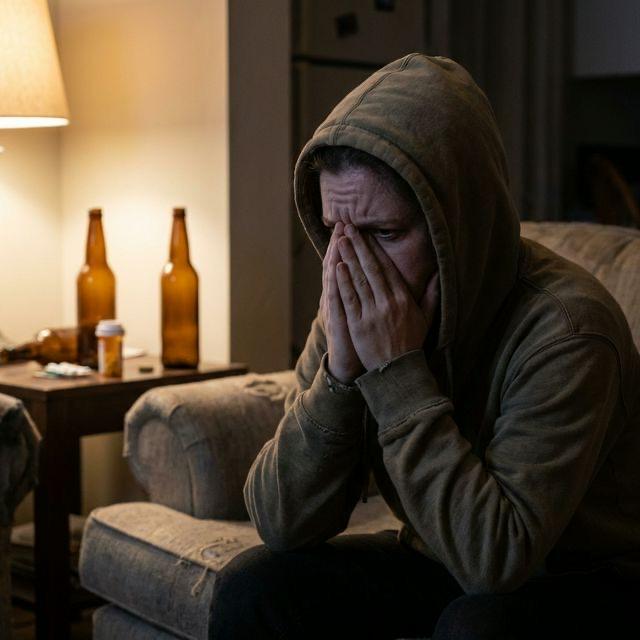
- The chronic nature of GAD makes it particularly prone to self-medication because the anxiety never fully resolves, creating constant motivation for chemical relief.
- CBT combined with non-addictive medication management is highly effective for treating GAD without substances and forms the core of dual diagnosis treatment at Trust SoCal.
Living with Generalized Anxiety Disorder
Generalized anxiety disorder is distinguished from normal worry by its persistence, pervasiveness, and the individual's inability to control it. While everyone worries from time to time, individuals with GAD experience a near-constant state of anxious apprehension that shifts from topic to topic, covering health, finances, work, relationships, and even minor daily tasks. This worry is accompanied by physical symptoms including muscle tension, restlessness, fatigue, difficulty concentrating, irritability, and sleep disturbance.
The unrelenting nature of GAD is what makes it such a significant risk factor for substance use. Unlike panic disorder, which produces discrete episodes of acute fear, GAD creates a chronic baseline of discomfort that never fully resolves. There is no period of calm between episodes because the anxiety is the baseline. This constant internal tension creates a powerful drive to find any form of relief, and substances provide the most immediately effective option available.
Trust SoCal in Orange County understands that individuals with GAD are not making a choice to self-medicate in the way that term implies. They are responding to a neurobiological condition that produces genuine, unrelenting suffering. Our compassionate, evidence-based approach addresses the anxiety at its source while providing healthier tools for managing the symptoms that remain.
Why GAD Leads to Substance Use
The pathway from generalized anxiety disorder to substance use disorder involves a combination of neurobiological vulnerability, psychological learning, and social factors. Understanding these pathways helps clinicians develop targeted treatment strategies and helps clients develop self-compassion around their substance use history.
Neurobiologically, GAD involves dysregulation of the brain's threat detection and anxiety circuits, including the amygdala, prefrontal cortex, and anterior cingulate cortex. These same circuits are powerfully modulated by substances, particularly alcohol and benzodiazepines, which enhance GABA activity and directly counteract the neural overactivation that produces anxiety. The relief is rapid, reliable, and reinforced through classical conditioning.
Alcohol: The Most Common Self-Medication
Alcohol is the substance most commonly used to self-medicate GAD, largely because of its legal availability, social acceptability, and rapid anxiolytic effects. An evening glass of wine that quiets the day's accumulated worry can gradually evolve into several glasses, then into drinking throughout the day as tolerance develops and morning anxiety intensifies.
The irony is that chronic alcohol use worsens the very anxiety it is meant to treat. Alcohol disrupts sleep architecture, depletes serotonin, and produces rebound anxiety during withdrawal that exceeds the original GAD symptoms. The individual drinks more to manage the worsening anxiety, creating an accelerating cycle of dependence.
Cannabis and Prescription Misuse
Cannabis is increasingly used to manage GAD symptoms, with many users perceiving it as a natural, safe alternative to medication. While some individuals experience anxiety reduction with cannabis, research shows that chronic use can actually increase anxiety through cannabinoid receptor downregulation and that THC itself can trigger panic attacks in susceptible individuals.
Prescription benzodiazepine misuse is another common pattern, often beginning with legitimately prescribed medication that is used in higher doses or more frequently than directed. The rapid effectiveness of benzodiazepines for anxiety makes them particularly susceptible to escalation in individuals with the chronic, unremitting anxiety of GAD.
Evidence-Based Treatment for GAD and Addiction
The good news for individuals with co-occurring GAD and addiction is that highly effective, non-addictive treatments exist for generalized anxiety disorder. These treatments can manage GAD symptoms as effectively as or more effectively than substances, without the devastating consequences of addiction.
Cognitive-behavioral therapy is the gold standard psychological treatment for GAD. CBT for GAD specifically targets the intolerance of uncertainty, positive beliefs about worry, and cognitive avoidance patterns that maintain the anxiety cycle. Clients learn to identify worry triggers, challenge catastrophic predictions, and tolerate the discomfort of uncertainty without resorting to worry or substances.
- 1Cognitive restructuring: identifying and challenging the distorted thoughts that fuel excessive worry
- 2Applied relaxation: systematic training in physical relaxation techniques that counteract chronic muscle tension
- 3Worry exposure: deliberate engagement with feared scenarios in a structured, therapeutic context to reduce their emotional power
- 4Behavioral activation: increasing engagement in meaningful activities that compete with worry and provide natural mood regulation
- 5Mindfulness-based stress reduction: developing present-moment awareness that counteracts the future-oriented nature of worry
Medication Management Without Addiction Risk
Pharmacological treatment of GAD in individuals with co-occurring addiction requires careful medication selection that prioritizes non-addictive options. SSRIs and SNRIs are first-line choices, with medications like escitalopram, sertraline, duloxetine, and venlafaxine showing strong efficacy for GAD without any abuse potential.
Buspirone is another valuable option specifically designed for generalized anxiety. Unlike benzodiazepines, buspirone has no sedating or euphoric effects, carries no abuse potential, and does not interact dangerously with alcohol. While it takes two to four weeks to reach full effectiveness, its safety profile makes it ideal for individuals in recovery.
At Trust SoCal in Orange County, our psychiatrist works closely with each client to find the medication regimen that most effectively manages their GAD symptoms while supporting their recovery from addiction. Call (949) 280-8360 to discuss your treatment options.
Developing a Worry-Free Toolkit
Long-term management of GAD without substances requires building a comprehensive toolkit of healthy coping strategies that can be deployed in real time when worry escalates. This toolkit is personalized to each individual and refined throughout treatment and into aftercare.
Physical exercise is one of the most potent natural anxiolytics available, with research showing that regular aerobic exercise reduces GAD symptoms comparably to medication for many individuals. Mindfulness meditation trains the brain to observe anxious thoughts without engaging them, gradually reducing the power of worry to hijack attention. Social connection provides both distraction from worry and the emotional support that reduces the perceived need for chemical coping.
Recovery from co-occurring GAD and addiction is a journey toward learning to live with uncertainty, to tolerate discomfort, and to engage fully with life even when anxiety is present. This is not about eliminating anxiety entirely but about developing a new relationship with it that no longer requires substances to manage.

Madeline Villarreal, Counselor
Counselor