Key Takeaways
- Naloxone is a safe, rapidly-acting opioid antagonist preventing fatal opioid overdose when administered immediately. Each dose can reverse one opioid overdose.
- Community-based naloxone distribution programs train peers, family members, and first responders to recognize and treat opioid overdose, dramatically expanding treatment access beyond emergency medical services.
- Regions with high naloxone distribution density show 30-50% reductions in opioid overdose death rates, with greater effects in areas with concurrent supervised consumption and syringe services.
- Standing orders allowing pharmacists and other providers to dispense naloxone without individual prescriptions dramatically increase access and reduce overdose deaths.
- Naloxone administration is safe with minimal side effects, and training community members to administer naloxone is straightforward, making naloxone distribution a scalable, cost-effective overdose prevention strategy.
Naloxone Mechanism and Overdose Reversal
Naloxone (marketed as Narcan) is an opioid antagonist—a medication that rapidly reverses opioid effects by binding opioid receptors with higher affinity than opioids while producing no agonist (rewarding) effects. When administered intravenously, intramuscularly, or intranasally during opioid overdose, naloxone rapidly displaces opioids from receptors, immediately reversing respiratory depression and restoring conscious breathing. The onset is rapid (30 seconds for IV; 2-3 minutes for intranasal) and the effects persist for 30-90 minutes, allowing time for emergency medical services to transport the person to a hospital.
Naloxone is remarkably safe with minimal side effects in non-opioid-dependent individuals and minimal withdrawal effects even in opioid-dependent individuals. The primary effect of naloxone administration is dramatic but temporary opioid withdrawal symptoms—agitation, sweating, body aches—that, while uncomfortable, are not dangerous. The distinction between uncomfortable withdrawal symptoms and death could not be starker, making naloxone administration the clearly correct choice in overdose situations.
Naloxone immediately reverses opioid overdose. Each dose can reverse one overdose. Administration is safe with minimal side effects. Widespread naloxone access represents a life-saving overdose prevention strategy.
Community Naloxone Distribution Programs
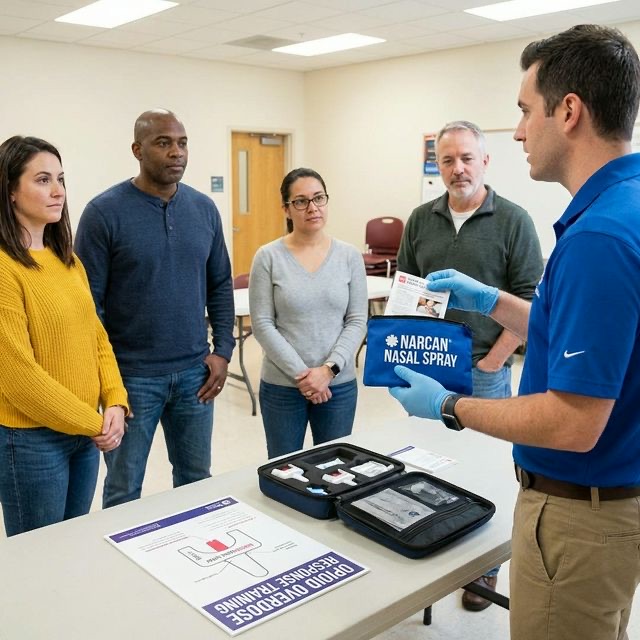
Community-based naloxone distribution programs train and equip peers, family members, first responders, and community members to recognize and treat opioid overdose. These programs provide intranasal or auto-injector naloxone, training on recognition of overdose signs and naloxone administration, and information about calling emergency medical services. The critical insight underlying naloxone distribution programs is that the people most likely to witness opioid overdoses are other people who use drugs—individuals present when a friend, partner, or acquaintance overdoses and in position to administer life-saving naloxone before emergency medical services arrive.
Standing orders represent a powerful policy mechanism facilitating naloxone distribution. Under standing order arrangements, pharmacists and other healthcare providers can dispense naloxone to anyone without individual prescriptions. This dramatically reduces barriers to naloxone access—individuals no longer need to convince a healthcare provider they are at overdose risk or belong to a priority group; they can simply access naloxone from pharmacies. States and regions implementing standing orders see dramatic increases in naloxone distribution and corresponding reductions in overdose deaths.
Effectiveness and Impact
Regions with high naloxone distribution density—meaning widespread community access through pharmacies, harm reduction programs, and emergency medical services—show 30-50% reductions in opioid overdose death rates. The effects are dose-dependent: more naloxone distribution correlates with greater overdose death reduction. Importantly, naloxone distribution effects are particularly large in areas with concurrent syringe services and supervised consumption sites, indicating that combining harm reduction strategies creates synergistic overdose prevention benefits greater than any single strategy alone.
Cost-effectiveness analysis consistently finds naloxone distribution highly cost-effective, with every dollar invested in naloxone distribution programs returning $5-10 in healthcare costs saved through prevented overdose deaths, hospitalizations, and medical complications.

Trust SoCal Editorial Team, Clinical Review Board
Editorial & Clinical Review