Key Takeaways
- Creative expression activates the brain's reward circuitry through dopamine release, providing a natural alternative to substance-induced pleasure.
- Art therapy reduces PTSD symptoms by 35 percent in trauma-exposed populations according to a meta-analysis in the Journal of Traumatic Stress.
- Music-based interventions decrease anxiety and depression scores more effectively than standard relaxation techniques in substance use disorder populations.
- Creative practice builds distress tolerance by teaching individuals to sit with uncertainty, imperfection, and emotional discomfort without escape.
- No artistic talent or prior experience is required; the therapeutic value lies in the process of creation, not the quality of the product.
Why Creativity Matters in Addiction Recovery
Addiction narrows life to a single pursuit: obtaining and using substances. It collapses the vast range of human experience into a monotonous loop of craving, using, and recovering from use. Creativity does the opposite. It expands possibilities, opens new neural pathways, and reconnects individuals with the parts of themselves that addiction suppressed.
The clinical rationale for integrating creative expression into addiction treatment goes beyond feel-good philosophy. Neuroscience research demonstrates that creative activities activate the mesocorticolimbic dopamine system, the same reward pathway hijacked by substances. By engaging this system through healthy creative pursuits, individuals in recovery literally retrain their brains to find pleasure and meaning in non-substance experiences.
At Trust SoCal in Fountain Valley, we have observed that clients who engage in creative expression during treatment often demonstrate faster emotional processing, stronger peer connections, and more robust relapse prevention skills. Creativity provides a language for experiences that words alone cannot capture, which is especially important for individuals processing trauma.
A 2021 study in the American Journal of Public Health found that 72 percent of addiction treatment professionals who integrated creative arts into their programming reported improved client engagement and retention, the two factors most predictive of long-term recovery success.
The Neuroscience of Creative Expression and Healing
Creative expression engages a network of brain regions that are uniquely relevant to addiction recovery. The prefrontal cortex is activated during planning and decision-making aspects of creative work. The limbic system processes the emotional content. The default mode network supports the imagination and self-reflection that creativity requires.
Importantly, the act of creating something, whether a painting, a melody, or a poem, requires sustained attention, frustration tolerance, and the capacity to sit with ambiguity. These are precisely the cognitive and emotional skills that substance use erodes and that recovery demands. Creative practice is therefore not just recreational; it is rehabilitative.
Flow States as Natural Reward
Flow, the psychological state of complete absorption in an activity, produces neurochemical profiles remarkably similar to those generated by substance use but without the harmful consequences. During flow, the brain releases dopamine, norepinephrine, endorphins, anandamide, and serotonin in a cascade that creates feelings of pleasure, focus, and timelessness.
Creative activities are among the most reliable inducers of flow states. Painting, playing music, writing, and sculpting all have the characteristics that flow research identifies as necessary: clear goals, immediate feedback, and a balance between challenge and skill. For individuals in recovery who are searching for ways to feel good naturally, creative flow offers a profound and renewable source of well-being.
Processing Trauma Through Non-Verbal Expression
Trauma is stored in the brain differently than ordinary memory. Traumatic experiences are often encoded in sensory and emotional fragments rather than coherent verbal narratives. This is why people can be triggered by a smell, a sound, or a body sensation without understanding why. Traditional talk therapy reaches trauma through the verbal centers of the brain, but creative expression can access traumatic material through non-verbal sensory pathways.
Art-making, music improvisation, and movement-based creative practices offer individuals a way to externalize traumatic experiences that they may not yet have words for. This externalization creates therapeutic distance, allowing the individual to observe and process the material rather than being overwhelmed by it.
Art as a Healing Practice in Recovery
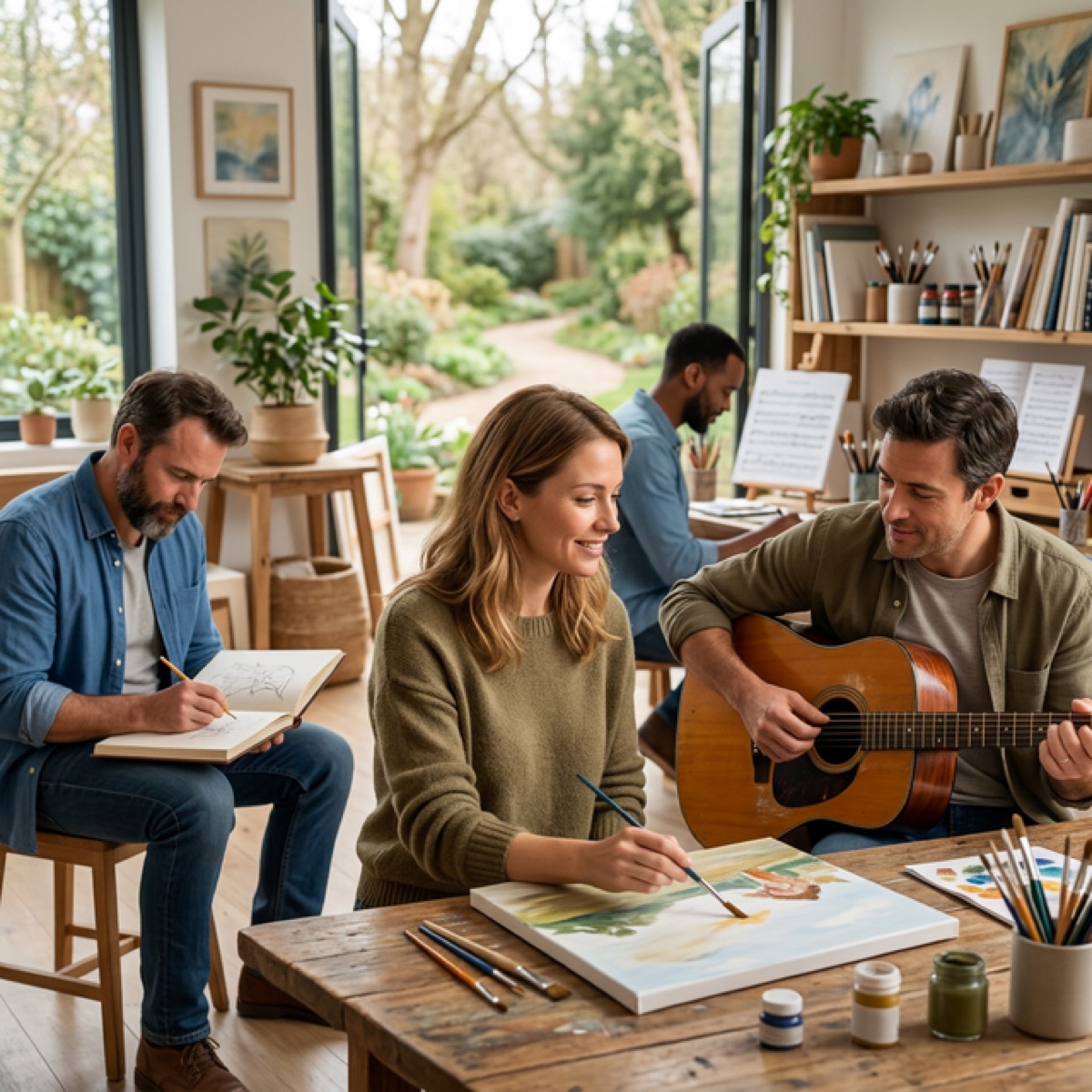
Art therapy is a clinical discipline practiced by licensed professionals with specific training in both psychotherapy and artistic media. However, personal art practice, creating visual works outside of a formal therapeutic relationship, also carries significant benefits for individuals in recovery.
The key distinction is that therapeutic benefit comes from the process of making art, not from the finished product. A messy, technically imperfect painting that was made with full emotional engagement is far more therapeutically valuable than a polished piece created from technical skill alone.
Start with a simple 10-minute daily art practice. Keep a small sketchbook and colored pencils accessible. Draw or color for 10 minutes each day without judgment. The consistency of the practice matters far more than what you create.
Accessible Art Practices for Beginners
Many people resist art-making because they believe they lack talent. This belief, often formed in childhood, is one of the most destructive myths in creative healing. Therapeutic art has nothing to do with talent and everything to do with engagement.
The following practices require no prior experience and minimal supplies. They can be done alone, in a group, or with a therapist.
- Mandala drawing: creating circular designs with colored pencils or markers promotes focus and calm
- Collage: cutting and assembling images from magazines externalizes internal states without requiring drawing skills
- Clay work: the tactile, three-dimensional nature of clay engages somatic processing and reduces anxiety
- Zentangle: structured doodling patterns induce meditative focus and are accessible to anyone who can hold a pen
- Color journaling: using colors rather than words to represent daily emotional states creates a visual record of recovery progress
- Vision boards: assembling images representing recovery goals activates the brain's visualization circuits
Music and Sound in Recovery
Music engages the brain more comprehensively than almost any other activity. Listening to or playing music simultaneously activates auditory, motor, emotional, and cognitive brain regions. This broad neural engagement makes music an extraordinarily powerful medium for emotional regulation, memory processing, and mood management in recovery.
A systematic review published in Frontiers in Psychology found that music-based interventions in substance use disorder treatment reduced depression scores by 28 percent and anxiety scores by 33 percent compared to standard treatment alone. Active music-making, which includes playing instruments, singing, and drumming, produced larger effects than passive listening, though both were beneficial.
Trust SoCal integrates music into our treatment programming because of its universal accessibility. Every human being has a relationship with music regardless of cultural background, education level, or musical training.
Active Music-Making as Therapy
Group drumming circles are one of the most widely used music interventions in addiction treatment. The rhythmic, embodied nature of drumming engages the nervous system in ways that promote co-regulation, meaning that the group's collective rhythm helps individual nervous systems synchronize and calm. Research on group drumming shows reduced cortisol, increased natural killer cell activity, and improved social bonding.
Learning a musical instrument in recovery provides structure, progressive skill development, and a healthy relationship with frustration and mastery. The instrument becomes a sober companion, available for emotional expression at any hour.
- Group drumming circles reduce cortisol levels and increase immune function markers
- Songwriting provides a structured framework for emotional expression and narrative construction
- Singing activates the vagus nerve, promoting parasympathetic nervous system activation and calm
- Instrument learning builds frustration tolerance, patience, and progressive mastery, skills central to recovery
Curating a Recovery Soundtrack
The music people listened to during active addiction often carries powerful associative triggers. One of the practical creative tasks in recovery is intentionally curating a new musical landscape: playlists for different emotional states, activities, and recovery milestones.
This is not about avoiding all music from the past but about developing conscious awareness of how specific music affects mood and craving intensity, and making intentional choices. A playlist for managing anxiety, another for motivation during exercise, and another for winding down before sleep can all become practical recovery tools.
Writing as Creative Recovery Practice
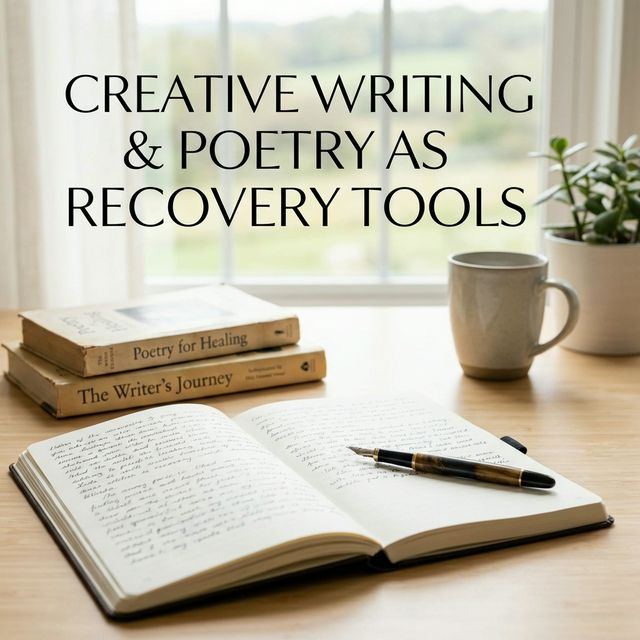
Writing, whether poetry, fiction, memoir, or personal essay, offers a unique creative pathway in recovery because it engages both emotional processing and cognitive organization simultaneously. The act of translating internal experience into written language requires naming emotions, sequencing events, and finding meaning, all of which support recovery.
Poetry, in particular, has gained recognition in addiction treatment. Its brevity makes it accessible, its metaphorical nature allows emotional expression without literal disclosure, and its formal constraints, meter, rhyme, line breaks, provide structure that can feel containing for overwhelming emotions.
Writing workshops and open mic nights in recovery communities create opportunities for connection, vulnerability, and witness. The experience of reading one's truth aloud and being received with compassion is a powerful antidote to the isolation and shame of addiction.
We write to taste life twice, in the moment and in retrospect.
— Anais Nin
Starting a Creative Practice in Recovery
The most common obstacle to creative practice is perfectionism, the belief that if you cannot create something excellent, there is no point in creating at all. This mindset is particularly prevalent among people in recovery who may already struggle with all-or-nothing thinking.
The antidote is lowering the stakes. Create for process, not product. Give yourself permission to make terrible art, write awful poetry, and play wrong notes. The therapeutic benefit lives in the doing, not the result.
Trust SoCal encourages every client to explore at least one creative modality during treatment. Whether that means sketching in a journal, strumming a guitar, writing a poem, or shaping clay, the act of creating something from nothing is a powerful metaphor for building a new life in recovery. Call (949) 280-8360 to learn more about our holistic approach to addiction treatment in Fountain Valley.
Orange County offers a rich creative recovery ecosystem including Art for Recovery programs, sober open mic nights, and community workshops. Ask your treatment team at Trust SoCal for local recommendations that fit your interests and recovery stage.
A Simple Creative Recovery Plan
Choose one creative modality that interests you, even mildly. Commit to 10 minutes of practice per day for 30 days. Do not evaluate what you produce. At the end of 30 days, reflect on how the practice affected your mood, your relationship with yourself, and your recovery.
If you want to explore further, look for recovery-focused creative communities in Orange County. Many sober living homes, community centers, and recovery organizations offer writing groups, art workshops, and music circles specifically for people in recovery.
- Choose a medium that feels even slightly appealing; do not force yourself into a modality that feels punishing
- Set a timer for 10 minutes to remove the pressure of deciding when to stop
- Create a dedicated physical space, even a corner of a table, for your creative practice
- Share your work only if and when you feel ready; creative practice can be entirely private
- Connect with recovery arts communities for inspiration and accountability

Trust SoCal Editorial Team, Clinical Review Board
Editorial & Clinical Review