Key Takeaways
- Costa Mesa hosts the highest concentration of licensed addiction treatment facilities and sober living homes in Orange County, creating a comprehensive recovery ecosystem.
- The city's recovery infrastructure includes medical detox, residential treatment, PHP, IOP, outpatient counseling, and hundreds of weekly AA/NA meetings.
- Sober living homes in Costa Mesa are increasingly regulated through city ordinances and voluntary OARRS certification, improving quality and accountability.
- Costa Mesa's central location off the 55 Freeway and 405 provides easy access to employment, meetings, and treatment facilities across the county.
- Trust SoCal in neighboring Fountain Valley is just 10 minutes from Costa Mesa and offers a full continuum of care. Call (949) 280-8360 to learn more.
Costa Mesa: Understanding Orange County's Recovery Capital
Costa Mesa's identity as a recovery community did not happen by accident. Beginning in the 1970s, the city's relatively affordable housing stock, mild climate, and proximity to beaches attracted individuals seeking a fresh start after treatment. Sober living homes proliferated, 12-step meetings multiplied, and treatment providers recognized the commercial and clinical logic of locating near the clients and recovery community already in place. Over five decades, this self-reinforcing cycle created what addiction professionals now call "recovery capital" -- a dense network of treatment resources, sober housing, peer support, and recovery-friendly employers.
Today, Costa Mesa and the surrounding corridor along Harbor Boulevard, Superior Avenue, and Newport Boulevard host dozens of DHCS-licensed treatment facilities offering every level of care defined by the American Society of Addiction Medicine. The city is home to residential treatment centers, medical detox programs, partial hospitalization programs (PHP), intensive outpatient programs (IOP), and individual practitioners specializing in addiction medicine and therapy.
This concentration of resources means that someone entering treatment in Costa Mesa can step through the entire continuum of care -- from detox to residential to PHP to IOP to outpatient to sober living -- without changing cities. That continuity of environment, provider relationships, and peer support networks significantly improves long-term outcomes according to SAMHSA research.
Costa Mesa is sometimes called the "recovery capital of the West Coast." The city and neighboring Newport Beach contain one of the densest clusters of licensed treatment facilities and sober living homes in the United States.
The Geography of Recovery in Costa Mesa
Costa Mesa's treatment infrastructure follows recognizable geographic patterns. The Harbor Boulevard corridor running north-south through the city hosts many residential and outpatient treatment centers. The Mesa Verde neighborhood in the eastern portion of the city contains numerous sober living homes in quiet residential streets. The Westside, closer to the 55 Freeway and Fairview Park, offers a mix of treatment offices and transitional housing.
- Harbor Boulevard: High concentration of treatment offices, therapists, and outpatient programs
- Mesa Verde: Established sober living neighborhood with proximity to parks, meetings, and South Coast Plaza employment
- Westside/Placentia Avenue: Mix of residential programs and sober living near Fairview Park and the Santa Ana River Trail
- The Triangle/SoBECA: Emerging mixed-use area with recovery-supportive amenities near the 55 Freeway and 19th Street
Medical Detox and Residential Treatment in Costa Mesa
Medical detoxification is the clinically supervised process of managing acute withdrawal symptoms when someone stops using alcohol, opioids, benzodiazepines, or other physically addictive substances. Costa Mesa hosts several DHCS-licensed detox programs staffed by physicians, nurses, and clinical support personnel who monitor vital signs, administer withdrawal-management medications, and address medical complications around the clock.
Following detox, residential treatment programs in Costa Mesa typically offer 30-, 60-, or 90-day stays. During residential care, clients participate in daily programming that includes individual therapy (often CBT or DBT-informed), group process sessions, psychoeducation about addiction neuroscience, relapse prevention planning, family sessions, and experiential therapies such as art therapy, equine therapy, or surf therapy -- the latter being uniquely accessible given Costa Mesa's proximity to Newport and Huntington beaches.
The quality gap between Costa Mesa treatment providers is real and should be taken seriously. CARF or Joint Commission accreditation, DHCS licensure in good standing, staff-to-client ratios, clinician credentials, and transparent outcome data are the metrics that separate excellent programs from mediocre ones. Trust SoCal, located just 10 minutes away in Fountain Valley, maintains all of these quality markers and provides a full residential program at 16537 Elm Cir.
Not all treatment centers in Costa Mesa maintain equal standards. Before enrolling, verify the program's DHCS license status at dhcs.ca.gov, check for accreditation, and ask for staff credentials and client-to-counselor ratios.
Dual-Diagnosis Treatment Options
An estimated 50% to 60% of individuals with substance use disorders also meet criteria for at least one co-occurring mental health condition. Effective Costa Mesa residential programs provide integrated dual-diagnosis treatment that addresses both conditions simultaneously rather than treating them sequentially. Look for programs with licensed psychiatrists or psychiatric nurse practitioners on staff who can manage medication alongside therapy.
- Common co-occurring conditions: major depressive disorder, generalized anxiety, PTSD, bipolar disorder, ADHD
- Integrated treatment produces significantly better outcomes than sequential or parallel treatment models
- Trust SoCal's clinical team includes specialists in dual-diagnosis treatment -- call (949) 280-8360 for assessment
Sober Living in Costa Mesa: Navigating Quality and Regulation
Costa Mesa contains the largest concentration of sober living homes in Orange County, with estimates ranging from 200 to over 400 active homes at any given time. This density has been both a strength and a challenge. The strength lies in the availability of affordable, recovery-supportive housing and the peer community that emerges when hundreds of people in early recovery live in close proximity. The challenge has been quality control -- historically, some operators ran overcrowded, poorly managed homes that created neighborhood friction and failed to support genuine recovery.
In response, the city of Costa Mesa has implemented regulatory frameworks including occupancy limits, property maintenance standards, and operational requirements for sober living homes. The Orange County Alliance of Recovery Residences (OARRS) provides voluntary certification based on NARR national standards, and many quality operators now display their certification status. When choosing a sober living home in Costa Mesa, OARRS or NARR certification is a strong positive indicator.
Typical costs for sober living in Costa Mesa range from $700 to $2,000 per month for a shared room and $1,500 to $3,500 for a private room. Most homes require residents to attend a minimum number of recovery meetings per week, submit to random drug and alcohol testing, maintain employment or active job searching, and participate in house meetings and chores.
What Makes a Good Sober Living Home
Beyond certification, look for specific operational indicators of quality. A competent house manager who lives on-site or is available 24/7 is essential. The home should have clear written rules, a structured daily schedule, consistent drug testing protocols, and a defined process for addressing violations that balances accountability with support.
- On-site or readily available house manager with recovery experience
- Written house rules provided before move-in, including consequences for violations
- Regular drug and alcohol testing (at least weekly, with random additional tests)
- Structured schedule including meeting attendance, employment requirements, and curfew
- Clean, well-maintained property with appropriate occupancy levels
- Connections to local treatment providers for residents who need clinical support
The Costa Mesa Meeting Landscape
If Costa Mesa is the recovery capital of Orange County, its meeting halls are the town squares. The city and immediate surroundings host hundreds of weekly 12-step meetings spanning AA, NA, Al-Anon, Nar-Anon, and Cocaine Anonymous. Major meeting venues include the Triangle Club on Placentia Avenue, churches along 17th Street and Adams Avenue, and community spaces in the Mesa Verde neighborhood.
The Triangle Club deserves special mention as one of Orange County's premier recovery meeting venues. Operating out of a dedicated facility, it hosts multiple daily AA and NA meetings in a welcoming, recovery-focused environment. For newcomers to Costa Mesa, the Triangle Club is often the first place long-time residents will recommend.
Non-12-step options are also available in the Costa Mesa area. SMART Recovery meetings provide a cognitive-behavioral alternative for people who prefer a science-based framework without the spiritual component of traditional 12-step programs. Refuge Recovery and Dharma Recovery groups offer meditation-based approaches meeting at local Buddhist centers and yoga studios.
The Triangle Club on Placentia Avenue in Costa Mesa hosts multiple AA and NA meetings daily and is widely regarded as one of the most welcoming meeting venues in Orange County. It is an excellent starting point for newcomers.
Building a Meeting Schedule
Addiction counselors typically recommend that individuals in early recovery attend 90 meetings in 90 days. In Costa Mesa, this is logistically easy -- you can find meetings at virtually every hour of the day. Morning meetings before work, noon meetings during lunch, evening meetings after dinner, and late-night meetings for those who struggle with nighttime cravings are all available within the city.
- Early morning meetings (6:00-7:30 AM) at the Triangle Club and local churches
- Noon meetings at multiple locations for mid-day recovery support
- Evening meetings (7:00-9:00 PM) -- the most attended time slot with the widest variety
- Late-night and 10 PM meetings for night owls and shift workers
Employment and Daily Life During Recovery in Costa Mesa
Rebuilding a stable daily life is a critical component of sustained recovery, and Costa Mesa offers practical advantages in this area. The city's commercial centers -- South Coast Plaza, The Lab and The Camp, the Harbor Boulevard business corridor, and the light industrial areas near the 405 -- provide diverse employment opportunities at various skill levels. Many Costa Mesa employers have experience working with individuals in recovery and understand the scheduling needs around meetings and outpatient appointments.
The city's location at the junction of the 55 Freeway and Costa Mesa Freeway (73) provides access to employment centers throughout Orange County. The OCTA bus system serves Costa Mesa with multiple routes, and the city is bikeable along key corridors, important considerations for residents in early recovery who may not have reliable personal transportation.
South Coast Plaza and the surrounding retail and hospitality district employs thousands of workers and is walking or biking distance from many Costa Mesa sober living homes, making it a practical employment resource for individuals in early recovery.
Recovery-Supportive Activities
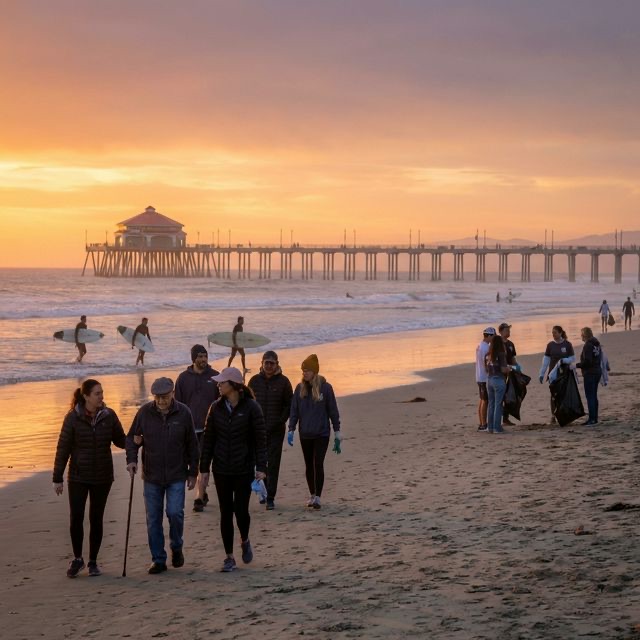
Costa Mesa and its neighbors offer outdoor and wellness activities that support physical and mental health during recovery. Fairview Park provides 208 acres of open space for walking, running, and nature observation. The Santa Ana River Trail connects Costa Mesa to Huntington Beach and inland communities for long bike rides. Nearby Newport Beach and Huntington Beach offer surf therapy, beach walks, and sunrise meetings on the sand.
- Fairview Park: 208 acres of trails, wildlife observation, and open space
- Santa Ana River Trail: Paved bikeway connecting Costa Mesa to the coast and inland
- TeWinkle Park: Sports facilities, community events, and outdoor meeting spaces
- Newport Beach and Huntington Beach: Surf therapy programs and beach-based recovery activities
Choosing the Right Costa Mesa Treatment Provider
The abundance of treatment options in Costa Mesa is a double-edged sword. While competition generally improves quality, it also means that marketing-savvy but clinically weak programs operate alongside excellent ones. Choosing the right provider requires due diligence that goes beyond online reviews and slick websites.
Start by verifying the program's DHCS license at the California DHCS website. Check for CARF or Joint Commission accreditation -- these voluntary quality standards require regular third-party audits. Ask the admissions team about their clinical staff credentials, client-to-counselor ratios, evidence-based modalities used, and what outcome data they track. A quality program will answer these questions transparently.
Trust SoCal, located at 16537 Elm Cir in Fountain Valley (10 minutes from Costa Mesa via the 405 North), offers DHCS-licensed treatment with a clinical team led by experienced professionals. We welcome calls from individuals and families who want to understand their options -- reach us at (949) 280-8360 for a free, confidential conversation.
Ask any treatment center: What is your staff-to-client ratio? What evidence-based therapies do you use? What is your completion rate? What aftercare support do you provide? Quality programs answer these questions openly.
Taking Action: Next Steps for Costa Mesa Recovery
Whether you are a Costa Mesa resident, have a family member living there, or are considering relocating to the area for treatment, the city's recovery infrastructure gives you options that most communities cannot match. The critical thing is to move from research to action. Addiction is a progressive condition -- the longer treatment is delayed, the more damage accumulates.
Call Trust SoCal at (949) 280-8360 to speak with an admissions counselor who can help you assess your situation, verify insurance benefits, and outline a treatment plan. If you prefer to start locally, attend a meeting at the Triangle Club or call the Orange County AA helpline. The Costa Mesa recovery community is genuinely welcoming to newcomers -- showing up is the hardest part.

Rachel Handa, Clinical Director
Clinical Director & Therapist