Key Takeaways
- Military service members in Hawaii face unique addiction challenges from combat trauma and deployment stress
- Hawaii military bases provide military health services and substance abuse programs
- Combat PTSD and military trauma require specialized trauma-informed treatment
- Peer support with other veterans strengthens recovery commitment
- Integration with VA and military benefits maximizes treatment access
Military Service and Addiction in Hawaii
Hawaii hosts major military installations including Pearl Harbor, Hickam, Kaneohe, Schofield, and others with thousands of active-duty service members and families. Military culture, combat deployment stress, and service-related injuries create unique addiction patterns. Many service members use substances managing PTSD, depression, pain, or sleep disruption.
Military structure and culture affect treatment engagement. Service members respond better to military-trained clinicians understanding combat trauma and military values. Peer support with other veterans provides essential mutual understanding and accountability.
Military service members in Hawaii struggling with substance use and trauma deserve specialized treatment. Call (949) 280-8360 to discuss military-competent options.
Military Risk Factors
Military service creates unique addiction and trauma patterns.
- Combat deployment trauma and PTSD
- Service-related injuries and chronic pain
- Deployment separation stress
- Military culture normalizing substance use
- Limited emotional expression training
Military Health Services in Hawaii
Military installations in Hawaii provide Military Health Services including substance abuse screening, brief intervention, and counseling. Service members access base medical clinics for mental health and addiction services at no cost. These services understand military culture and deployment-related trauma.
Hawaii military bases connect service members with substance abuse treatment programs, PTSD specialists, and medication management. Many service members begin treatment within military systems, then extend to community or specialized programs.
Hawaii service members can access free mental health and substance abuse services through military health services.
Military Services
Military installations provide military-specific health services.
- Substance abuse screening and assessment
- Military health counseling services
- PTSD-specialized treatment
- Medication management
- Referrals to treatment programs
VA Benefits and Military-Connected Treatment
Service members and veterans qualify for VA healthcare including substance abuse treatment. VA programs provide outpatient counseling, group therapy, residential treatment programs, and medication management. Veterans should establish VA healthcare eligibility through VA office or VA.gov.
Many civilian treatment providers accept VA benefits and specialize in military trauma. Treatment providers with military background understand unique needs of service members and veterans. Effective providers provide trauma-informed care honoring military service.
Veterans should establish VA healthcare eligibility. Call (949) 280-8360 to discuss treatment options accepting VA benefits.
VA Resources
VA provides comprehensive substance abuse and mental health treatment.
- VA outpatient counseling
- VA substance abuse treatment programs
- VA residential facilities
- VA psychiatric medication management
- Specialized combat trauma treatment
Combat Trauma and PTSD Treatment
Combat trauma profoundly affects addiction. Service members struggling with PTSD often use substances managing intrusive memories, hypervigilance, and emotional numbness. Effective addiction treatment for combat veterans integrates trauma therapy, addressing both substance use and underlying PTSD simultaneously.
Trauma-informed treatment providers understand that substance abuse behaviors often represent attempts managing PTSD. Therapy addressing trauma memories, processing combat experiences, and developing healthy coping skills addresses addiction root causes. Service members typically engage better when trauma is directly addressed.
Untreated combat trauma drives continued substance use. Effective treatment addresses both PTSD and addiction simultaneously.
Trauma-Informed Components
Effective treatment addresses combat trauma and PTSD.
- Combat trauma screening and PTSD assessment
- Trauma-focused cognitive behavioral therapy
- EMDR and trauma processing
- Coping skills for trauma symptoms
- Service dog and equine-assisted therapy
Peer Support and Veteran Community
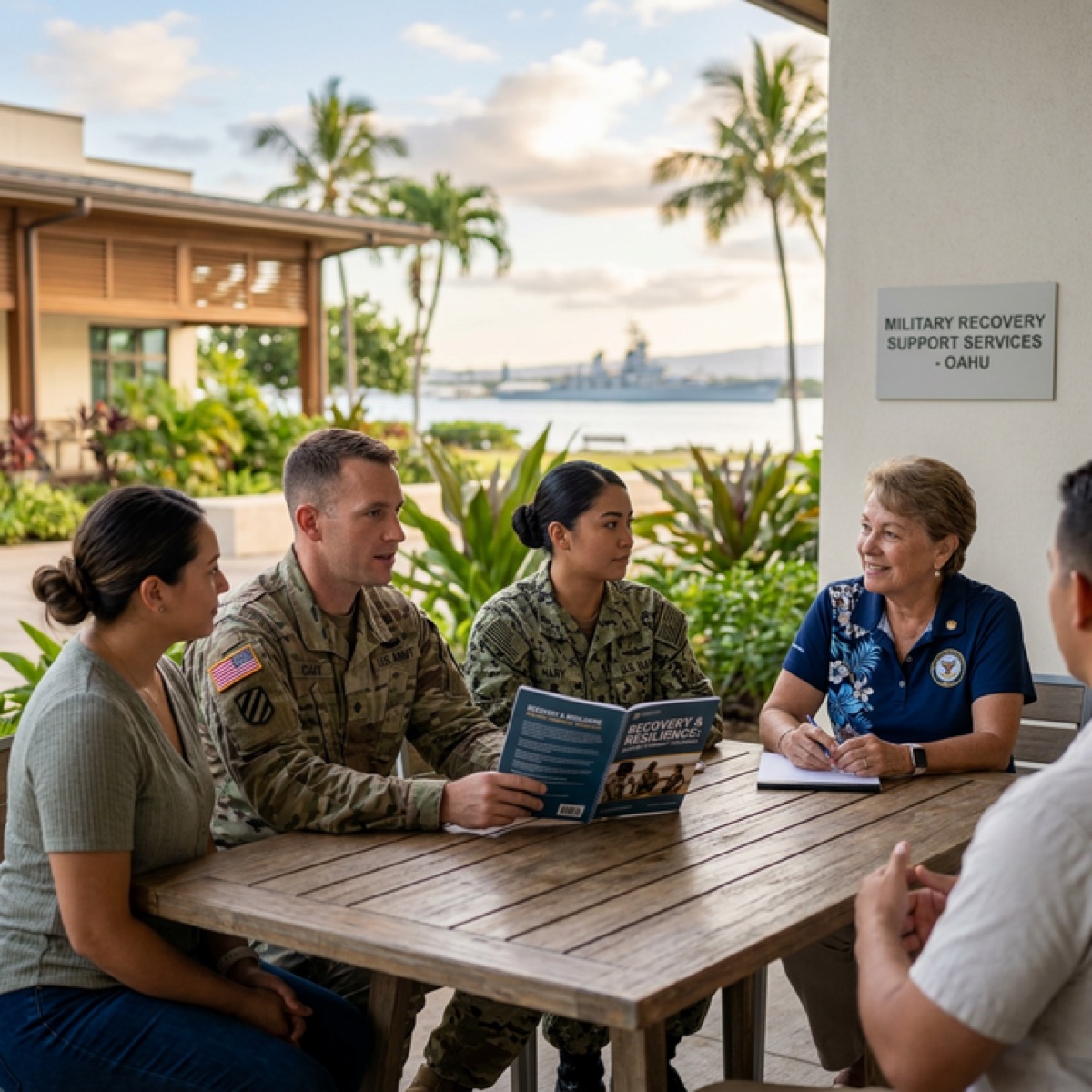
Military peer support is critical for service member recovery. Connection with others who understand military experience, deployment stress, and combat trauma provides essential validation and mutual understanding. Peer mentorship from veterans in recovery strengthens commitment to sobriety.
Hawaii has veteran recovery communities, veteran AA groups, and service member support networks connecting military-connected individuals. These communities provide accountability and healing from shared experience.
Veteran peer support communities provide essential connection and accountability for military-connected recovery.
Peer Networks
Peer support communities provide military-connected recovery.
- Veteran-specific AA and NA meetings
- Service member peer support groups
- Veteran mentorship and sponsorship
- Military-connected sober social activities
- Peer recovery specialist programs

Trust SoCal Editorial Team, Clinical Review Board
Editorial & Clinical Review