Key Takeaways
- NIDA research indicates that treatment lasting less than 90 days has limited effectiveness, and significantly better outcomes are associated with longer treatment durations.
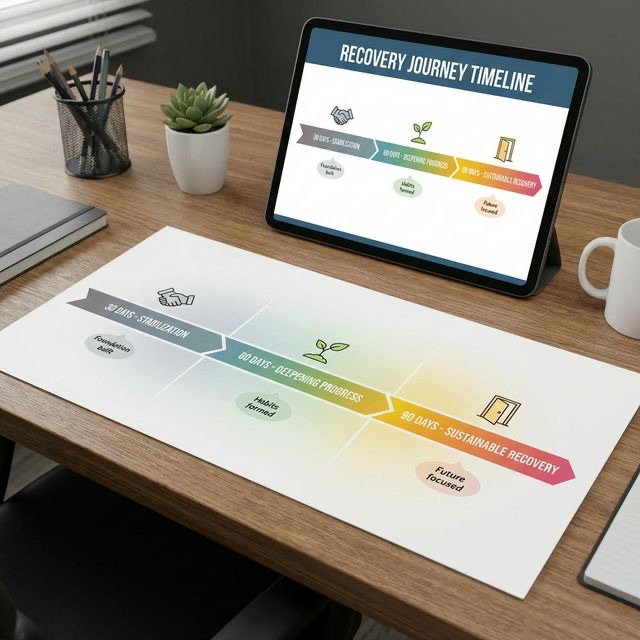
- 30-day programs can stabilize acute crisis but may not provide sufficient time for deep therapeutic work and behavioral change.
- 60-day programs allow time for detox, stabilization, therapeutic engagement, and early relapse prevention skill development.
- 90-day programs offer the most comprehensive treatment experience and are associated with the highest rates of sustained recovery.
- The optimal treatment length depends on individual factors including substance use severity, co-occurring disorders, support system strength, and prior treatment history.
- Insurance coverage, not clinical need, too often determines treatment length, and advocacy for adequate coverage is essential.
Why Treatment Duration Matters
The question of how long rehab should last is not merely logistical; it is fundamentally clinical. Addiction is a chronic brain disorder that involves neurological changes, entrenched behavioral patterns, psychological comorbidities, and disrupted social systems. Reversing these changes and building new neural pathways, coping strategies, and relational skills takes time.
The National Institute on Drug Abuse (NIDA) has been clear on this point for decades: "Research indicates that most addicted individuals need at least three months in treatment to significantly reduce or stop their drug use, and that the best outcomes occur with longer durations of treatment." This recommendation is based on extensive longitudinal research including the Drug Abuse Treatment Outcome Studies (DATOS).
Despite this evidence, the addiction treatment industry has been shaped significantly by insurance reimbursement policies that often limit coverage to 28 or 30 days. The 28-day treatment model originated not from clinical research but from the Minnesota Model developed in the 1950s, which was designed around a four-week educational framework.
NIDA Principle 5 of Effective Treatment states: "Remaining in treatment for an adequate period of time is critical. Research indicates that most addicted individuals need at least 3 months in treatment to significantly reduce or stop their drug use and that the best outcomes occur with longer durations of treatment."
30-Day Rehab Programs: Crisis Stabilization
A 30-day rehab program provides approximately four weeks of structured treatment, typically beginning with medical detox (3 to 10 days) followed by two to three weeks of clinical programming. This timeframe is sufficient to address the immediate medical crisis of withdrawal, achieve physical stabilization, begin individual and group therapy, and develop an initial understanding of addiction as a disease.
However, the clinical limitations of 30-day treatment are significant. After subtracting the detox period, clients have roughly two to three weeks of therapeutic engagement. Many evidence-based therapies, including trauma-focused treatments like EMDR and CPT, require multiple sessions over several weeks to complete a full course of treatment.
When 30 Days May Be Appropriate
There are specific clinical scenarios in which a 30-day program may be clinically appropriate as a standalone treatment episode. These include individuals with mild substance use disorders (as defined by DSM-5-TR criteria of 2 to 3 symptoms), individuals with strong family and social support systems, first-time treatment episodes without prior relapse, and individuals without significant co-occurring mental health disorders.
Even in these favorable scenarios, the 30-day timeframe is best understood as the minimum rather than the ideal. Clients who complete 30-day programs should plan for continued care through intensive outpatient programming (IOP), individual therapy, and support group participation.
- Mild substance use disorder without polysubstance use
- First-time treatment episode without prior relapse history
- Strong family support system and stable housing upon discharge
- No significant co-occurring psychiatric conditions requiring integrated treatment
- Immediate transition to structured outpatient care after discharge
60-Day Rehab Programs: Deeper Therapeutic Work
A 60-day program doubles the treatment window and addresses many of the clinical limitations inherent in the 30-day model. After completing detox and the initial adjustment period, clients in a 60-day program have approximately six to eight weeks of active therapeutic engagement. This additional time allows for completion of structured therapy protocols, deeper exploration of trauma and co-occurring disorders, and more extensive relapse prevention planning.
The neuroscience of habit formation supports the 60-day timeframe as well. Research on neuroplasticity suggests that establishing new behavioral patterns requires consistent repetition over a period of weeks. Actual research by Phillippa Lally at University College London found that the average time to establish a new automatic behavior is 66 days.
If your insurance initially authorizes only 30 days but your clinical team recommends 60 or 90 days, do not assume that longer treatment is impossible. Treatment centers like Trust SoCal employ utilization review specialists who advocate with insurance companies for continued stay authorization based on clinical necessity.
Clinical Advantages of Extended Treatment
The additional time in a 60-day program allows clinicians to move beyond crisis stabilization and surface-level psychoeducation into the deeper therapeutic work that addresses the root causes of addiction. Trauma processing, which is relevant for an estimated 60 to 80 percent of individuals with substance use disorders according to SAMHSA, requires time to establish safety, build therapeutic alliance, and engage with traumatic material at a pace the client can tolerate.
Sixty-day programs also provide time for medication stabilization, particularly for clients on psychiatric medications for co-occurring depression, anxiety, bipolar disorder, or PTSD. Many psychotropic medications require four to six weeks to reach therapeutic levels.
- Allows completion of structured trauma therapy protocols (EMDR, CPT) typically requiring 8 to 12 sessions
- Provides time for psychiatric medication stabilization and adjustment
- Enables deeper exploration of family dynamics, relationship patterns, and attachment issues
- Builds stronger peer connections that translate to post-treatment recovery support
- Allows development of comprehensive, individualized relapse prevention plans
90-Day Rehab Programs: The Gold Standard
The 90-day treatment program represents the gold standard in addiction treatment based on the preponderance of clinical evidence. NIDA's research consistently identifies three months as the threshold below which treatment effectiveness is significantly diminished. The landmark Drug Abuse Treatment Outcome Studies (DATOS) found that clients who remained in treatment for at least 90 days were significantly more likely to maintain abstinence at one-year and five-year follow-up.
A 90-day program provides sufficient time for every phase of the recovery process: medical stabilization, emotional regulation, deep therapeutic processing, behavioral change, skill development, social reintegration planning, and aftercare preparation.
At Trust SoCal in Orange County, the clinical team frequently recommends 90-day treatment programs for clients with moderate to severe substance use disorders. Call (949) 280-8360 to discuss which treatment duration is recommended for your individual situation.
The DATOS study found that clients who remained in residential treatment for 90 days or more were 10 times more likely to remain abstinent than those who left before 90 days. This finding has been replicated in multiple subsequent studies.
Factors That Determine Optimal Treatment Length
The ideal treatment duration is not one-size-fits-all. ASAM criteria provide a framework for matching individuals to appropriate levels and durations of care based on six clinical dimensions: acute intoxication and withdrawal potential, biomedical conditions, emotional/behavioral/cognitive conditions, readiness to change, relapse/continued use potential, and recovery environment.
Beyond the ASAM dimensions, several practical factors influence treatment length decisions. Insurance coverage, while not a clinical consideration, often constrains treatment duration. Employment obligations, family responsibilities, and financial considerations also play a role.
Clinical Indicators for Longer Treatment
Certain clinical presentations strongly suggest that longer treatment durations will be necessary for optimal outcomes. These indicators reflect the increased complexity and severity of the individual's condition.
Individuals with the following characteristics typically benefit most from 60- to 90-day (or longer) treatment programs. Clinicians at Trust SoCal assess these factors during the intake process.
- Severe substance use disorder (6 or more DSM-5-TR criteria met)
- Polysubstance use involving multiple substance classes
- Co-occurring psychiatric disorders requiring integrated treatment
- History of trauma, particularly complex or developmental trauma
- Prior treatment episodes that did not result in sustained recovery
- Unstable or unsupportive home environment
- Limited social support network or recovery community connections
- Legal issues requiring documentation of extended treatment engagement
Navigating Insurance Coverage for Extended Treatment
One of the most frustrating realities of addiction treatment is the disconnect between clinical recommendations for treatment duration and insurance company authorization practices. While the Mental Health Parity and Addiction Equity Act requires insurers to cover substance use disorder treatment at parity with medical and surgical benefits, many insurance companies continue to authorize treatment in short increments.
Advocacy is essential. Treatment centers with experienced utilization review teams can significantly impact the duration of coverage authorized by insurance companies. At Trust SoCal, the utilization review team works directly with insurance companies throughout your treatment stay to secure authorization for the duration of care your clinical team recommends.
If you are concerned about insurance coverage for extended treatment, call Trust SoCal at (949) 280-8360 and our admissions team will verify your insurance benefits, explain your coverage options, and work with you to develop a financial plan that makes treatment accessible.

Trust SoCal Editorial Team, Clinical Review Board
Editorial & Clinical Review