Key Takeaways
- The continuum of care provides a structured pathway through progressively less intensive levels of treatment as clients gain stability and recovery skills.
- ASAM criteria guide clinical decisions about which level of care is appropriate at each stage, based on six standardized dimensions.
- Each transition between levels of care should be planned, gradual, and supported by the clinical team to minimize relapse risk.
- Aftercare and alumni programming are essential components of the continuum that support long-term sobriety beyond formal treatment.
- Receiving all levels of care within a single treatment organization improves continuity and outcomes.
What Is the Continuum of Care?
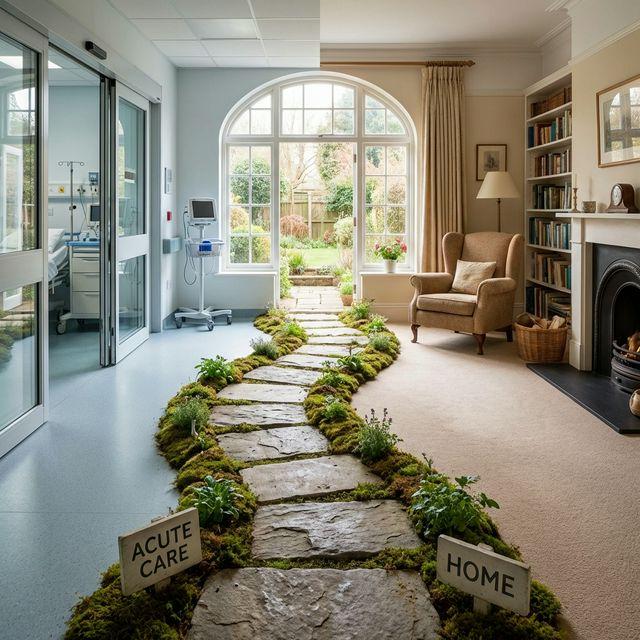
The continuum of care in addiction recovery refers to a comprehensive system of treatment services that spans from the most intensive level of care through long-term aftercare and community support. Rather than viewing treatment as a single event, the continuum model recognizes that recovery is a progressive journey requiring different levels of support at different stages. This approach reflects the reality that addiction is a chronic condition that benefits from sustained, adaptive care over time.
At its core, the continuum of care is designed to meet individuals where they are clinically and gradually reduce the intensity of treatment as they develop the skills, support systems, and stability needed to maintain sobriety independently. The model includes medical detox, residential treatment, partial hospitalization, intensive outpatient programming, standard outpatient therapy, and long-term aftercare. Each level serves a distinct purpose and prepares the individual for the next step in their recovery.
Treatment centers in Southern California that offer the full continuum of care under one organizational umbrella, like Trust SoCal in Orange County, provide a significant advantage. When clients move between levels of care within the same program, they maintain relationships with their clinical team, avoid gaps in service, and experience seamless care coordination that supports sustained progress.
ASAM Criteria: The Clinical Framework for Level-of-Care Decisions
The American Society of Addiction Medicine developed a comprehensive set of criteria that clinicians use to determine the most appropriate level of care for each individual. The ASAM criteria evaluate six dimensions: acute intoxication and withdrawal potential, biomedical conditions and complications, emotional, behavioral, and cognitive conditions, readiness to change, relapse and continued use potential, and recovery and living environment.
By assessing each of these dimensions, clinicians can match individuals to the level of care that provides adequate support without being unnecessarily restrictive. This evidence-based approach ensures that treatment decisions are based on clinical need rather than arbitrary program lengths or financial considerations. ASAM criteria also guide step-up and step-down decisions as a client's condition changes during treatment.
ASAM defines five broad levels of care ranging from Level 0.5 (early intervention) through Level 4 (medically managed intensive inpatient). Most addiction treatment falls within Levels 1 through 3.7, encompassing outpatient, intensive outpatient, partial hospitalization, and residential services.
How Assessments Drive Treatment Placement
When you enter treatment, a licensed clinician conducts a comprehensive biopsychosocial assessment that evaluates each of the six ASAM dimensions. The results of this assessment determine your initial placement in the continuum. For example, someone with severe alcohol dependence, an unstable home environment, and co-occurring depression would likely be placed in residential treatment, while someone with a moderate cannabis use disorder, stable housing, and strong family support might start at the IOP level.
These assessments are not one-time events. Throughout your treatment, your clinical team continuously evaluates your progress across all six dimensions. When you demonstrate sufficient stability and skill development in the areas that initially required intensive support, the team recommends transitioning to the next level of care. This dynamic, responsive approach ensures that treatment intensity always matches your current needs.
Level 4 and 3.7: Medical Detox and Residential Treatment
The most intensive levels of the continuum address acute medical needs and provide around-the-clock clinical support. Medical detox, typically classified at Level 3.7 or Level 4 depending on medical complexity, is the entry point for individuals who are physically dependent on substances and need supervised withdrawal management. Detox ensures safety during the physiologically dangerous period of acute withdrawal.
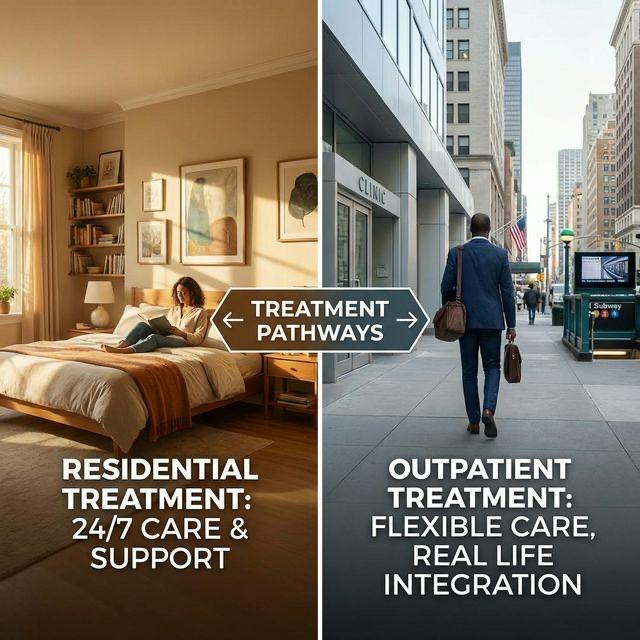
Following detox, residential treatment at Level 3.5 provides a structured, immersive therapeutic environment where clients live at the facility and participate in daily programming. Residential care typically lasts 30 to 90 days and includes individual therapy, group counseling, psychoeducation, family involvement, and wellness activities. This level is appropriate for individuals who need the structure and safety of a controlled environment to begin their recovery.
The Critical Transition from Detox to Treatment
One of the most vulnerable points in the continuum is the transition from detox to active treatment. Individuals who complete detox but do not enter ongoing treatment have extremely high relapse rates, often within days. At Trust SoCal, the transition from detox to residential programming is seamless because both services are provided within the same facility by the same clinical team. There is no gap in care, no waiting list, and no need to re-establish therapeutic relationships.
For individuals who arrive at detox uncertain about continuing into treatment, the detox period provides an opportunity for motivational work. Clinicians use motivational interviewing techniques to help clients move from ambivalence toward commitment to ongoing care. By the time detox is complete, most clients are ready and willing to engage in the next phase of their recovery.
Level 2.5: Partial Hospitalization (PHP)
Partial hospitalization occupies Level 2.5 in the ASAM continuum and serves as a critical bridge between the 24-hour structure of residential care and the independence of outpatient treatment. PHP provides five to six hours of structured clinical programming daily while allowing clients to live in the community, typically in sober living or at home with a supportive family environment.
PHP is an ideal step-down for individuals completing residential treatment who still need intensive daily therapeutic contact. It maintains the clinical depth of residential care while introducing the real-world responsibilities and decision-making that will define life in ongoing recovery. The daily structure of PHP includes group therapy, individual sessions, psychiatric services, and skill-building workshops that reinforce the work done in residential care.
For some individuals, PHP also serves as an entry point into the continuum. Those with moderate clinical needs who have stable living environments may begin treatment at the PHP level without first requiring residential care. The ASAM assessment determines whether this pathway is clinically appropriate.
Level 2.1: Intensive Outpatient Programs (IOP)
Intensive outpatient programming at Level 2.1 provides structured treatment several days per week while allowing clients substantial freedom to manage their daily lives. IOP typically involves nine to twelve hours of programming per week, including group therapy, individual counseling, and psychoeducation. This level of care is designed for individuals who have developed sufficient coping skills and stability to function independently between sessions.
IOP serves multiple roles within the continuum. It is the most common step-down from PHP, providing continued therapeutic support with greater scheduling flexibility. It also functions as an effective entry point for individuals with milder substance use disorders who do not require the intensity of higher levels of care. Additionally, IOP can serve as a step-up for individuals in standard outpatient therapy who need temporarily increased support during a challenging period.
When stepping down from PHP to IOP, maintain the healthy routines you established during more intensive treatment. Continue attending support group meetings, exercising regularly, and practicing the coping skills you learned. The reduction in treatment hours should be filled with recovery-supportive activities, not empty time.
Level 1: Standard Outpatient Therapy
Standard outpatient therapy represents the least intensive level of formal treatment in the continuum, typically involving one to two sessions per week. At this level, individuals have developed a solid foundation of recovery skills, a stable living environment, and a functioning support network. Outpatient therapy provides ongoing clinical support for maintaining sobriety, processing challenges, and continuing personal growth.
Outpatient therapy may include individual counseling, couples or family therapy, medication management visits, and participation in ongoing recovery groups. Many individuals continue outpatient therapy for months or even years after completing higher levels of care, recognizing that sustained clinical contact supports long-term recovery. The frequency and duration of outpatient sessions are adjusted based on individual needs and progress.
Aftercare, Alumni Programs, and Long-Term Recovery Support
The continuum of care does not end when formal treatment concludes. Aftercare planning begins during the earliest stages of treatment and results in a comprehensive plan that supports recovery for months and years beyond discharge. Effective aftercare plans include ongoing therapy appointments, medication management, community support group involvement, sober living arrangements when needed, vocational or educational support, and connections to alumni programming.
Alumni programs extend the treatment community well beyond the date of discharge. Trust SoCal's alumni program offers regular meetings, social events, check-in calls, and access to clinical support for graduates of our programs. These connections serve as a safety net, providing accountability, encouragement, and immediate access to help if challenges arise. Research consistently shows that individuals who engage in structured aftercare have significantly better long-term outcomes than those who discontinue all support after treatment.
Community Support and 12-Step Involvement
Community-based recovery support groups, including 12-step programs like Alcoholics Anonymous and Narcotics Anonymous, SMART Recovery, and Refuge Recovery, play a vital role in long-term recovery. These groups provide free, widely accessible peer support that complements formal treatment services. Orange County has a particularly robust recovery community with hundreds of meetings available throughout the week.
While participation in 12-step or alternative recovery groups is not required, research indicates that regular meeting attendance is associated with higher rates of sustained sobriety. These groups offer accountability, social connection, and a sense of purpose that extend far beyond what formal treatment alone can provide. Your treatment team will help you explore different recovery support options and find the community that resonates with your values and needs.
Why Continuity of Care Matters
The effectiveness of the continuum of care depends not just on the quality of each individual level but on the smoothness of transitions between them. Gaps in care, whether caused by waitlists, insurance complications, or logistical barriers, create windows of vulnerability where relapse is most likely to occur. Treatment organizations that offer the full continuum under one roof minimize these gaps and ensure that every transition is planned, supported, and clinically guided.
At Trust SoCal, clients receive care from the same clinical team as they move through detox, residential treatment, PHP, IOP, and outpatient services. This continuity means your therapist already knows your history, your treatment plan evolves organically, and you never have to start over with a new provider. The relationships built during the earliest days of treatment become a stable foundation that carries through every subsequent stage of your recovery journey.
If you or a loved one is considering addiction treatment in Orange County, understanding the continuum of care can help you make informed decisions about the treatment journey ahead. Trust SoCal's admissions team is available for a confidential assessment to determine the most appropriate entry point into the continuum based on your individual needs. Recovery is not a single step but a pathway, and every step along the continuum brings you closer to a life of sustained health and freedom.
Recovery is a marathon, not a sprint. The continuum of care ensures that you have the right level of support at every mile marker along the way.
— Robert Kim, LMFT, Family Therapist, Trust SoCal
Amy Pride, MFTT
Marriage & Family Therapy Trainee