
Key Takeaways
- PHP provides five to six hours of structured clinical programming per day, five to seven days per week, offering intensive support without overnight stays.
- PHP serves as an effective step-down from residential treatment or as an entry point for individuals who need intensive care but do not require 24/7 supervision.
- Clients in PHP live at home or in sober living, practicing recovery skills in real-world settings while maintaining daily therapeutic support.
- PHP programming includes individual therapy, group counseling, psychiatric services, and evidence-based skill-building workshops.
Understanding Partial Hospitalization Programs
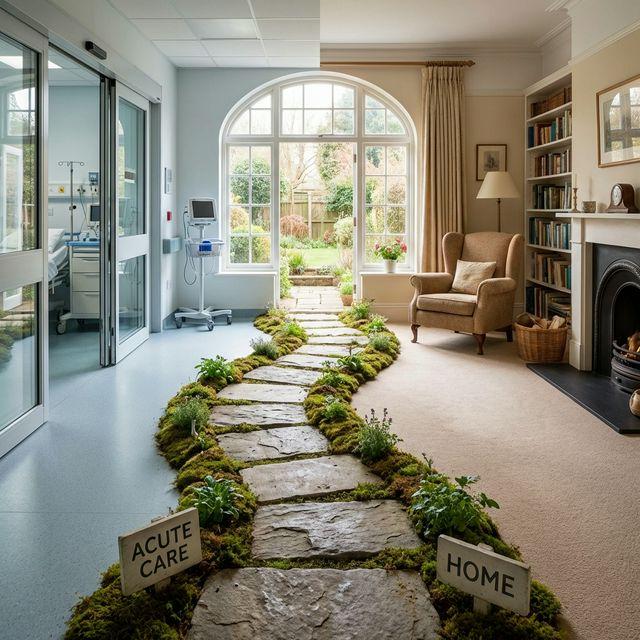
A partial hospitalization program, often abbreviated as PHP, is a structured level of addiction treatment that provides intensive clinical care during the day while allowing clients to sleep at home or in an approved sober living environment. Sometimes called day treatment, PHP bridges the gap between residential care and outpatient treatment, offering nearly the same intensity of clinical programming as inpatient rehab without requiring clients to live at the facility around the clock.
PHP typically involves five to six hours of structured programming per day, five to seven days per week. During these hours, clients participate in individual therapy, group counseling, psychoeducation, and wellness activities guided by a multidisciplinary clinical team. The level of clinical intensity in PHP is significantly higher than standard outpatient therapy, making it appropriate for individuals who need substantial support but have a stable and safe living environment to return to each evening.
At Trust SoCal in Orange County, our PHP programming is designed to provide the clinical depth of residential treatment with the flexibility to begin practicing recovery skills in the real world. Clients engage in the same evidence-based therapies used in our residential program, including CBT, DBT, motivational interviewing, and trauma-focused approaches, while gradually building independence and confidence in their ability to maintain sobriety outside of a treatment facility.
Who Is a Good Candidate for PHP?
PHP is appropriate for a range of individuals at different points in their recovery journey. The most common candidates include those stepping down from residential treatment who still need intensive daily support, individuals with moderate substance use disorders who have stable housing and do not require medical detox, and people with co-occurring mental health conditions who benefit from daily psychiatric monitoring and therapeutic engagement.
Stepping Down from Residential Treatment
For many individuals completing residential rehab, transitioning directly to weekly outpatient therapy feels like too large a jump. PHP provides a gradual step-down that maintains the therapeutic intensity clients have grown accustomed to while introducing the freedoms and responsibilities of living outside a treatment facility. This measured approach reduces the risk of relapse during the vulnerable early weeks after leaving residential care.
Clients stepping down from residential to PHP at Trust SoCal benefit from continuity of care with the same clinical team. There is no need to rebuild therapeutic relationships or re-explain your history. Your therapist simply adjusts the treatment plan to reflect your evolving needs as you take on more independence.
Entering Treatment Without Residential Care
Not everyone needs residential treatment to begin recovery. Individuals with mild to moderate substance use disorders, strong family support, and a safe home environment may enter treatment at the PHP level directly. A thorough clinical assessment using ASAM criteria will determine whether PHP provides sufficient intensity for your specific situation. Starting at PHP can be less disruptive to work and family obligations while still providing the high level of care needed during early recovery.
A Typical Day in PHP
Structure and routine are therapeutic elements of PHP, just as they are in residential care. A typical day begins in the morning and runs through the early afternoon, with programming designed to address multiple dimensions of recovery. While specific schedules vary by facility, the core components of PHP programming are consistent across high-quality treatment centers in Southern California.
The day usually begins with a morning check-in or mindfulness exercise, followed by individual or group therapy sessions throughout the morning. A lunch break provides time for nutritious meals and social interaction with peers. Afternoon sessions may include psychoeducation workshops, process groups focused on relapse prevention or coping skills, and wellness activities such as yoga or art therapy. The day concludes with a summary session and planning for the evening and next day.
Use evenings productively by attending community recovery meetings, practicing coping skills learned during the day, journaling, and building healthy routines. The time outside PHP is an opportunity to apply what you learn in a real-world setting.
Clinical Components of PHP
PHP programming at Trust SoCal includes a comprehensive mix of therapeutic modalities. Individual therapy sessions occur two to three times per week, providing personalized attention for processing emotions, addressing trauma, and refining treatment goals. Group therapy is the backbone of daily programming, with specialized groups covering topics such as cognitive-behavioral skills, emotional regulation, relationship building, and substance-specific education.
Psychiatric services are an integral part of PHP, with a psychiatrist available for medication management, mental health evaluation, and ongoing monitoring of any prescribed medications including those used in medication-assisted treatment. This level of psychiatric access distinguishes PHP from less intensive outpatient options and ensures that co-occurring mental health conditions receive the attention they require.
PHP vs. Residential Treatment
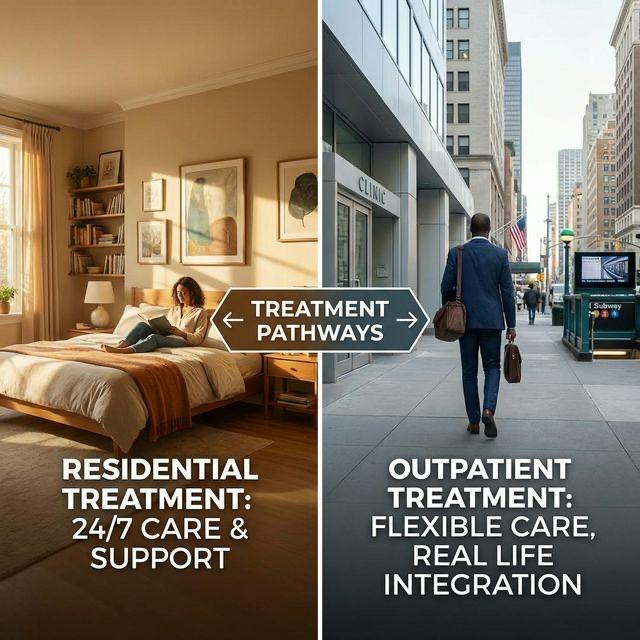
The primary difference between PHP and residential treatment is where you sleep. In residential treatment, you live at the facility and are supervised around the clock. In PHP, you attend programming during the day and return to your own residence or sober living home in the evening. This distinction has several practical implications for daily life, cost, and the recovery experience.
Residential treatment offers a more controlled environment that eliminates exposure to triggers and provides immediate support during evening and nighttime hours when cravings can be particularly intense. PHP offers the advantage of real-world practice, allowing clients to navigate triggers, manage their time, and make recovery-consistent decisions in their actual living environment while still receiving intensive daily support.
For many clients, the ideal path involves starting with residential treatment and stepping down to PHP when clinically appropriate. This progression allows for the safety and structure of inpatient care during the most acute phase of recovery, followed by the gradual independence-building that PHP provides.
PHP vs. Intensive Outpatient Programs (IOP)
PHP and IOP are both outpatient levels of care, but they differ in intensity and time commitment. PHP involves five to six hours of programming per day, five to seven days per week. IOP typically involves three to four hours per day, three to five days per week. This difference in intensity makes PHP more appropriate for individuals who need higher levels of support, while IOP serves those who are further along in their recovery and ready for more independence.
The clinical programming in PHP is also more comprehensive than IOP, with more frequent individual therapy sessions, greater access to psychiatric services, and a broader range of therapeutic groups. Clients in PHP often have more complex clinical needs, including co-occurring mental health disorders or recent completion of residential treatment. IOP is typically the next step down from PHP in the continuum of care.
Insurance Coverage and Cost of PHP
Partial hospitalization programs are covered by most health insurance plans when deemed medically necessary. The Mental Health Parity and Addiction Equity Act requires insurers to cover behavioral health services, including PHP, at parity with medical and surgical benefits. However, coverage specifics such as co-pays, deductibles, and authorized number of days vary by plan.
PHP is generally less expensive than residential treatment because it does not include housing and around-the-clock staffing costs. However, it provides significantly more clinical contact than standard outpatient therapy, making it an excellent value for the level of care provided. Trust SoCal's admissions team offers complimentary insurance verification to help you understand your PHP coverage before starting treatment.
Many insurance plans authorize PHP in increments of one to two weeks, with ongoing authorization based on clinical necessity. Your treatment team will handle the authorization process and communicate with your insurance company throughout your stay.
Finding a PHP Program in Orange County
When selecting a PHP program, look for facilities that offer individualized treatment planning, evidence-based therapies, psychiatric services, and a clear pathway for stepping down to IOP and outpatient care. The program should be staffed by licensed clinicians and accredited by a recognized national body. Location matters too, as daily attendance is required and a convenient location reduces barriers to consistent participation.
Trust SoCal's partial hospitalization program in Fountain Valley, Orange County, offers all of these elements within a supportive, community-oriented environment. Our PHP is integrated with our full continuum of care, ensuring seamless transitions from residential treatment and smooth step-downs to IOP as clients progress. If you are considering PHP as a treatment option, our clinical team is available for a confidential assessment to determine whether this level of care is right for you.
Courtney Rolle, CMHC
Clinical Mental Health Counselor