Key Takeaways
- The ASAM Criteria define a continuum of care from Level 0.5 (Early Intervention) through Level 4.0 (Medically Managed Intensive Inpatient), with each level addressing different clinical needs.
- Abrupt transitions from high-intensity treatment to no support create a "treatment cliff" that dramatically increases relapse risk.
- Step-down treatment, which gradually reduces the intensity of care, allows clients to practice recovery skills with progressively less structure and support.
- Aftercare is not an optional add-on but an essential component of effective addiction treatment that continues for months or years after formal treatment ends.
- The most effective treatment plans include clear transitions between levels of care with warm handoffs between clinical teams.
- Insurance parity laws require coverage for all medically necessary levels of care, though advocacy may be needed to secure appropriate authorization.
Understanding the ASAM Levels of Care
The American Society of Addiction Medicine (ASAM) Criteria provide the most widely accepted framework for matching individuals with substance use disorders to the appropriate level and intensity of care. The ASAM Criteria define a continuum of treatment settings that range from early intervention services to medically managed intensive inpatient care, with multiple gradations in between. This continuum recognizes that addiction severity, co-occurring conditions, and recovery support needs vary enormously across individuals and across the stages of each individual's recovery journey.
The fundamental principle underlying the continuum of care is that individuals should be treated at the least restrictive level of care that is safe and effective for their current clinical needs. This principle balances the therapeutic benefits of intensive structure and monitoring against the recovery-promoting benefits of independence, community integration, and real-world skill practice. As a person progresses in their recovery, their clinical needs change, and the appropriate level of care changes with them.
Understanding the full continuum before entering treatment helps individuals and families make informed decisions about care and set realistic expectations for the treatment journey. Recovery is rarely a straight line from crisis to wellness; it is a process that involves multiple phases, each with its own challenges, milestones, and therapeutic objectives.
The ASAM Criteria assess six dimensions when determining the appropriate level of care: acute intoxication/withdrawal potential, biomedical conditions, emotional/behavioral/cognitive conditions, readiness to change, relapse/continued use/continued problem potential, and recovery/living environment. Each dimension is evaluated independently.
Level 4.0 and 3.7: Medically Managed and Intensive Inpatient
The highest levels of the ASAM continuum, Levels 4.0 and 3.7, provide medically managed and medically monitored intensive inpatient treatment. Level 4.0 is essentially hospital-based care with 24-hour medical and nursing oversight, typically reserved for individuals with severe medical complications of withdrawal, acute psychiatric emergencies co-occurring with substance use, or medical conditions that require close monitoring during detoxification. Level 3.7 provides 24-hour professionally directed evaluation, observation, and treatment by addiction medicine specialists.
These levels of care are typically short-term, lasting from several days to several weeks. Their primary purpose is medical stabilization: managing the acute physical and psychiatric crises associated with severe substance use so that the individual can safely transition to a less medically intensive level of care. Medical detoxification, the process of safely withdrawing from substances under medical supervision, occurs at these levels for individuals whose withdrawal poses significant medical risk.
Medical Detox as the Starting Point
For many individuals, the treatment journey begins with medical detox at ASAM Level 3.7 or 4.0. As discussed in depth in our article on detox myths, medical detoxification is a supervised clinical process that manages the physiological symptoms of withdrawal using evidence-based pharmacotherapy and supportive care. Detox is not treatment for addiction itself; it is the essential first step that prepares the body and mind for the therapeutic work that follows.
The transition from medical detox to the next level of care is a critical juncture. Individuals who complete detox and are discharged without transitioning to continued treatment have relapse rates exceeding 80 percent. Trust SoCal in Fountain Valley provides seamless transitions from medical detox to residential treatment or other appropriate levels of care, ensuring that the momentum of seeking help is not lost during this vulnerable period.
Level 3.5 and 3.1: Residential Treatment
Residential treatment, encompassing ASAM Levels 3.5 (Clinically Managed High-Intensity Residential) and 3.1 (Clinically Managed Low-Intensity Residential), provides 24-hour structured living in a therapeutic community with daily clinical programming. This is the level of care most people envision when they think of "rehab." Clients live at the treatment facility, follow a structured daily schedule, and participate in intensive individual and group therapy, psychoeducation, wellness activities, and recovery meetings.
Residential treatment is indicated for individuals who need a stable, substance-free environment to make progress in their recovery, those who have been unable to achieve or maintain sobriety in less structured settings, individuals with co-occurring disorders requiring integrated daily treatment, and those whose home environment is not conducive to recovery. The 24-hour structure of residential treatment provides continuous support while also teaching the daily living skills and healthy routines that will be essential after discharge.
The duration of residential treatment varies based on clinical need, insurance authorization, and individual progress. Clinical recommendations typically range from 30 to 90 days, with NIDA research consistently associating longer stays with better outcomes. At Trust SoCal, the clinical team recommends the treatment duration they believe will produce the best outcomes for each individual and works with insurance companies to secure authorization for the recommended length of stay.
If you are considering residential treatment but are worried about being away from work or family for an extended period, discuss your concerns with the admissions team. Many people find that the time invested in comprehensive residential treatment prevents the repeated disruptions to work and family that ongoing untreated addiction causes.
Level 2.5: Partial Hospitalization Programs (PHP)
Partial hospitalization programs, ASAM Level 2.5, provide intensive clinical programming during the day (typically five to seven days per week, six or more hours per day) while allowing clients to return to their residence or a sober living environment in the evening. PHP represents a critical step-down from residential treatment, maintaining high-intensity clinical contact while introducing greater independence and the beginning of community reintegration.
PHP programming includes many of the same clinical elements as residential treatment: individual therapy, group counseling, psychoeducation, medication management, and wellness activities. The key difference is that clients must manage their evenings, nights, and early mornings independently, practicing the coping skills and healthy routines they learned in residential treatment in a less structured environment. This progressive introduction of independence is therapeutically intentional; it allows clients to test their recovery skills in increasingly real-world conditions while still having the safety net of daily clinical programming.
Who Benefits from PHP
PHP is appropriate for individuals stepping down from residential treatment who still need daily clinical support, those whose clinical needs exceed what can be addressed in three sessions per week (the typical IOP schedule) but who do not require 24-hour residential structure, and individuals with stable housing who can maintain safety and sobriety during non-programming hours. PHP is also used as an alternative to residential treatment for individuals whose clinical severity warrants intensive programming but whose support systems and recovery environment allow for less restrictive placement.
The transition from residential to PHP can be both exciting and anxiety-provoking. Clients often feel a sense of accomplishment at progressing to a less restrictive level of care while simultaneously worrying about their ability to maintain sobriety with less structure. Trust SoCal's clinical team provides targeted transition support during this period, helping clients develop specific strategies for managing the increased independence that PHP introduces.
- Step-down from residential with daily clinical programming (typically 6+ hours/day)
- Clients live at home or in sober living and attend programming during the day
- Includes individual therapy, groups, medication management, and wellness activities
- Provides a bridge between 24-hour residential structure and less intensive outpatient care
- Typically lasts 2 to 4 weeks before transitioning to IOP
Level 2.1: Intensive Outpatient Programs (IOP)
Intensive outpatient programs, ASAM Level 2.1, provide structured clinical programming for a minimum of nine hours per week, typically spread across three to five days. IOP represents a further step-down from PHP, with clients spending the majority of their time in the community while attending treatment sessions in the mornings, afternoons, or evenings depending on the program's schedule and the client's needs. Many IOP programs offer evening sessions specifically to allow clients to work or attend school during the day.
IOP is one of the most versatile levels of care in the addiction treatment continuum. It serves as a step-down from PHP or residential treatment, as a primary treatment option for individuals with less severe substance use disorders, and as a re-engagement point for individuals who experience early signs of relapse and need to increase their treatment intensity temporarily. The flexibility of IOP scheduling makes it accessible to individuals who need to maintain employment, educational, or family responsibilities while receiving treatment.
Clinical programming in IOP includes individual therapy (typically weekly), group therapy sessions, relapse prevention education, and ongoing medication management. The reduced frequency compared to PHP and residential means that a greater proportion of the client's recovery depends on their independent application of skills, participation in recovery support groups, and engagement with their aftercare support network.
Level 1.0: Outpatient Treatment and Aftercare
Outpatient treatment, ASAM Level 1.0, represents the least intensive level of professional addiction treatment. Outpatient programming typically involves fewer than nine hours of structured clinical contact per week and may include weekly individual therapy, periodic group sessions, medication management appointments, and check-ins with a case manager. This level of care is appropriate for individuals who have progressed through higher levels and are maintaining stable recovery with decreasing clinical support needs.
Aftercare, while not a formal ASAM level, describes the ongoing recovery support activities that continue after formal treatment episodes conclude. Effective aftercare includes continued individual therapy, regular participation in recovery support groups (12-step, SMART Recovery, or alternatives), ongoing medication management when applicable, periodic check-ins with a recovery support coordinator, and engagement with alumni communities. Research consistently demonstrates that individuals who participate in active aftercare programs have significantly lower relapse rates than those who discontinue all support after formal treatment.
Trust SoCal provides comprehensive aftercare planning that begins during the residential treatment phase. By the time a client completes formal treatment, they have a detailed aftercare plan that includes scheduled appointments with outpatient providers, a list of recovery support groups in their community, strategies for managing triggers and high-risk situations, and emergency contacts for crisis support. To begin developing your individualized treatment and aftercare plan, call (949) 280-8360.
The McKay Recovery Management Checkup model, supported by NIDA research, demonstrates that proactive monitoring and re-engagement for individuals in recovery from addiction reduces relapse rates and substance use severity compared to standard discharge with no follow-up. This model treats addiction with the same chronic disease management approach used for diabetes and other chronic conditions.
The Importance of Long-Term Recovery Support
Addiction is a chronic condition, and like other chronic conditions such as diabetes, hypertension, and asthma, it requires ongoing management to maintain remission. The treatment episode, whether it lasts 30 days or 90 days, is analogous to the acute phase of treatment for any chronic illness. Aftercare and long-term recovery support represent the maintenance phase that sustains the gains achieved during acute treatment.
Recovery support groups play a particularly important role in long-term recovery management. Whether through 12-step fellowships, SMART Recovery, Refuge Recovery, or other mutual aid organizations, regular participation in peer support communities provides accountability, connection, continued learning, and a sense of purpose and belonging that protects against relapse. Research published in the journal Alcohol Research found that AA participation following treatment was the strongest predictor of sustained recovery at one-year follow-up.
- Weekly individual therapy with a therapist specializing in addiction
- Regular participation in recovery support groups (AA, NA, SMART Recovery, etc.)
- Ongoing medication management for MAT and/or co-occurring psychiatric conditions
- Periodic check-ins with a recovery support coordinator or case manager
- Engagement with treatment alumni communities and sober social activities
- Continued practice of coping skills, mindfulness, and wellness routines developed in treatment
Avoiding the "Treatment Cliff"
The "treatment cliff" refers to the abrupt transition from intensive treatment to no support that occurs when individuals complete a treatment episode without adequate step-down planning. This cliff is one of the most common and preventable causes of post-treatment relapse. A person who spends 30 days in the structured, supportive, substance-free environment of residential treatment and then returns home to the same environment, relationships, and stressors that contributed to their addiction, without any ongoing clinical support, faces an enormous adjustment that even the most motivated individual may struggle to navigate.
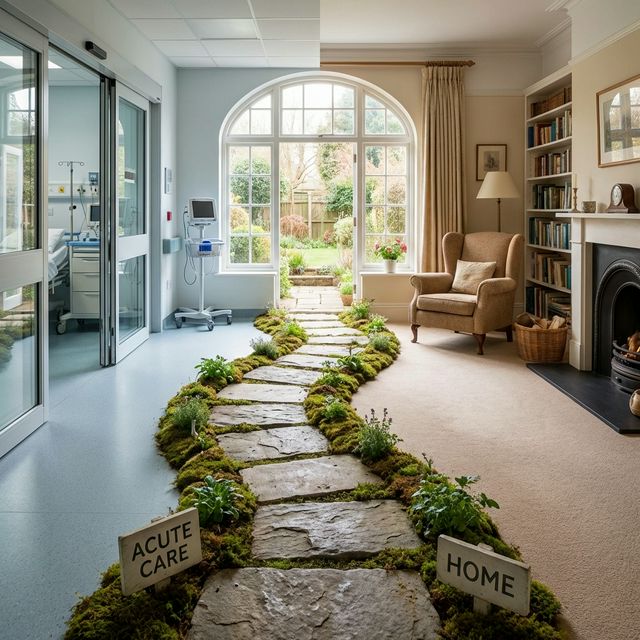
The continuum of care model exists specifically to eliminate this cliff by providing gradual, progressive transitions between levels of care. Each step-down introduces more independence while maintaining clinical support proportional to the client's needs. The residential client transitions to PHP, where they practice evening independence with daily clinical support. The PHP client transitions to IOP, where they manage most of their daily life with three to five sessions per week. The IOP client transitions to outpatient, with weekly sessions and ongoing recovery support. Each transition is a controlled experiment in increasing independence, with the safety net of clinical intervention available if difficulties arise.

Trust SoCal Editorial Team, Clinical Review Board
Editorial & Clinical Review