Key Takeaways
- GHB (gamma-hydroxybutyrate) is a naturally occurring neurotransmitter that, when taken exogenously, produces dose-dependent effects ranging from euphoria and sociability at low doses to unconsciousness and respiratory depression at higher doses.
- The margin between a recreational dose and a dose that produces unconsciousness is extremely narrow, making accidental overdose one of the most common and dangerous features of GHB use.
- GHB withdrawal is a medical emergency that can include severe autonomic instability, delirium, hallucinations, seizures, rhabdomyolysis, and death, with a clinical presentation resembling severe alcohol withdrawal or delirium tremens.
- GBL (gamma-butyrolactone) is a legal industrial solvent that is rapidly converted to GHB in the body and is the most common source of GHB in illicit markets, purchased as a cleaning product or industrial chemical.
- Physical dependence on GHB develops rapidly with around-the-clock dosing, and dependent users may need to dose every 1 to 4 hours, including through the night, to avoid withdrawal.
- Treatment for GHB dependence requires medically supervised detoxification, typically using high-dose benzodiazepines or pharmaceutical GHB (sodium oxybate) tapers, in an inpatient setting with ICU-level monitoring capability.
What Are GHB and GBL?
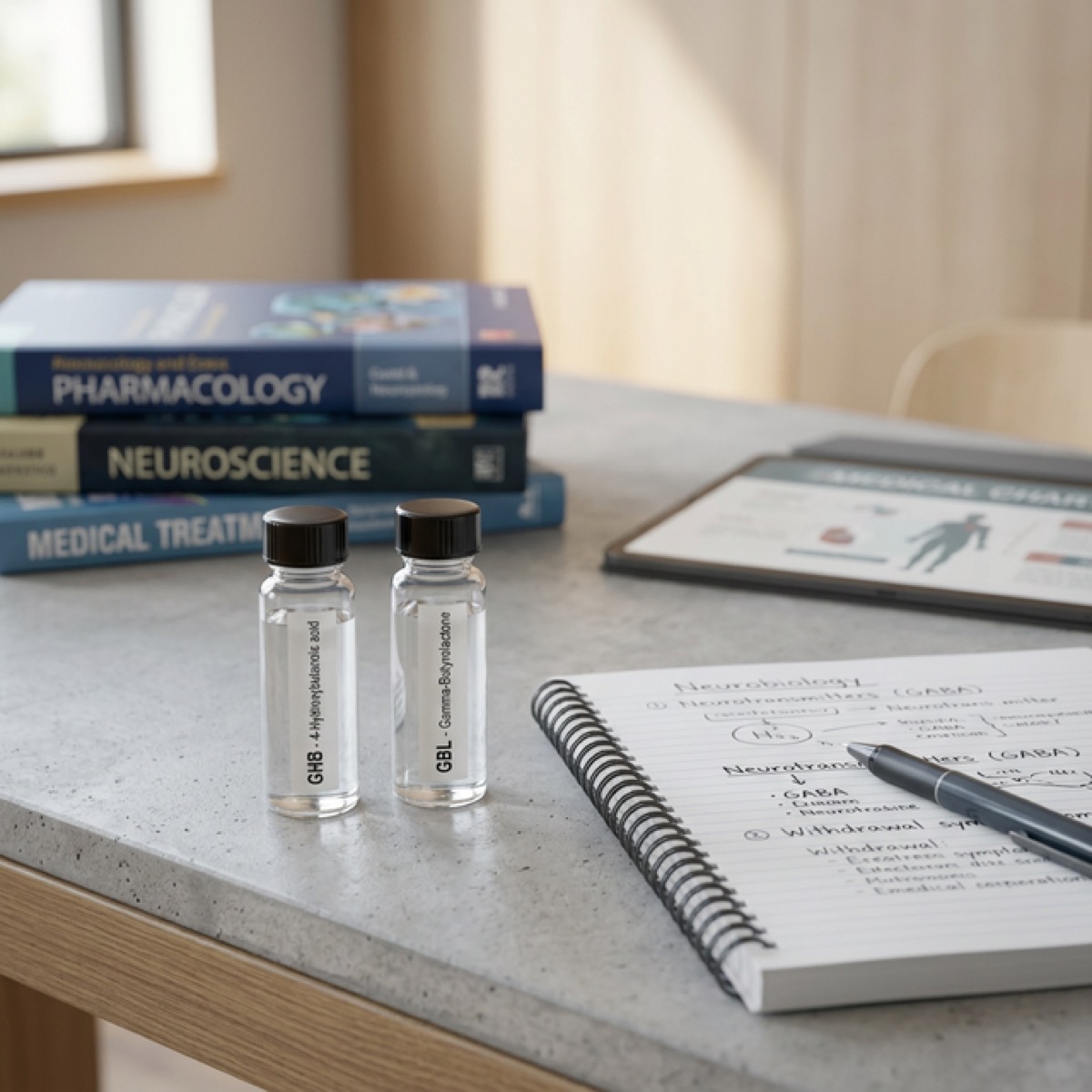
Gamma-hydroxybutyrate (GHB) is a naturally occurring neurotransmitter and neuromodulator found in the mammalian brain, where it functions at dedicated GHB receptors and at GABA-B receptors. When taken exogenously as a drug, GHB produces a range of dose-dependent effects: at low doses (0.5 to 1.5 grams), it produces euphoria, increased sociability, disinhibition, and enhanced sensory experiences that made it popular in club and party settings. At moderate doses (1.5 to 2.5 grams), it produces sedation, impaired coordination, and nausea. At higher doses (2.5 grams and above), it can produce sudden, deep unconsciousness, respiratory depression, and death.
GBL (gamma-butyrolactone) is not itself psychoactive but is rapidly converted to GHB by enzymes in the blood and liver after ingestion. Because GBL is a widely used industrial solvent and chemical intermediate with legitimate commercial applications, it is not subject to the same scheduling restrictions as GHB in many jurisdictions. This regulatory asymmetry has made GBL the primary source material for GHB in illicit markets. Users may purchase GBL directly as an industrial chemical and consume it, relying on their body's rapid conversion to GHB for the desired effects.
GHB gained notoriety in the 1990s as both a club drug and a drug-facilitated sexual assault agent (commonly called a "date rape drug") due to its ability to produce rapid, dose-dependent unconsciousness that the victim may not remember upon awakening. The compound was classified as a Schedule I controlled substance in the United States in 2000 through the Hillory J. Farias and Samantha Reid Date-Rape Drug Prohibition Act. Despite this scheduling, GHB remains available through illicit channels, and GBL remains accessible through industrial and online chemical suppliers.
The difference between a dose of GHB that produces euphoria and a dose that produces unconsciousness can be as little as half a gram. There is no safe way to dose GHB precisely in a non-medical setting. Overdose is an inherent risk of every use episode.
How GHB Affects the Brain and Body
GHB exerts its effects through two primary mechanisms: activation of specific GHB receptors and agonism at GABA-B receptors. At low concentrations, GHB acts preferentially at its own receptors, producing mild stimulatory and prosocial effects. As concentration increases, GABA-B receptor activation becomes dominant, producing the sedative, anxiolytic, and eventually unconsciousness-inducing effects that characterize higher-dose GHB use. This dual-receptor pharmacology explains the biphasic effect profile where low doses feel stimulating and higher doses become profoundly sedating.
The GABA-B mechanism is particularly important for understanding GHB's dangers. GABA-B activation depresses central nervous system activity including respiratory drive, and at sufficient doses, this depression can be fatal. The steep dose-response curve means that small increases in dose produce disproportionately large increases in sedative effect, making the transition from euphoria to unconsciousness abrupt and unpredictable. This is compounded by GHB's interaction with alcohol: because both substances act through GABAergic mechanisms, their combination produces synergistic CNS depression that can be lethal even at doses of each that would individually be survivable.
GHB is rapidly absorbed and metabolized, with onset of effects typically within 15 to 30 minutes and a duration of action of approximately 1.5 to 3 hours. This rapid metabolism has important implications for both recreational use and dependence: the effects come on quickly, peak rapidly, and resolve relatively fast, creating a pattern of frequent re-dosing that accelerates the development of physical dependence.
The Narrow Therapeutic Window
GHB's steep dose-response curve creates what pharmacologists call a narrow therapeutic window: the margin between a dose that produces desired effects and a dose that produces toxic effects is exceptionally small. For most recreational users, a "fun" dose of GHB is somewhere between 1 and 2.5 grams. A dose of 3 to 4 grams may produce deep unconsciousness from which the person cannot be aroused. This means that an error of as little as 1 gram, easily achievable when measuring from illicit liquid preparations of unknown concentration, can mean the difference between a party and a medical emergency.
The narrow window is further compressed by individual variation in GHB metabolism, body weight, food intake, and concurrent substance use. What produces mild euphoria in one person may produce unconsciousness in another at the same dose. This unpredictability is the fundamental danger of GHB and is the reason that GHB-related emergency department visits remain common despite the drug's relatively small user population compared to other substances of abuse.
- Euphoric dose range: approximately 1 to 2.5 grams
- Unconsciousness threshold: as low as 2.5 to 4 grams
- Fatal dose range: variable, particularly when combined with alcohol or other depressants
- Individual variation makes "safe" dosing impossible to predict
- Illicit GHB concentration is unknown, making volumetric measurement unreliable
- Food intake, body weight, and tolerance all affect individual response
GHB Dependence: The Around-the-Clock Trap
Physical dependence on GHB develops with remarkable speed in individuals who dose frequently, particularly those who dose around the clock. Because of GHB's short duration of action (1.5 to 3 hours), maintaining a continuous state of intoxication requires dosing every 1 to 4 hours, including through the night. Users who adopt this pattern can develop significant physical dependence within as little as one to two weeks of continuous use.
The dependent GHB user's life becomes structured around dosing schedules. They may set alarms throughout the night to wake and dose, knowing that missing a dose will trigger withdrawal symptoms within hours. Their days are organized around maintaining supply, measuring doses, and avoiding the windows of withdrawal that occur between doses. This around-the-clock pattern of use is one of the most distinctive features of GHB dependence and distinguishes it from most other substances of abuse where dosing is typically once or twice daily.
The rapid development of GHB dependence catches many users off guard. What may begin as occasional recreational use on weekends can progress to daily use within weeks, as the pleasant effects encourage more frequent dosing and the emerging withdrawal symptoms between doses create additional motivation to continue. By the time the user recognizes the pattern, physical dependence is often well established and independent cessation without medical support becomes dangerous.
Who Develops GHB Dependence?
GHB dependence affects a diverse population. Historically associated with the club and rave scene, GHB use and dependence have expanded into bodybuilding communities (GHB promotes growth hormone release), chemsex communities (GHB is used for its disinhibiting effects during sexual activity), and general recreational use among adults seeking an alcohol alternative. Some individuals initially use GHB for its sleep-promoting effects, as pharmaceutical GHB (sodium oxybate, brand name Xyrem) is FDA-approved for narcolepsy.
In Southern California, GHB use patterns reflect the region's nightlife culture and diverse communities. Orange County and Los Angeles area treatment providers, including Trust SoCal, encounter GHB dependence across demographic categories. The common thread is that most individuals did not anticipate developing dependence and are surprised by the severity of withdrawal when they attempt to stop.
- Club and party scene users seeking euphoria and sociability
- Bodybuilders using GHB for growth hormone release and sleep quality
- Chemsex community members using GHB for disinhibition during sexual activity
- Individuals using GHB as an alcohol alternative or sleep aid
- People who initially obtained pharmaceutical sodium oxybate and escalated use
- Dependence can develop in any user who doses around the clock for more than 1-2 weeks
GHB Withdrawal: A Medical Emergency
GHB withdrawal is one of the most dangerous withdrawal syndromes in all of addiction medicine, comparable in severity and lethality to alcohol withdrawal and benzodiazepine withdrawal. Because GHB activates GABA-B receptors, chronic use produces neurological adaptation (downregulation of GABA receptors and upregulation of excitatory glutamate systems) that, upon discontinuation, results in a dangerous excitatory rebound affecting the entire central nervous system.
Withdrawal symptoms typically begin 1 to 6 hours after the last dose and can escalate rapidly. Mild symptoms include anxiety, insomnia, tremor, and tachycardia. Moderate symptoms include confusion, hallucinations (visual, auditory, and tactile), diaphoresis, nausea, and vomiting. Severe symptoms include delirium, agitation requiring physical restraint, autonomic instability (dangerous fluctuations in heart rate and blood pressure), seizures, rhabdomyolysis, and death. The clinical picture at its most severe is indistinguishable from delirium tremens.
The speed of withdrawal onset is a particularly dangerous feature. Unlike alcohol withdrawal, which typically develops over 12 to 48 hours, GHB withdrawal can begin within hours and escalate to a medical crisis within 24 hours. This rapid timeline means that individuals who are unable to obtain their usual dose may be in serious medical danger before they can access emergency care. The mortality rate of untreated severe GHB withdrawal, while not precisely established, is estimated to be significant and underscores the absolute necessity of medical supervision for discontinuation.
GHB withdrawal can be fatal. Never attempt to stop GHB use abruptly without medical supervision. If you are physically dependent on GHB and unable to obtain your usual dose, go to an emergency department immediately and inform staff of your GHB use. Call 911 if withdrawal symptoms become severe.
Withdrawal Timeline
The GHB withdrawal timeline is compressed compared to other GABAergic substances, reflecting the drug's short half-life. The first hours after the last dose bring anxiety, restlessness, insomnia, and tremor. By 12 to 24 hours, symptoms can escalate to include confusion, hallucinations, tachycardia, hypertension, and diaphoresis. Days 1 to 3 represent the peak danger period for delirium, seizures, and autonomic instability. Days 3 to 7 bring gradual improvement in most patients, though some experience prolonged delirium lasting up to two weeks. Weeks 2 to 4 may involve persistent insomnia, anxiety, and mood instability.
The protracted nature of some GHB withdrawal cases, with delirium persisting for 7 to 14 days despite aggressive medical management, distinguishes it from alcohol withdrawal delirium, which typically resolves within 3 to 5 days. Some case reports describe GHB withdrawal psychosis lasting weeks, requiring extended inpatient psychiatric hospitalization. These prolonged cases underscore the severity of GHB dependence and the inadequacy of outpatient management.
- Hours 1-6: Anxiety, insomnia, tremor, restlessness, tachycardia
- Hours 6-24: Escalating confusion, hallucinations, diaphoresis, nausea
- Days 1-3: Peak delirium, seizure risk, autonomic instability, potential for rhabdomyolysis
- Days 3-7: Gradual improvement in most patients with continued medical monitoring
- Days 7-14: Persistent delirium in severe cases, ongoing psychiatric symptoms
- Weeks 2-4: Protracted insomnia, anxiety, mood instability during recovery
Medical Management of GHB Withdrawal
Medical management of GHB withdrawal requires inpatient care, ideally in a setting with ICU-level monitoring capability, because of the potential for rapid deterioration and the need for high-dose sedation to control symptoms. The primary pharmacological approach involves high-dose benzodiazepines, typically diazepam or lorazepam, titrated to effect. Doses required to control GHB withdrawal delirium can be far higher than those used in typical alcohol withdrawal management, sometimes reaching hundreds of milligrams of diazepam equivalent per day.
An alternative approach used in some European countries involves tapering pharmaceutical GHB (sodium oxybate) under medical supervision. This method provides smooth, controlled reduction in GHB levels, avoiding the abrupt withdrawal that triggers delirium. While sodium oxybate is available in the United States as a prescription medication (Xyrem/Xywav), its use for GHB withdrawal management is off-label and requires a physician experienced with this approach.
Adjunctive medications used in GHB withdrawal management may include baclofen (which shares GABA-B agonist activity), barbiturates for refractory delirium not controlled by benzodiazepines alone, antipsychotics for hallucinations and agitation (used cautiously due to seizure threshold lowering), and propofol in extreme cases requiring ICU sedation. The complexity of managing severe GHB withdrawal underscores why this syndrome requires experienced medical management.
If you are dependent on GHB and want to stop, please seek medical help. GHB withdrawal management is available at facilities with medical detox capabilities. Trust SoCal in Fountain Valley can assess your situation and provide safe detox management. Call (949) 280-8360 for a confidential consultation.
GHB Overdose Recognition and Response
GHB overdose is characterized by sudden onset of deep unconsciousness from which the person cannot be aroused, vomiting (with aspiration risk), respiratory depression (slow, shallow, or absent breathing), bradycardia (slow heart rate), and hypothermia. The unconsciousness produced by GHB overdose can be profound, with the person appearing to be in a coma. This presentation is distinct from passing out from alcohol in its depth and resistance to arousal; a person in GHB overdose cannot be woken by stimulation.
There is no specific antidote for GHB overdose. Management is entirely supportive: ensuring the airway is protected, supporting breathing (including mechanical ventilation if necessary), and monitoring cardiac and hemodynamic function until the GHB is metabolized and eliminated from the body. Most GHB is metabolized within 4 to 8 hours, and patients who survive the acute period without anoxic brain injury generally recover fully.
If you witness someone become suddenly unconscious after consuming an unknown liquid or substance at a party or social event, suspect GHB overdose. Call 911 immediately. Place the person on their side to protect their airway from vomit aspiration. Do not leave them alone. Do not attempt to make them vomit. Monitor their breathing and be prepared to perform rescue breathing if respiration becomes inadequate.
Treatment for GHB Addiction in Orange County
Treatment for GHB addiction begins with safe, medically supervised detoxification and continues through comprehensive addiction treatment addressing the behavioral, psychological, and social dimensions of the disorder. The medical complexity of GHB withdrawal makes the choice of treatment facility critical; the facility must have 24-hour medical monitoring capability and staff experienced with GABAergic withdrawal management.
Following detoxification, behavioral treatment for GHB addiction draws on the same evidence-based approaches used for other substance use disorders. Cognitive behavioral therapy helps identify and modify the thought patterns and situations that trigger GHB use. Motivational interviewing strengthens the internal motivation for change. Relapse prevention planning develops strategies for managing cravings and avoiding high-risk situations. Group therapy and peer support provide connection and accountability.
Trust SoCal in Fountain Valley offers the medical detox capabilities and comprehensive treatment programming needed to address GHB dependence safely and effectively. Our medical team has experience managing complex withdrawal presentations, and our clinical programs provide the sustained support needed for long-term recovery from GHB addiction. If GHB has become a problem in your life or the life of someone you love, call (949) 280-8360 to discuss treatment options confidentially.
Medical disclaimer: This article is for educational purposes only and does not constitute medical advice. If you are experiencing GHB withdrawal symptoms, this is a medical emergency. Call 911 or go to the nearest emergency department immediately. For substance use treatment referrals, contact SAMHSA at 1-800-662-4357 or the 988 Suicide and Crisis Lifeline.

Medical Review Board, MD, ABAM
Medical Director & Reviewer