Key Takeaways
- Outpatient rehab allows you to receive structured addiction treatment while continuing to work, attend school, or care for your family.
- Intensive outpatient programs (IOP) provide 9-12 hours of treatment per week over 8-12 weeks, while standard outpatient typically involves 1-2 sessions per week.
- Good candidates for outpatient rehab include individuals with mild to moderate substance use disorders, those who have completed residential treatment, and people with strong support systems at home.
- When searching for outpatient rehab near you, verify licensing, accreditation, staff credentials, and evidence-based treatment approaches.
- Trust SoCal offers both IOP and PHP outpatient programs at our Fountain Valley, Orange County facility with flexible scheduling options.
- Outpatient rehab is most effective when combined with a comprehensive support system including 12-step meetings, family involvement, and ongoing individual therapy.
What Is Outpatient Rehab? Understanding Your Options
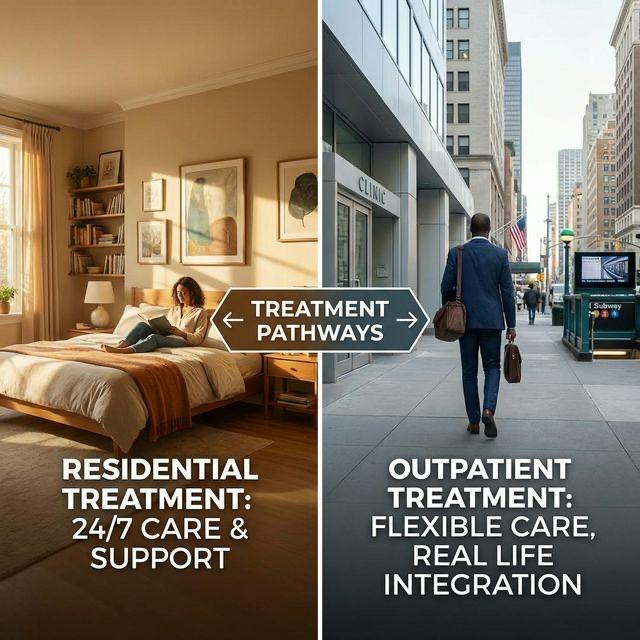
If you are searching for outpatient rehab near me, understanding what outpatient treatment involves is the first step toward making an informed decision. Outpatient rehabilitation is a level of addiction treatment that allows you to live at home or in a sober living environment while attending scheduled treatment sessions at a facility. Unlike residential treatment, where you live onsite 24 hours a day, outpatient rehab provides flexibility to maintain work, school, family, and other obligations.
Outpatient rehab is not a single type of program. It exists on a continuum from highly structured partial hospitalization programs (PHP) that meet 5-6 days per week to standard outpatient counseling that may involve just one session per week. The level of care appropriate for you depends on the severity of your addiction, your progress in treatment, your home environment, and the strength of your support system.
At Trust SoCal in Fountain Valley, Orange County, we offer multiple levels of outpatient care designed to meet clients at their specific point in the recovery journey. Whether you are stepping down from residential treatment or seeking outpatient rehab as your primary level of care, our clinical team creates an individualized program that balances therapeutic intensity with the flexibility your life requires.
The American Society of Addiction Medicine (ASAM) defines four levels of outpatient care: early intervention, outpatient services, intensive outpatient/partial hospitalization, and clinically managed residential. Your placement depends on a comprehensive assessment of six clinical dimensions.
IOP vs. Standard Outpatient Rehab Near Me
When people search for outpatient rehab near me, they often encounter two primary options: intensive outpatient programs (IOP) and standard outpatient treatment. Understanding the differences between these levels of care is essential for choosing the right program.
Intensive outpatient programs provide a structured treatment experience that typically involves 9 to 12 hours of clinical programming per week, usually spread across 3 to 5 days. Sessions include group therapy, individual counseling, psychoeducation, relapse prevention skills training, and often family therapy. IOP typically lasts 8 to 12 weeks, though the duration can be adjusted based on individual progress. This level of care is appropriate for individuals who need significant clinical support but do not require 24-hour supervision.
Standard outpatient treatment is less intensive, typically involving 1 to 2 individual or group sessions per week. This level of care is appropriate for individuals with mild substance use issues, those who have successfully completed more intensive treatment, or those in the maintenance phase of recovery who need ongoing support without the time commitment of IOP. Standard outpatient may continue for several months to a year or longer.
Comparing Outpatient Levels of Care
The following comparison helps clarify which outpatient option may be right for your situation when looking for outpatient rehab near you.
- PHP (Partial Hospitalization): 5-6 days/week, 5-6 hours/day, 4-6 weeks duration. Best for step-down from residential or those needing near-residential intensity.
- IOP (Intensive Outpatient): 3-5 days/week, 3-4 hours/day, 8-12 weeks duration. Best for moderate addiction, post-residential step-down, or primary treatment with strong home support.
- Standard Outpatient: 1-2 days/week, 1-2 hours/session, 3-12+ months duration. Best for mild substance use issues, long-term maintenance, or as a final step in the continuum of care.
Who Is a Good Candidate for Outpatient Rehab?
Not everyone is an appropriate candidate for outpatient rehab. The flexibility that makes outpatient treatment attractive can also be a liability for individuals who need the structure and separation from triggers that residential treatment provides. A thorough clinical assessment is necessary to determine the right level of care.
Good candidates for outpatient rehab near you typically meet several criteria. They have a stable, supportive home environment free from active substance use. They have completed medical detox if needed and are physically stable. They have a mild to moderate substance use disorder, or they have completed residential treatment and are ready to step down. They have reliable transportation to attend sessions regularly. And they demonstrate motivation and willingness to engage in treatment.
Individuals who may not be appropriate for outpatient rehab include those with severe, untreated substance use disorders, those currently experiencing withdrawal symptoms, those living in environments where substance use is occurring, those with untreated severe mental health conditions, and those with a history of treatment dropout. For these individuals, residential treatment or PHP may be more appropriate starting points.
If you are experiencing withdrawal symptoms, do not attempt to enter outpatient rehab without first completing medical detox. Withdrawal from alcohol and benzodiazepines can be life-threatening without medical supervision. Contact Trust SoCal to discuss safe detox options.
How to Find Quality Outpatient Rehab Near Me in Southern California
Southern California offers a wealth of outpatient rehab options, but not all programs are created equal. When searching for outpatient rehab near you, there are several key factors to evaluate that can help you distinguish high-quality programs from those that may not deliver the care you deserve.
First, verify that the facility is licensed by the California Department of Health Care Services (DHCS) and holds accreditation from a recognized body such as The Joint Commission or CARF International. These credentials ensure that the program meets established standards for clinical care, safety, and ethical practice. Second, investigate the qualifications of the clinical staff. Look for programs staffed by licensed therapists (LMFT, LCSW, LPCC, LAADC), licensed physicians, and certified addiction counselors.
Third, ask about the therapeutic approaches used. Evidence-based therapies such as cognitive-behavioral therapy, motivational interviewing, dialectical behavior therapy, and trauma-informed care should be central to the program. Fourth, consider practical factors like location, scheduling options, insurance acceptance, and whether the program offers both group and individual therapy. Finally, read reviews and ask for references from alumni when possible.
Outpatient Rehab Near Me: Trust SoCal in Fountain Valley
Trust SoCal's outpatient programs in Fountain Valley provide accessible, high-quality addiction treatment for residents of Orange County and the greater Southern California region. Located at 16537 Elm Cir in Fountain Valley, our facility is conveniently accessible from Huntington Beach, Costa Mesa, Irvine, Anaheim, Santa Ana, and surrounding communities.
Our IOP program meets three to five days per week in the evening, allowing clients to maintain daytime work or school commitments. Programming includes evidence-based group therapy, individual counseling, family therapy, relapse prevention skills training, and connections to community recovery resources. Our PHP program offers a more intensive daytime schedule for those who need additional structure.
What sets Trust SoCal apart from other outpatient rehab options near you is our commitment to individualized care. We do not use a one-size-fits-all curriculum. Each client receives a personalized treatment plan developed by a multidisciplinary team, regularly updated based on progress, and designed to address their specific clinical needs, personal goals, and life circumstances. Call us at (949) 280-8360 to learn more about our outpatient programs.
Trust SoCal offers complimentary insurance verification. Call (949) 280-8360 or complete our online form to find out what your insurance covers before committing to a program.
Making the Most of Outpatient Rehab
Outpatient rehab provides the clinical framework for recovery, but its effectiveness depends significantly on what you do outside of sessions. Because you are living in the real world while attending treatment, you have the unique opportunity to practice coping skills, manage triggers, and build a sober routine in real-time with the support of your clinical team.
To maximize the benefits of outpatient rehab near you, commit to attending every scheduled session without exception. Engage fully in group and individual therapy rather than going through the motions. Build a daily routine that includes recovery-supportive activities such as exercise, meetings, meditation, and sober social connection. Communicate honestly with your therapist about challenges, triggers, and close calls. And involve supportive family members or friends in your recovery plan.
Outpatient rehab is not the easier option; it is the option that requires you to do the hard work of recovery while simultaneously navigating the demands of daily life. Many clients find that this challenge, while difficult, actually prepares them better for long-term sobriety because they are learning to live sober in real-world conditions from the very beginning.
Madeline Villarreal, Counselor
Counselor